Monthly Archives: August 2014

Formula 1 and Tibetan Buddhism

While there has been a lot of chatter about Nico Rosberg edging Lewis Hamilton out of last weekend’s F1 Belgian Grand Prix, few eagle eyes will have noticed a small design on his race helmet. As the German driver clambered out of his car to face the podium, his team, and his critics, I noticed a small Tibetan Buddhist emblem on the front grille of his Mercedes-AMG Petronas helmet.

Nico Rosberg

Rosberg designed the helmet together with his girlfriend. He calls it his “Full Attack” design, and it is mainly comprised of black and turquoise, a colour strongly associated with Tibetan Buddhism. He describes the Tibetan motif as “something personal” but does not elaborate further. You can watch his full explanation here. It’s about as emotional as he gets!

The design is an endless knot (dpal be’u for all you closet Tibetologists out there) which is a closed, graphic ornament composed of right-angled, intertwined lines. It overlaps without a beginning, or an end, symbolising the Buddha’s endless wisdom and compassion. It indicates continuity as the underlying reality of existence.

The intertwining of lines represents how all phenomena are conjoined and yoked together as a closed cycle of cause and effect. Thus the whole composition is a pattern that is closed on in itself with no gaps, leading to a representational form of great simplicity and fully balanced harmony. See here for a full explanation.

Tibetans and Buddhists often copy the design on a gift or greeting card as this is understood to establish an auspicious connection between the giver and the recipient. At the same time, the recipient is goaded to righteous karma, and reminded that future positive effects have their roots in the causes of the present. This interconnectivity, and the social dues that go with it, were first properly analysed and commented on by the French sociologist Marcel Mauss in his 1925 essay Essai sur le don. Forme et raison de l’échange dans les sociétés archaïques (An essay on the gift: the form and reason of exchange in archaic societies) and expanded upon in his seminal anthropological treatise ‘The Gift.’ It is a great, and short, introduction to the fascinating field of Anthropology.

One can only hope that Hamilton too has done his homework, and acknowledges that the knot represents a connection, a link between their fates and karmic destiny, but does not ‘connect’ with it further. I can assure him that the symbol will be the same when viewed in a rear view mirror.
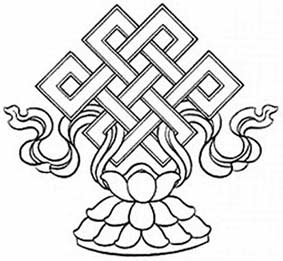
endless knot

1 Comment

Filed under Tibetology, Timology

World War One. My Family’s History.

Today marks the centenary of Great Britain joining World War One. There have been salutes, flypasts, vigils, and tributes paid by all quarters, and much done to honour the dead. And quite rightly so; their sacrifices made possible our freedom, and we will all, ever, be thankful.

My own family were surprisingly lucky during the war. My mother’s side of the family were all in India for the duration, and only started to drift back to Blighty at Independence, while there are little or no records from my father’s side. My grandmother (on my father’s side) however used to tell me tales of her father, my great-grandfather, and his time in uniform.

When I was a child she would stroke my hair when she spoke to me of him, and tell me how much I reminded her of him… she described how his hair was exactly like mine… ginger and much like a wire brush. Apparently we have the same eyes, but I know mum’s side also lays claim to my (somewhat useless) ocular ancestry. Kelly was much luckier, and avoided the ginge altogether.

The only records we have of Frank Kittle (Nan called him “Pop”, but then our grandfather was also “Pops”, so maybe this is a generational thing?) are some photographs and stories.

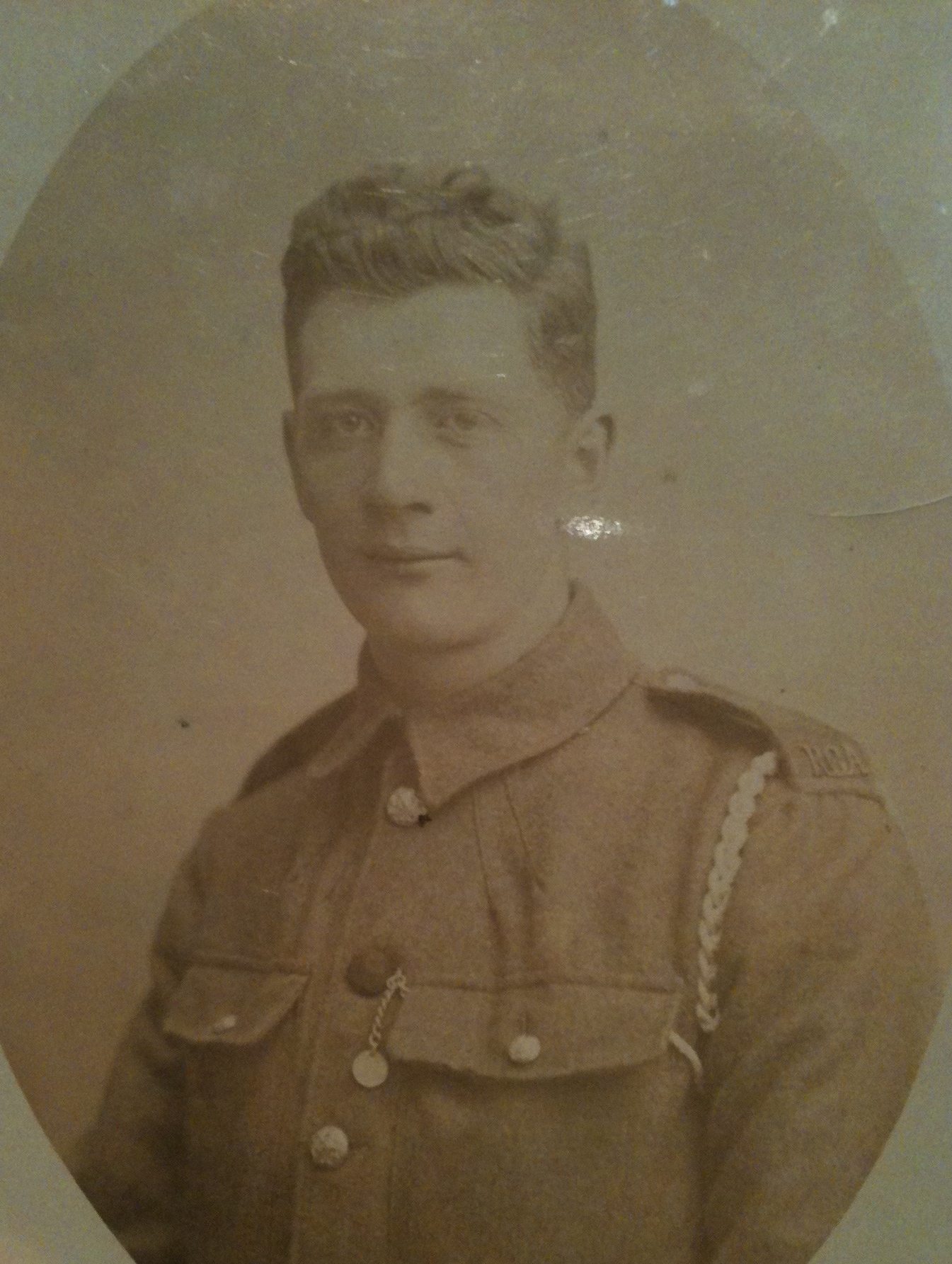
The photograph of him before he went to the trenches shows a thin, nervous, smile, and a rather optimistic attempt to Brylcream down the wire wool with a side parting. In the photo he must be in his mid 20’s, and has the badge of the Royal Garrison Artillery on his shoulder. Shortly after the photo was taken, he was sent to France, and was gassed at the Somme while serving with one of the Brigades of The Royal Field Artillery.

Pop Kittle Pre War

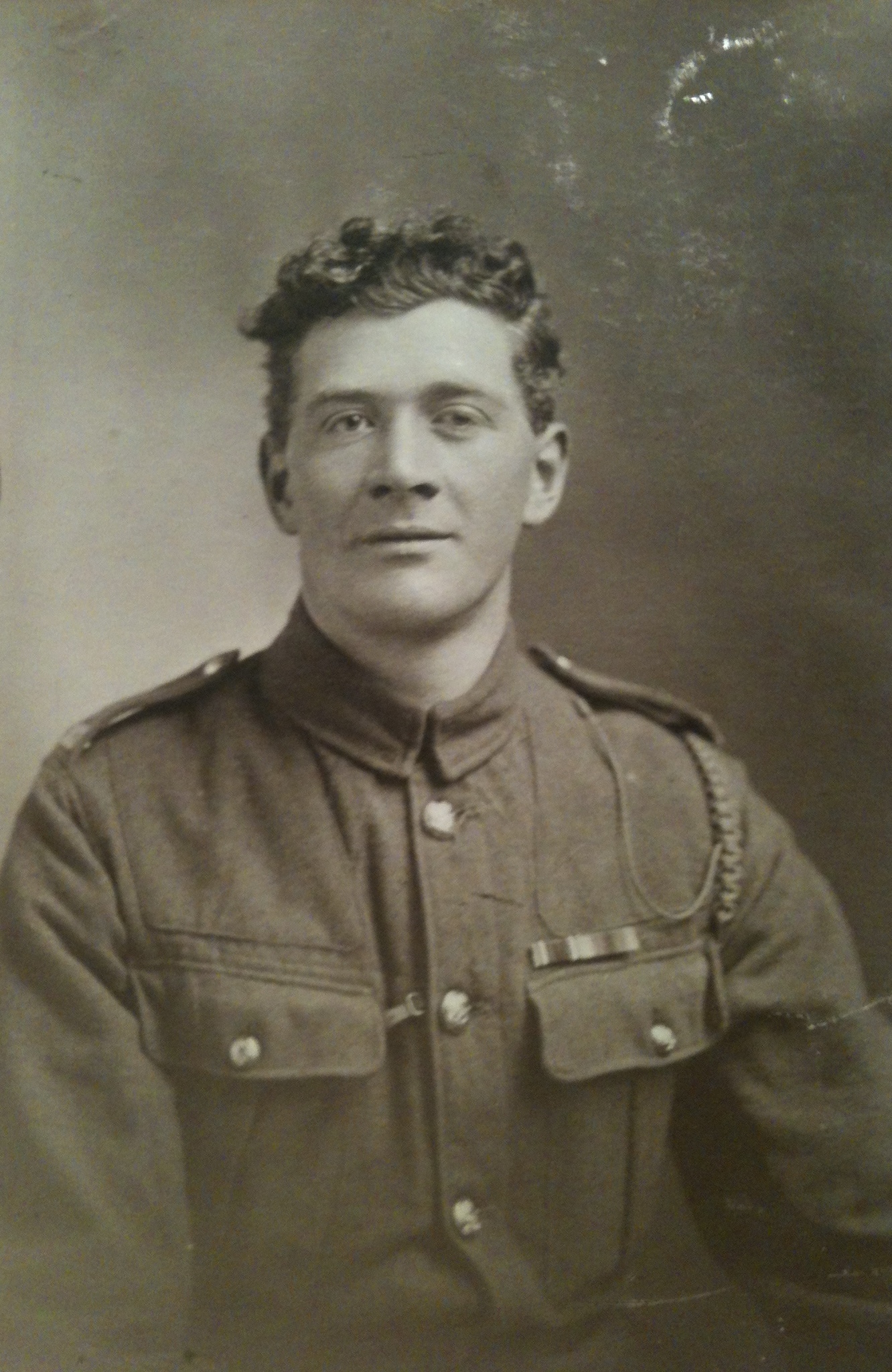
He was lucky to live, and was invalided back to his native Norfolk. He spent time recuperating from the effects of the mustard gas at hospitals in Bristol and Yarmouth, but had a hacking, rattling, cough ’till the day he died. A photo of him taken some years later, still in his uniform, shows a more confident face, and the slightest hint of a smile.

Frank Kittle

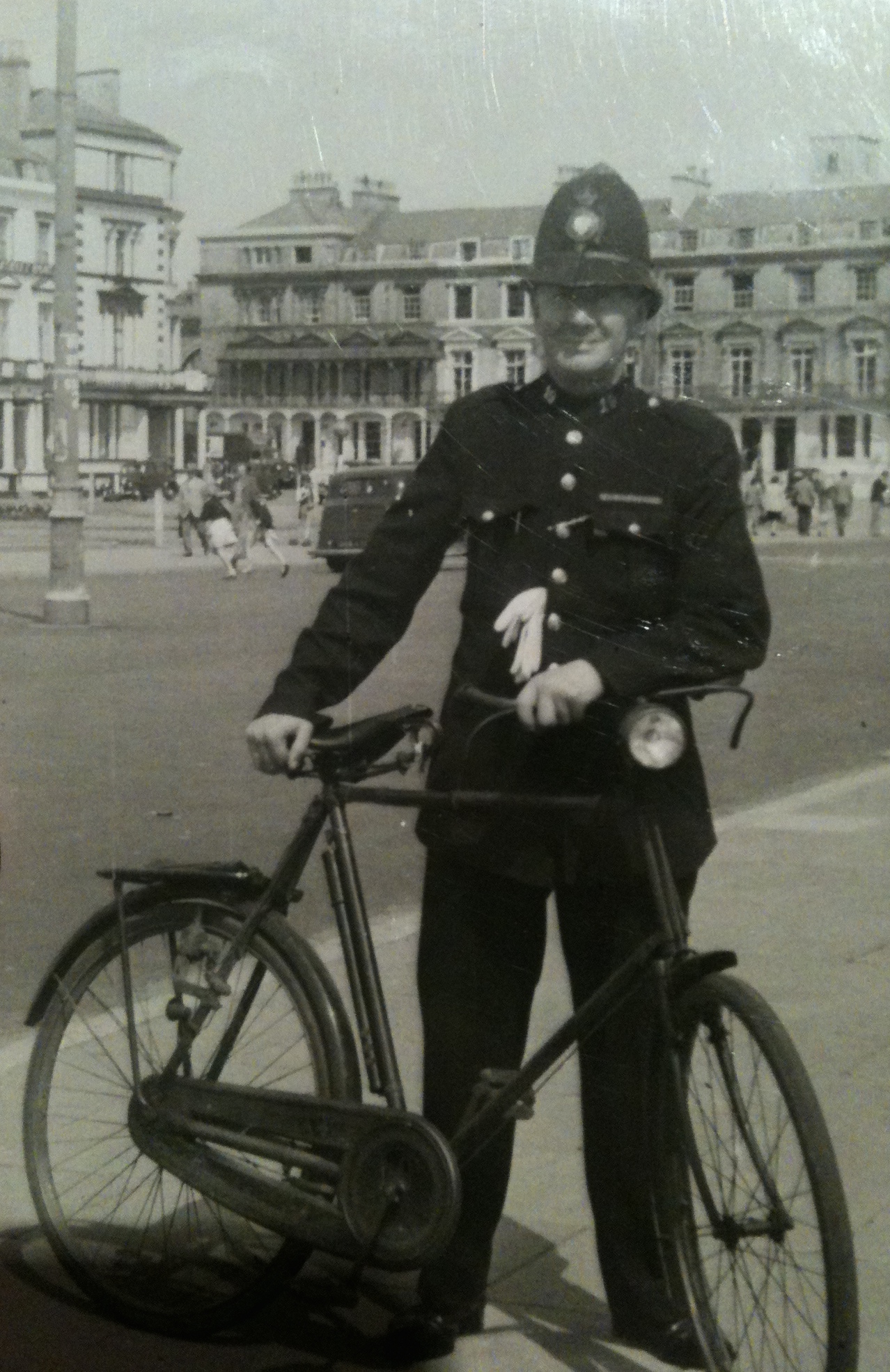
His cough stayed with him all his life, and Dad describes how he was always ill and bronchial. He served as both a Policeman, and Fireman in and around Yarmouth during both the interwar period, and during the Second World War. There is a family story that describes how he was the only policeman on duty when a local fisherman caught a German U-Boat in his nets, and towed it into Yarmouth harbour. Pop took the surrender of the U-Boat Captain, and his crew, and accepted a set of binoculars as a token of friendship. While this may or may not be true, it does help to explain the Nazi U-Boat binoculars that have been kicking about for years! This is him in his Police uniform, with his bicycle.

And a definite smile.

Policemand in Yarmouth

2 Comments

Filed under Photography, Timology