

Category Archives: Timology
Guess Who Friday
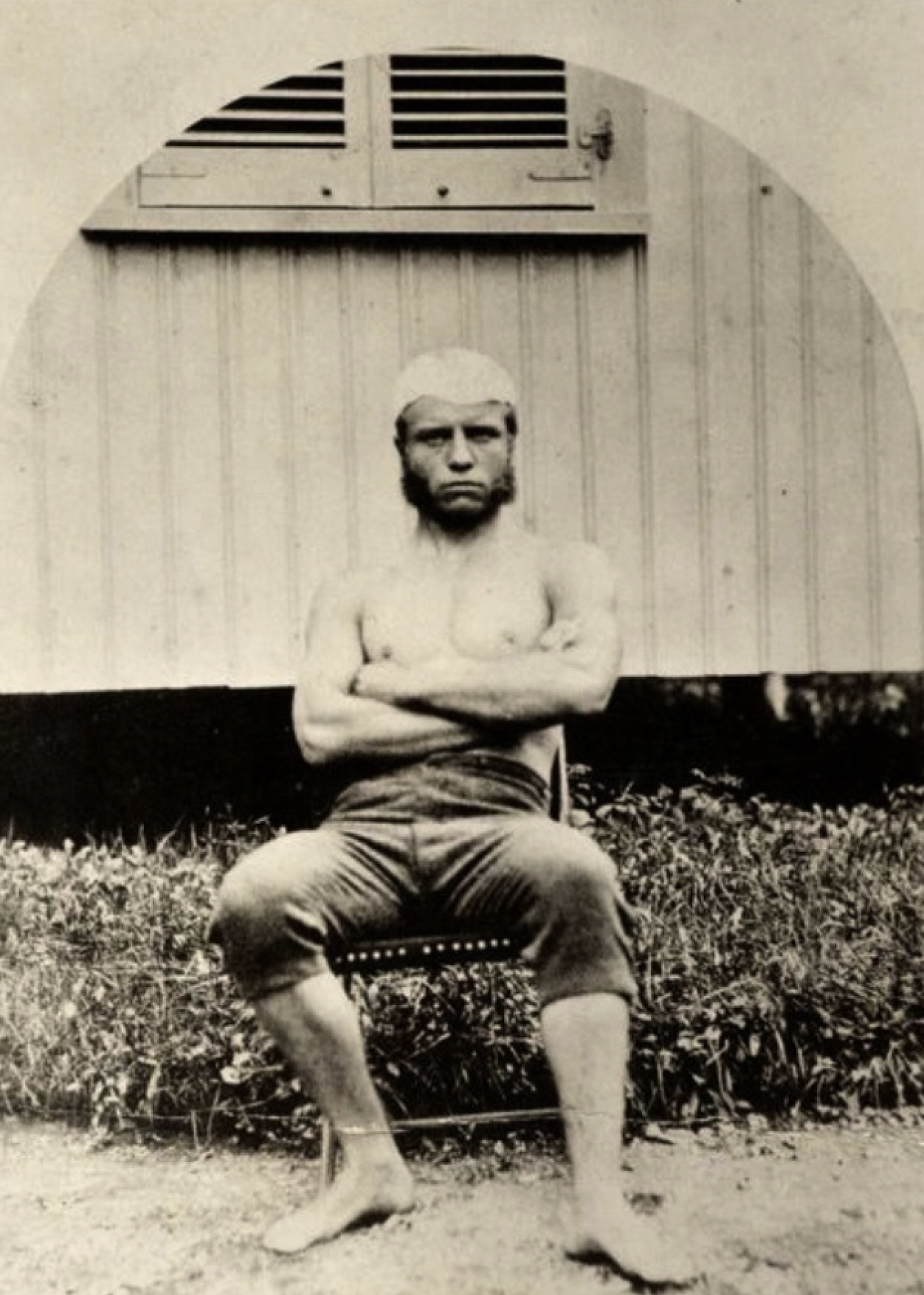
It’s been a while since our last round of the marginally popular ‘Guess Who Friday’… so, given our current visitors from across the pond, who is this?
Filed under Timology

Who owns your street? Searchable map of properties owned by offshore companies
What with all the recent revelations to come out of the Panamanian Mossack Fonseca data leak, and the plight of the troubled British steel industry, there is currently a lot of attention being focused on exactly how much of GB PLC is owned and registered abroad.
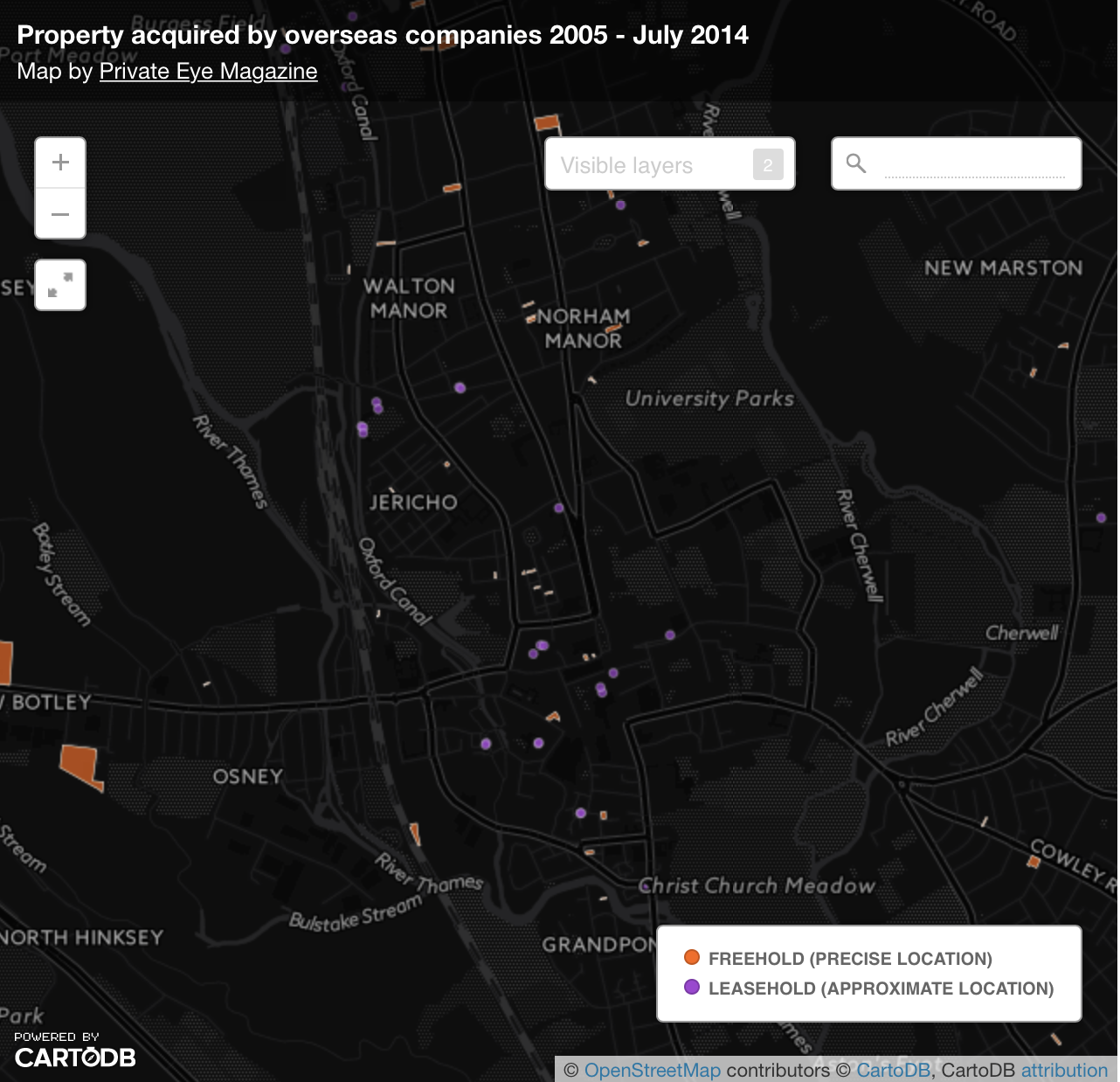
Those cunning and clever people at Private Eye (pick up a copy at all good newsagents) have created a searchable map of properties in England and Wales owned by offshore companies. Using Land Registry data released under Freedom of Information laws, and then linking around 100,000 land title register entries to specific addresses, the Eye has mapped all leasehold and freehold interests acquired by offshore companies between 1999 and 2014.
There is an 8MB database available, but the real joy comes from the searchable map… while London is awash with foreign registrations, Oxford escapes only lightly. I was interested to discover that of the seven flats in the converted pub I live in, two are owned by the Jersey based Eurocomm Holdings. They also seem to hold a number of other houses and flats in Oxford and beyond! Have a look a see who owns what near you using this link.
Filed under Oxford: The Perspiring Dream, Technology, Timology

What if an all-electric vehicle was bespoke, hand crafted, and exhilarating to drive?
Both of you that follow this blog will know that I am a fan of those ‘hand made little green racers from Malvern.’ I refer of course to the Morgan Car Company and the frankly dazzling machines they (very slowly and carefully) craft.
Last week the Morgan EV3 made its world debut at the 2016 Geneva Motor Show. Morgan have essentially asked “what if an all-electric vehicle was bespoke, hand crafted, and exhilarating to drive?” What if indeed!? I have had the pleasure of driving a couple of electric vehicles over the years. While the recent Tesla Model S was certainly luxurious and had incredible acceleration, it was a little like driving an electric canal barge round the back streets of Oxford. I enjoyed my migrations in the hybrid Prius, but could never have described them as ‘exhilarating.’
The EV3 is Morgan’s first electric vehicle, and production is due to start in Q4 of this year. Their website claims that pricing and performance figures will be comparable to their petrol 3 wheeler. (And what a glorious statement that is… I wonder who else currently manufactures a 3 wheeler.) It is hoped it will have an operational range of 150 miles, which is just enough to pop to London and back.
 This year also marks 80 years of the longest running production car in the world. Of course, it is also a Morgan, and to celebrate Morgan have announced a limited edition 80th anniversary 4/4. The Morgan 4/4 was first launched in 1936 at exhibitions in London and Paris, and if those clever chaps came up with this design 80 years ago, just imagine what they might conjure in 80 years hence.

Filed under Technology, Timology
Oxford Bags.
Thirty years ago no man was ever seen in the streets of Oxford after lunch without being dressed as he would have been in Pall Mall. Tail coats were sometimes worn in those days in the morning, and the fast men still wore cutaways. But the correct thing for the quite gentlemanly undergraduate was black frock-coat, and tall hat, with the neatest of gloves and boots, and in this costume he went out for his country walk, the admired of all beholders, as he passed through Hinksey or Headington. In the same dress he usually went into hall, and appeared at wine-parties. Now, I believe, shooting-jackets of all patterns…have taken the place of this decorous garb in which every one looked well.
T.E. Kebbel, the National Review of June 1887
Filed under Oxford: The Perspiring Dream, Timology
I slowed to ninety.
The extravagance in which my surplus emotion expressed itself lay on the road. So long as roads were tarred blue and straight; not hedged; and empty and dry, so long I was rich.
Nightly I’d run up from the hangar, upon the last stroke of work, spurring my tired feet to be nimble. The very movement refreshed them, after the day-long restraint of service. In five minutes my bed would be down, ready for the night: in four more I was in breeches and puttees, pulling on my gauntlets as I walked over to my bike, which lived in a garage-hut, opposite. Its tyres never wanted air, its engine had a habit of starting at second kick: a good habit, for only by frantic plunges upon the starting pedal could my puny weight force the engine over the seven atmospheres of its compression.
Boanerges’ first glad roar at being alive again nightly jarred the huts of Cadet College into life. ‘There he goes, the noisy bugger,’ someone would say enviously in every flight. It is part of an airman’s profession to be knowing with engines: and a thoroughbred engine is our undying satisfaction. The camp wore the virtue of my Brough like a flower in its cap. Tonight Tug and Dusty came to the step of our hut to see me off. ‘Running down to Smoke, perhaps?’ jeered Dusty; hitting at my regular game of London and back for tea on fine Wednesday afternoons.
Boa is a top-gear machine, as sweet in that as most single-cylinders in middle. I chug lordlily past the guard-room and through the speed limit at no more than sixteen. Round the bend, past the farm, and the way straightens. Now for it. The engine’s final development is fifty-two horse-power. A miracle that all this docile strength waits behind one tiny lever for the pleasure of my hand.
Another bend: and I have the honour of one of England’ straightest and fastest roads. The burble of my exhaust unwound like a long cord behind me. Soon my speed snapped it, and I heard only the cry of the wind which my battering head split and fended aside. The cry rose with my speed to a shriek: while the air’s coldness streamed like two jets of iced water into my dissolving eyes. I screwed them to slits, and focused my sight two hundred yards ahead of me on the empty mosaic of the tar’s gravelled undulations.
Like arrows the tiny flies pricked my cheeks: and sometimes a heavier body, some house-fly or beetle, would crash into face or lips like a spent bullet. A glance at the speedometer: seventy-eight. Boanerges is warming up. I pull the throttle right open, on the top of the slope, and we swoop flying across the dip, and up-down up-down the switchback beyond: the weighty machine launching itself like a projectile with a whirr of wheels into the air at the take-off of each rise, to land lurchingly with such a snatch of the driving chain as jerks my spine like a rictus.
Once we so fled across the evening light, with the yellow sun on my left, when a huge shadow roared just overhead. A Bristol Fighter, from Whitewash Villas, our neighbour aerodrome, was banking sharply round. I checked speed an instant to wave: and the slip-stream of my impetus snapped my arm and elbow astern, like a raised flail. The pilot pointed down the road towards Lincoln. I sat hard in the saddle, folded back my ears and went away after him, like a dog after a hare. Quickly we drew abreast, as the impulse of his dive to my level exhausted itself.
The next mile of road was rough. I braced my feet into the rests, thrust with my arms, and clenched my knees on the tank till its rubber grips goggled under my thighs. Over the first pot-hole Boanerges screamed in surprise, its mud-guard bottoming with a yawp upon the tyre. Through the plunges of the next ten seconds I clung on, wedging my gloved hand in the throttle lever so that no bump should close it and spoil our speed. Then the bicycle wrenched sideways into three long ruts: it swayed dizzily, wagging its tail for thirty awful yards. Out came the clutch, the engine raced freely: Boa checked and straightened his head with a shake, as a Brough should.
The bad ground was passed and on the new road our flight became birdlike. My head was blown out with air so that my ears had failed and we seemed to whirl soundlessly between the sun-gilt stubble fields. I dared, on a rise, to slow imperceptibly and glance sideways into the sky. There the Bif was, two hundred yards and more back. Play with the fellow? Why not? I slowed to ninety: signalled with my hand for him to overtake. Slowed ten more: sat up. Over he rattled. His passenger, a helmeted and goggled grin, hung out of the cock-pit to pass me the ‘Up yer’ Raf randy greeting.
They were hoping I was a flash in the pan, giving them best. Open went my throttle again. Boa crept level, fifty feet below: held them: sailed ahead into the clean and lonely country. An approaching car pulled nearly into its ditch at the sight of our race. The Bif was zooming among the trees and telegraph poles, with my scurrying spot only eighty yards ahead. I gained though, gained steadily: was perhaps five miles an hour the faster. Down went my left hand to give the engine two extra dollops of oil, for fear that something was running hot: but an overhead Jap twin, super-tuned like this one, would carry on to the moon and back, unfaltering.
We drew near the settlement. A long mile before the first houses I closed down and coasted to the cross-roads by the hospital. Bif caught up, banked, climbed and turned for home, waving to me as long as he was in sight. Fourteen miles from camp, we are, here: and fifteen minutes since I left Tug and Dusty at the hut door.
I let in the clutch again, and eased Boanerges down the hill along the tram-lines through the dirty streets and up-hill to the aloof cathedral, where it stood in frigid perfection above the cowering close. No message of mercy in Lincoln. Our God is a jealous God: and man’s very best offering will fall disdainfully short of worthiness, in the sight of Saint Hugh and his angels.

The Road. In, The Mint. T E Lawrence, writing as T.E. Ross. Published posthumously in 1955.
Filed under Timology
Iran’s ‘Colossal’ Ceilings
I have posted before about Robert Byron’s description of the Sheikh-Lotfollah’s mosque in Esfahan, Iran, in his Road to Oxiana. I am yet to travel to Iran, but long to visit the country and explore its architectural splendours. For the time-being however I can read, use my imagination, and explore them through the internet.
One element of their design captures my imagination above all else… the intricately tiled iwans and ceilings, often featuring complex tessellations and honeycombs. Last night I came across a fabulous collection of photographs of them here on the ‘This is Colossal’ website. Well worth a look, but must be even better to see with one’s own eyes.

Of the interior if the dome Byron wrote “I know of no finer example of the Persian Islamic genius than the interior of the dome: The dome is inset with a network of lemon-shaped compartments, which decrease in size as they ascend towards the formalised peacock at the apex… The mihrāb in the west wall is enamelled with tiny flowers on a deep blue meadow. Each part of the design, each plane, each repetition, each separate branch or blossom has its own sombre beauty. But the beauty of the whole comes as you move. Again, the highlights are broken by the play of glazed and unglazed surfaces; so that with every step they rearrange themselves in countless shining patterns… I have never encountered splendour of this kind before.”
But as fans of this genre of architecture, can you tell me where the ceiling shown below can be found?
Filed under Photography, Timology
Shackleton’s bookshelf
Books on Shackleton’s bookshelf:
- Encyclopedia Britannica
- Seven short plays by Lady Gregory
- Perch of the devil by Getrude Atherton
- Pip by Ian Hey
- Plays: pleasant and unpleasant, Vol 2 Pleasant by G B Shaw
- Almayer’s folly by Joseph Conrad
- Dr Brewer’s readers handbook
- The Brassbounder by David Bone
- The case of Miss Elliott by Emmuska Orczy
- Raffles by EW Hornung
- The Grand Babylon Hotel by Arnold Bennett
- Pros and cons: a newspaper reader’s and debater’s guide to the leading controversies of the day by JB Askew
- The Brothers Karamazov by Fyodor Dostoyevsky
- The Woman’s view by Herbert Flowerdew
- Thou Fool by JJ Bell
- The Message of Fate by Louis Tracy
- The Barrier by Rex Beach
- Manual of English Grammar and Composition by Nesfield
- A book of light verse
- Oddsfish by Robert Hugh Benson
- Poetical works of Shelley
- Monsieur de Rochefort by H De Vere Stacpoole
- Voyage of the Vega by Nordenskjold
- The threshold of the unknown region by Clements Markham
- Cassell’s book of quotations by W Gurney Benham
- The concise Oxford dictionary
- Chambers biographical dictionary
- Cassell’s new German-English English-German dictionary
- Chambers 20th Century dictionary
- The northwest passage by Roald Amundsen
- The voyage of the Fox in Arctic seas by McClintock
- Whitaker’s almanac
- World’s end by Amelie Rives
- Potash and perlmutter by Montague Glass
- Round the horn before the mast by A Basil Lubbock
- The witness for the defence by AEW Mason
- Five years of my life by Alfred Dreyfuss
- The morals of Marcus Ordeyne by William J Locke
- The rescue of Greely by Commander Winfield Scott Schley
- United States Grinnell Expedition by Dr Kane
- Three years of Arctic service by Greely
- Voyage to the Polar Sea by Nares
- Journal of HMS Enterprise by Collinson

Filed under Photography, Timology
 Tim Myatt