Royal Mail Ships and the last few pink bits on the map.

I like to think of this site as a kind of ‘cabinet of curiosities’ on the web; of no especial purpose or relevance, but perhaps interesting and worth of the distraction… anyway, I was musing the other day about how to go about visiting some of the more remote islands around the world that are still painted pink on the map. Ben Fogle wrote a highly entertaining book on the subject called ‘The Tea Time Islands‘ some years back, and I can recommend it. (Ben must be a good chap to meet in a pub BTW; he seems genuinely charming, and among his achievements has rowed the Atlantic Ocean in 49 days and crossed Antarctica by foot in a race to the South Pole.)

So, after a little bit of research it seems that the best way to get to the Falkland Islands is, of course, to enlist in the RAF and hope (!) to be posted to RAF Mount Pleasant… This RAF station is currently home to between 1,000 and 2,000 British military personnel, and is located about 30 miles southwest of Port Stanley. To help you while away the time, you can entertain yourself along the world’s longest corridor; half a mile (800 m) long, that links the barracks, messes and recreational and welfare areas of the base. I bet the time flies past… while a trip to Diego Garcia in the service of HM Armed Forces might involve such cultural highlights as, “providing a visible demonstration of United Kingdom sovereignty on the behalf of the Foreign and Commonwealth Office, and a number of civil functions ranging from policing to customs and excise.” Where do I sign?
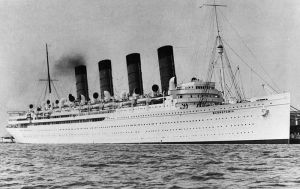
800px-Mauretania_1930s

However it researching was how one might get to St Helena that gave me most pleasure. Do you remember those evocative names of old steam ships? The sort of Blue Riband, Cunard Line / Union-Castle line, ladies of the oceans… Mauretania, Olympic, Persia, Titanic, Lancastria? Well, almost all of them were Royal Mail Ships, and used the RMS prefix. Any vessel designated as “RMS” had, or has the right both to fly the pennant of the Royal Mail when sailing and to include the Royal Mail “crown” logo with any identifying device for the ship. The designation “RMS” has been used since around 1840, and was seen as a mark of quality and a competitive advantage, because the mail was supposed to be on time. How things have changed.

Anyway,  the shift in recent years to air transport for mail has left only an handful of ships with the right to the prefix or its variations. Queen Mary 2 was conferred “RMS” by Royal Mail when she entered service in 2004 on the Southampton to New York route as a gesture to Cunard’s history, while the Royal Mail has allowed British Airways to use their logo and crest on a plane’s fuselage, usually alongside their registration markings. But the ship that interested me was the RMS St Helena which sails between Cape Town and Saint Helena with regular shuttles continuing to Ascension Island. Her website is wonderful, and you can even follow the ship’s progress in real time (slow) on a map! The ship is a far cry from the floating ‘gin places’ one usually associates with cruise ships, indeed the site boasts that, “there are no theatres, no casinos, no golf ranges… Life on board is far from frenetic.” Its not cheap mind you, with cabins costing between £770 and £3,418 for the Ascension to Cape Town leg, but Ascention has to be one of the more bizarre holiday destinations anyway! You can find out more about her, and life abroad here.

RMS St Helena

Leave a comment

Filed under Timology

Visit Ukraine

With the troubling news from Kiev and Ukraine filling our news feeds these last few weeks, I was amused to find this little gem in the dark recesses of my laptop… I think it’s best to let things calm down a bit first though…

Visit Ukraine

Leave a comment

Filed under Timology

A big fan of this…

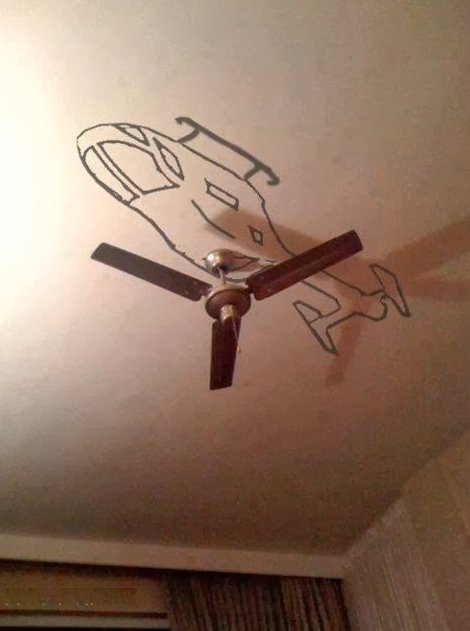
This has been entertaining me this week:

Chopper fan

Leave a comment

Filed under Photography, Technology

Green Sheds and Goddesses: The Seven Pillars of Wisdom Trust

I have recently been lead down a rabbit hole of research. It involved, as many of my goose-chases do, chasing Lawrence of Arabia around London, and ended up in the archives of the British Museum, starting from a much more unlikely venue; a dark green wooden shed in the middle of a central London road junction.

Some months ago I was visiting a friend, not a million miles from Lords’ Cricket Ground, on Warwick Avenue. I was waiting to meet her in a conspicuous place near the Underground entrance, and chose to shelter from the rain under the awnings of a green wooden shed. On the side of the shed was a brass disc, that claimed that said shed was a “Cabman’s Shelter” and further that it had been restored in 1994 by “The Cabmen’s Shelter Fund, the Heritage of London Trust, and the Seven Pillars of Wisdom Trust.” This set my mind wandering off towards an enormous grant from the Trust to wander the Hejaz, looking for the trains destroyed by Lawrence. (I know you can still find some of them, and it has long been my desire to go and locate them… the small matter of a bloody civil war in Syria has thus far thwarted me.) But then my friend arrived, and we dashed off for a pint.

green shed These sheds used to be quite common in London, and you can see what they have been used for more recently in a BBC magazine video here. The Cabmen’s Shelter Fund was established in London as long ago as 1875 to run shelters for the drivers of hansom cabs and later hackney carriages. By law, cab drivers at the time could not leave the cab stand while their cab was parked there. This made it very difficult for them to obtain hot meals and could be unpleasant in bad weather. The Earl of Shaftesbury and other worthies therefore took it upon themselves to set up a charity to construct and run shelters at major cab stands, but I somehow can’t imagine he frequented them too often. There are still 13 of these dark green sheds around London (and a couple in Oxford, for you eagle eyed Oxonians) The shelters were originally provided with seats and tables and books and newspapers, most of them donated by the publishers or other benefactors. Most could accommodate ten to thirteen men, but gambling, drinking, and swearing were strictly forbidden! Now these shelters are Grade II listed buildings.

Fascinating!” I hear you cry, but what of the Seven Pillars of Wisdom Trust?

TE Well, The Seven Pillars of Wisdom Fund is now a charity that awards grants for archaeological, environmental, and other academic projects. There were originally two Trusts, both set up in 1936 by A. W. Lawrence, who was the sole beneficiary under the will of T. E. Lawrence, and thus inherited the copyright of all his brother’s works. To the ‘Seven Pillars of Wisdom Trust’ he assigned the copyright in Seven Pillars of Wisdom, which was shortly afterwards given its first publication. To the ‘Letters and Symposium Trust’ he assigned the copyright in all his brother’s letters. The two Trusts were amalgamated in 1986.

So, apart from rebuilding Green Sheds in central London what else have they been up to? Well, I might be wrong, but seemingly not a lot… they hardly advertise themselves, but did make a contribution towards the purchase of a stunning 19th Century BC Babylonian relief, called the Queen of the Night, for those luck people at the British Museum. And she is stunning.

The nude female figure is depicted with  tapering feathered wings and talons, standing with her legs together, and sporting a sort of bizarre headdress of four pairs of horns topped by a disc. She is ‘supported’ by a pair of addorsed lions above a scale-pattern representing mountains, and is flanked by a pair of standing owls. Quite what this has to do with Lawrence, or green sheds, I have no idea!

Queen of the Night

2 Comments

Filed under Timology

Rest and Roof Restoration

A little glimmer of good news for you all in this miserable weather; the Oxford University Museum of Natural History is set to reopen its doors to the public on Saturday 15 February.

The museum has been closed for a full 14 month restoration project on its fabulous roof which should prevent the glass-tiled roof of the museum from leaking rainwater into the courts below. The £2 million roofing work involved more than 8,500 glass tiles being individually removed, cleaned and resealed with a mastic silicone. Where necessary, replacement glass tiles have been handmade to match the Victorian originals. While all this has been going on the museum staff have been able to complete successful conservation work on a number of whale skeletons, which were lowered from their position above the court, treated for the first time in over 100 years, and then raised again in a new configuration. Additional lighting has also been installed throughout the public areas of the museum, including specially designed rings of LEDs attached to the underside of the building’s original gas-lamp fittings. They have even got round to opening a small cafe run by Morten’s (who basically run all the other cafes in Oxford…)

If you have not been to the museum, you really must go… I describe it as a Cathedral to Nature, something Sir Henry Acland, The Regius Professor of Medicine, would have agreed with. He initiated the construction of the museum between 1855 and 1860, to bring together all the aspects of science around a central display area. In 1858, Acland gave a lecture on the museum, setting forth the reason for the building’s construction. He believed that the University  should  offer a chance to learn of the natural world and obtain the “knowledge of the great material design of which the Supreme Master-Worker has made us a constituent part“. This idea, of Nature as the Second Book of God, was common in the 19th century. The museum was funded through the sale of Bibles by the University, and also houses the Pitt Rivers Museum through a rabbit hole door at the rear… In 19th-century thinking, it was very important to separate objects made by the hand of God (natural history) from objects made by the hand of man (anthropology). But more on that, and the Pitt Rivers on another occasion.

The museum was built between 1885 and 1886, and is a stunning piece of Victorian architecture. It consists of a large square court with a glass roof, supported by cast iron pillars, which divide the court into three aisles. Cloistered arcades run around the ground and first floor of the building, with stone columns each made from a different British stone. The ornamentation of the stonework and iron pillars incorporates natural forms such as leaves and branches, combining the Pre-Raphaelite style with the scientific role of the building. Interestingly, Irish stone carvers O’Shea and Whelan were employed to create lively freehand carvings in the Gothic manner. When funding dried up they offered to work unpaid, but were accused by members of theUniversity Congregation of “defacing” the building by adding unauthorised work. According to Acland, they responded by caricaturing the Congregation as parrots and owls in the carving over the building’s entrance. I hope the new roof makes them easier to spot!

v0_master

2 Comments

Filed under Oxford: The Perspiring Dream, Timology

Contact with the future

A few months ago I wrote a piece about Google’s new ‘Google Glasses’, waffling on about how they might potentially be used to collect invasive amounts of information, and the pervasive creep of such smart technologies into our lives. It seemed to capture the zeitgeist and concerns of a lot of readers (well… both of you…) and it got punted about t’internet for a short time. Now however those clever folks at Google have come up with something far more interesting, and there has been barely a whisper (or beep) about it.

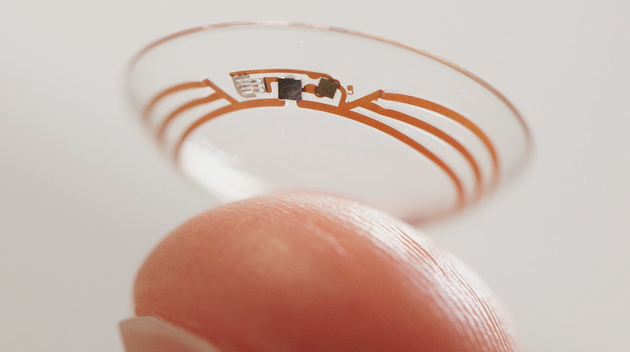
They are developing a kind of ‘Smart Contact Lense’ with integrated sensors and circuitry that are able to monitor blood sugar levels. While this might not sound the most exciting technological development (when, say, compared to being able to play ‘Candy Crush’ on your Google Glasses while appearing to all intents and purposes to read the newspaper, or listen to your Great Aunt’s laments about her angina…) but it could be revolutionary for those with diabetes.

Diabetes is a metabolic disease in which a person has high blood sugar, either because the pancreas does not produce enough insulin, or because cells do not respond to the insulin that is produced. There are two main types, early onset, mostly in children, and later onset in adults. Basically it’s pretty grim, and there really is no known cure. Instead, management concentrates on keeping blood sugar levels as close to normal (“euglycemia”) as possible, without causing hypoglycaemia. This is done through injection or intake of insulin to lower ‘spikes’ in blood sugar. The problem is that people with diabetes have to vigilantly monitor their blood-glucose levels or they risk major problems like passing out, and in extreme cases, coma, or such trivialities as death. And the bad news is that these ‘spikes’ can be caused by pretty much anything; eating, exercise, sweating, drinking, etc, etc.

Those that are not able to regulate their own blood sugar levels have to monitor themselves frequently, often by drawing a very small blood sample from the tip of their finger… mostly painless, but a pain in the backside, and not exactly romantic on a  first dinner date. So these cunning contacts lenses monitor bloody sugars in the tears of the eye; here is what the Google X team has to say for itself:

We’re now testing a smart contact lens that’s built to measure glucose levels in tears using a tiny wireless chip and miniaturised glucose sensor that are embedded between two layers of soft contact lens material. We’re testing prototypes that can generate a reading once per second. We’re also investigating the potential for this to serve as an early warning for the wearer, so we’re exploring integrating tiny LED lights that could light up to indicate that glucose levels have crossed above or below certain thresholds. It’s still early days for this technology, but we’ve completed multiple clinical research studies which are helping to refine our prototype. We hope this could someday lead to a new way for people with diabetes to manage their disease.”

While this technology may be five years or more from any potential general release, Google is in talks with the Food and Drug Administration in the US. We have indeed come a long way since 1508 when  that ‘visionary’ (sorry…) da Vinci thought up the idea of inserting a thin film of glass over the eye to correct his vision, and 1823 when the British physicist John Herschel came up with the first practical design for contact lenses! Interesting too that Google appear to be moving into the realm of technological medicine, but as a contact lense wearer, and one with a history of diabetes in the family, I see this as no bad thing. If, that is, I have my lenses in!

Google lense

Leave a comment

Filed under Timology

An Apathy for Antiquity

I am often taken aback by the sheer volume of history that we have in this country, and also how staggeringly neglectful we are of our embarrassment of heritage. I am not going to descend into a Daily Mail style rant about our failings to teach ‘proper‘ history in our schools, or our total lack of grasp of facts and figures, but just how absent mindedly we treat our past.

I guess a certain amount of this sequent slovenliness comes from the sheer volume of ‘history’ that we are surrounded with. Bill Bryson in his Notes From a Small Island expresses his amazement that in the UK there are (or were at his time of writing in 1995) 445,000 listed historical buildings, 12,000 medieval churches, 1,500,000 acres of common land, 120,000 miles of footpaths and public rights-of-way, 600,000 known sites of archaeological interest. Most memorably me marvels that in his Yorkshire village there were more 17th-century buildings than in the whole of North America.

So it’s not surprising that some of this plethora of past achievement and industry gets nibbled away each year. We also have a grand tradition of the occasional bonfire of beautiful buildings, take for example the Black Death, Dissolution, Reformation, occasional visitations from the Luftwaffe, or the frankly criminal machinations of the 1960’s town planner. But still there are the occasionally baffling examples of historical indifference. I found one such example the other day.

Despite being one of our better known Saints, a former Archbishop, and medieval martyr, there are almost no chapels or churches dedicated to St Thomas a Becket. The obvious exception to this was his famous shrine in Canterbury Cathedral, but that was destroyed in 1538 when Henry VIII ordered that  Becket’s bones be destroyed and  that all mention of his name be obliterated. Oh, that, and the famous shrine at St Thomas’ Chapel in Meppershall

What?! You have never heard of the famous shrine at St Thomas’ Chapel in Meppershall? Tsk Tsk… “As any fule kno” the chapel is first documented in a papel letter dated 1291 which promised to all penitents the remission of one year and forty days penance if they made the pilgrimage to the chapel of St. Thomas the Martyr. It belonged to the Gilbertine Priory at Chicksands which had been founded by Rohesia and Payn de Beauchamp around 1150 (more here). The chancel was mainly replaced in around 1500, but there is some staggering twelfth century sculpture found on the south doorway. Still not ringing any bells? No? Well, I am not surprised…

It is used as a cow shed.

St Thomas' Chapel in MeppershallOn an ‘interesting’ final note, legends attached to the chapel are many, but one tells of a man called “The Jiggler” who hanged himself there and was buried in a grass triangle where the water tower now stands. It is said that if you walk around the triangle twelve times at midnight, The Jiggler will come out after you. So, who is up for a trip to Meppershall?

Leave a comment

Filed under Timology

Guess Who Friday!

Yes; It’s Guess Who Friday.

But lets keep it classy; no tabloid nonsense. And no switching parties… it’s not like we are trying to teach Auntie to play football…

G

Leave a comment

Filed under Timology

A More Cunning … Guess who Friday!

I have been neglecting our weekly “Guess Who Friday” feature… mainly because I have not been around on a Thursday evening to find favourably fiendish photographs. My apologies. But this one might just make up for it.

And before you all smile knowingly and say, “well that’s that nice young Mr Tennant, you know, the one off Dr Who...” it is not him that I am after. It’s the chap on the right of the picture. Yes, the dead one. (And “Alas, poor Yorrick” is also not an answer; you smug so-and-sos…)

Usual rules apply… no cheating, and answers on a PM, email, or text message!

skull

BTW, I should make clear that this is in no way a “Halloween Special.” You can put your pathetic attempt at a ‘sexy zombie’ costume away. Please.

2 Comments

Filed under Timology

A Cathedral of Crap

I am sure that you are by now aware that I have a soft spot for all things Victorian and loony… after all, I spent five years researching a man who invaded Tibet in 1903, ended his days believing in space aliens, and wrote books with catch titles like, ‘Life in the Stars: An Exposition of the View that on some Planets of some Stars exist Beings higher than Ourselves, and on one a World-Leader, the Supreme Embodiment of the Eternal Spirit which animates the Whole.’ (Younghusband:1927).

I also find Victorian architecture and design fascinating… for a people that believed that the world’s largest Empire could be run with little more than a black top-coat and a Bible, they produced some remarkably ornate and beautiful buildings. If austerity and moral high mindedness were the touch stones of their epoch, then absurdity and high gothic ornamentalism were the foundation stones of their architecture. The list is endless but think of the great railway stations in London (St Pancras, and the Gilbert Scott especially), The Natural History Museum, and Keble College Oxford to name but a few.

But these are all buildings designed to impress, and to flatter their visitors and inhabitants. Perhaps my favorite Victorian building is however none of these… it was built for an entirely different purpose. Some might say for a slightly shitty purpose; it is the pumping station at the far east end of the Great Southern Outfall Sewer, in Bexley, London. It is called the Crossness Pumping Station, and it’s a real hidden gem.

Designed by the Metropolitan Board of Works’s Chief Engineer Sir Joseph Bazalgette and architect Charles Henry Driver it was built between 1859 and 1865,  expanded in 1897, and again in 1901. It was so ornate and beautiful that, in what must have been the most bizarre invitation card of the century, it was officially opened HRH the Prince of Wales, attended by Prince Alfred, the Duke of Cambridge, Prince Edward of Saxe-Weimar, the Archbishop of Canterbury, the Archbishop of York, and the Lord Mayor of London.

Yep, they got the Prince of Wales, two further Royal Princes, two Archbishops, and the Lord Mayor to open a sewerage pumping station… now do you get an idea how ornate it is? Following that, in the true Victorian spirit, the “Prince and five hundred guests sat down to an excellent dejeuner, in one of the ancillary sheds, beside the Engine House.” One can only imagine the sheer bonkerness of the whole scene, but Nikolaus Pevsner, never one to shower praise, described as “a masterpiece of engineering – a Victorian cathedral of ironwork.”

But the beautiful behemoth had a rather grim purpose; to pump the sewerage from the great drain into a reservoir for basic treatment, before it was released into the Thames as the tide ebbed out towards the sea. Lovely. The four massive coal fired steam engines, the largest rotative beam engines in the world, with 52 ton flywheels and 47 ton beams, lifted 6 tons of sewage per stroke, per engine, up into a 27-million-imperial-gallon reservoir. Basically it moved a lot of shit.

800px-The_Octagon,_Crossness_Pumping_Station The following description of the building comes from the current website: “The complex was designed in the Romanesque / Norman style, in gault brick, with considerable ornamentation with red brick arches and dog-tooth string courses. The three entrance doorways were decorated with Norman dog-toothed red brick arches, whilst the main entrance, facing the river (now hidden by an extension) was further decorated with the coats-of-arms of the MBW and adjacent counties. There was originally a magnificent chimney, 207 feet high, which has since been demolished.

The capitals of the many columns and mullions on the outside of the building and the supporting corbels to the arched overhanging main cornice, are of different designs, and although some of these are repeated, no two side-by-side, are alike.

The interior of the Engine House was provided with wrought and cast iron work of the most ornate design. The four engines are placed in the corners of the building, the centre of which is occupied by an octagonal structure of iron columns with richly ornamented capitals, supporting iron arched screens and the open octagonal well on the main beam floor. Handrails were of tubular brass highly polished, and the ironwork was painted in natural colours following those of the leaves, branches and fruit represented. The openwork upper iron floors were painted in french grey and vermilion, whilst the shafts of the main columns were in indian red. The elaborately painted panels in the octagon, immediately below the beam floor, incorporated the monogram of the Metropolitan Board of Works, the same device being included in the centre of the cast-iron screens on the working floor.”

Sadly, when the pumping station was decommissioned in the 1950s it was not considered economic to dismantle the engines as the cost of doing so far exceeded any scrap value. The more valuable metal items (made from brass) such as the engine oilers, much pipework and even the handrails from the stairs were removed. The remaining building and engines were left to suffer considerable vandalism and decay. However the good work of the Crossness Engines Trust has lead to many of the buildings, engines, and ornamental features being restored and opened to the public. Sadly, it is not open next until April 2014, but you can find out more information here.

Crossness

1 Comment

Filed under Timology