The covers of this book are too far apart…

This is a really good article written by a chap who has dumped his iPhone gizmo for a luddite love affair with literature. Pah! What a total fool. Everyone knows that phones are cool, and make you attractive to the opposite sex. Books are just for losers who did not get a kindle for Christmas. 

“I could easily spend three straight hours on my phone without even noticing. If I’d spent three straight hours watching TV, I would be disgusted with myself. But I was convinced that the Internet was more edifying than television—even though most of my online diet consisted of gossipy garbage—because it was “interactive.” I couldn’t possibly be a zombie, because everyone knows zombies don’t comment and share.”

Read the whole article here.

*If I flatter myself I could assume that people who dont know me well might actually read this blog… I should therefore clarify that I love books. I love books more possibly than any other material object. Their nourishing kindness, learning, amusement, forgiveness, and the sheer pleasure in owning them. Like Jan Morris said, “book lovers will understand me, and they will know too that part of the pleasure of a library lies in its very existence.” Sadly I also think that iPhones are also cool, and so am in total disagreement with (but sneaking admiration for) the thrust of the article. While I could live without my phone, it would all be rather pointless without books. The two make a formidable tool, but perhaps the author of the article’s point is that he simply forgot that they are different things for different purposes. It’s sad that he had for forgo one in order to value the other.

(Sent from my iPhone)

(no, not really… thats beyond me…) 

Leave a comment

Filed under Technology, Timology

The Daily Torygraph

I also quickly had to share this from Friday’s Torygraph:

If you dont follow their highly amusing, but often rude, adaptations to that stalwart of ‘port sodden blimpery’ you should. And you can find it here.

Leave a comment

Filed under Timology

The Empire Strikes Back

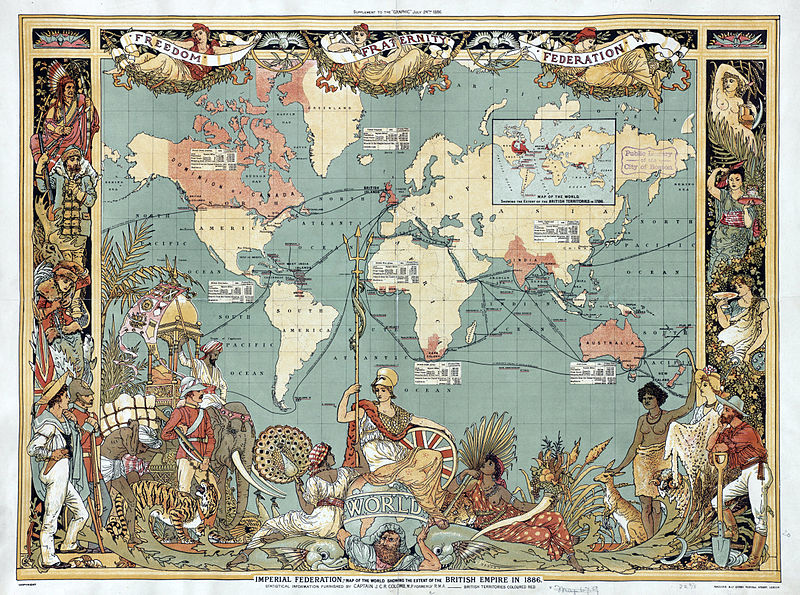
The themes and debate over the merits and horrors of Empire, like the sun on that of the former British, seems never to set.

While not a strict historian, I have spent years reading heavy leather bound tomes telling of dash and heroism which added (subjected?) nations and peoples to the Pax Britannica once shaded a light cartographers pink. Likewise I have stumbled through a goodly proportion of the post colonial, Subaltern, reassessment of Empire that so keenly divides historians. Needless to say, this is not going to be an in-depth analysis of the whole of Empire, just an acknowledgement that the debate still rages long after most, but by no means all, of the troops and administrators have set sail. (If you want a closer analysis of what I call the ‘temples of the mind of Empire’ have a look at chapter five of my thesis, but take a stiff drink beforehand… its supremely boring!) 

The polarisation is remarkable, from, on the one hand the likes of Kwarteng portraying “jolly good fellows [leaving] a great mess wherever they were unleashed on hapless natives,” to Ferguson on the other, who believes that the British empire brought the benefits of democracy and free trade to Asia and Africa, and was no less than the maker of the modern world.

Either way, three new and interesting books have been published this month to add to the pantheon of debate on the subject. They are all reviewed in a brilliant article by Mishra (the author of ‘Temptations of the West: How to be Modern in India, Pakistan, Afghanistan, Tibet and Beyond’) in the Financial Times. While I think that his statement that “The enthusiasm for a new western empire seems a strange hallucination today as Anglo-America lurches from one crisis to another,” and believe it to be short sighted for a historian, the article is well worth a read, and can be found here. And the books are listed below:

Empire: What Ruling the World Did to the British, by Jeremy Paxman.

Britain’s Empire: Resistance, Repression and Revolt, by Richard Gott.

Ghosts of Empire: Britain’s Legacies in the Modern World, by Kwasi Kwarteng.


1 Comment

Filed under Timology

Is this the real life,


Leave a comment

Filed under Photography, Timology

Tahrir Square London

Yesterday I jumped off the tube a stop early to go and take a peek at the ‘mass’ protest outside St Paul’s. I must have looked a touch conspicuous in my dinner suit, striding ardently in the direction of the Bank of England, but everyone was friendly, and no one accused me of being a banker… after all, its half term, so they will all be in Klosters or the Cotswolds

What stuck me about the whole thing is the total number of these anti capitalist crusaders (also know as Occupy London Stock Exchange) was about fifty persons all up. Yes, there are a few tents gaffer taped to the pavement, but this is hardly Glastonbury. Its more, well, Feltnam Brownies Village Fete. That said, their blog is worth a look, as is the ‘Tent University’. Find it here.

For days now the press have been taking about this protest as if it is somehow going to bring the Western economy to its senses, make them appreciate the feelings of the ‘99%’ and start a new world order. What I saw was a bunch of friendly, imaginative, passionate people, with no real sense of purpose or goal, camping outside the mighty cathedral, and pestering the cathedral wardens over where they could charge their mobile phones. Today the BBC have reported that St Paul’s has been forced to close due to the chaos of the protest. Perhaps they have simply run out of plug points?  

Leave a comment

Filed under Timology

Paris ISYT Published today…

Great news! The proceedings of the 2009 Paris ISYT conference have today been published through the Revue d’Etudes Tibétaines (RET). Alice, Nicola, Kalsang and I have been working hard editing and reviewing the papers for the last year, and we are pleased that it has been finally published.

The RET is a twice-yearly scholarly and peer-reviewed journal published by CRCAO of the CNRS, Paris, under the direction of  Dr Jean-Luc Achard.

All contributions to the RET are peer-reviewed and to date twenty-one volumes are available as a free PDF downloads.

My article, Trinkets, Temples, and Treasures: Tibetan Material Culture and the 1904 British Mission to Tibet, can be found by following the link.

We are hoping to be able to publish a hard copy of the volume in India this winter, but those that can’t wait to read the rest of the articles, they can be found here. And dont forget that Kobe 2012 is now taking registrations for the next instalment of the International Seminar of Young Tibetologists!

Leave a comment

Filed under Tibetology

Dear Sir / Madam, I must apologise for my disgraceful behaviour last night…

Sorry, I have been neglecting you again. I have been a bit preoccupied this last week, and on Friday I got blindingly, stupidly, and probably intentionally, drunk. It was fun though. It wrote off Saturday, but has to be done on occasion. (Blab Blab, not condoning excessive drinking etc, taken in moderation, eat more lentils etc etc…) 

As I was drifting home on the bus I tried to catalogue all the apologetic emails and letters I have had to send over the years as a result of liver abuse and the spirited (usually gin based) belief that one last pint will not do anyone any harm. Few were poetic, most were pathetic. But its the ‘having written’ them, as well as the contrition aspect, that is important, not the linguistic gymnastics nor asking to be reminded of the young lady in question’s name. That is unless you lived in Central China in about 856 AD.

The draconian, but inventive local ‘Dunhuang Bureau of Etiquette’ (imagine a cross between your guilty conscience and the Debrett’s) insisted that local mandarins use an official letter template when sending apologies to offended dinner hosts. The guilty party would copy the template text, enter the dinner host’s name, sign the letter and then deliver with head bowed, usually before dashing off to the chemist for some 9th century Seltzers.

If you have never heard of the caves at Dunhuang, then you obviously have never met a Tibetologist. We tend to salivate and wax lyrical about this treasure trove of texts and manuscripts. The first caves were dug out 366 AD as places of Buddhist meditation and worship, but became a depository for all kinds of manuscripts and murals, in all the languages of the Silk Road until they were walled off sometime after the 11th century.

In the early 1900s, a Chinese monk named Wang appointed himself guardian of some of these temples. Wang discovered a walled up area behind one side of a corridor leading to a main cave. Behind the wall was a small cave stuffed with texts dating from 406 to 1002 AD. Wang sold the majority of the texts to Aurel Stein 1907 for £220 pounds, however unbeknownst to Stein he had purchased hundreds of copies of the same text, the Diamond Sutra, because he was unable to read any of the languages they were written in. The final laugh was with Stein (and do read the relevant bits in my thesis about looting, ‘collecting,’ and museum collections) however as one copy turned out to be the earliest known dated, printed text, that now lives in the British Library’s treasure rooms. Much of the collection is now being worked on by the International Dunhuang Project, based in part at the BL.

But, back to the etiquette letter. The following is a translation of the official letter. I suggest you make note of if… such things come in useful! 

Yesterday, having drunk too much, I was intoxicated as to pass all bounds; but none of the rude and coarse language I used was uttered in a conscious state. The next morning, after hearing others speak on the subject, I realised what had happened, whereupon I was overwhelmed with confusion and ready to sink into the earth with shame.

3 Comments

Filed under Tibetology

The Dalai Lama; to reincarnate, or not to reincarnate?

Over the years many of you have asked me my opinion on the Dalai Lama, reincarnation in general, and the process involved in finding a child reincarnation.

Its a difficult subject, and one that I confess I am not a specialist on, nor have strong opinions about. I have known many recognised reincarnations during my career as a Tibetologist, and also as an English teacher in India and Tibet, and I have to confess confusion over the whole subject. Of course to a rational, sensible, scientific mind (and I would never claim to have one!) it makes no logical sense whatsoever. To a romantic, orientalist, spiritually sensitive mind it is perfectly acceptable to believe that the soul / essence of a being can be reincarnated in another form. I am not a Buddhist expert, obviously, but from a political science or anthropological standpoint it is also a flawed process: Reincarnation necessitates a period when the child is located, educated, and brought to power, often known as a Regency. In Tibet the Regent was often the tutor of the young Dalai Lama or other high ranking monk, and they were often reluctant to yield power and authority once the young Dalai came to an age where he could assume power. Indeed there was a succession of Dalai Lamas from the VIIIth to the XIIIth who failed to gain majority, and who were either poisoned / died young for manifold reasons. That said, on meeting such people I have experienced what I can only describe as an immensely strange and unsettling sensation, and generally the more ‘powerful’ the reincarnation, the more ‘odd’ the experience has been. I am sure that like me you will draw your own conclusions, be they spiritual, psychological, delusional, or faithful. As Father Jack would say, “That would be an ecumenical matter!” 
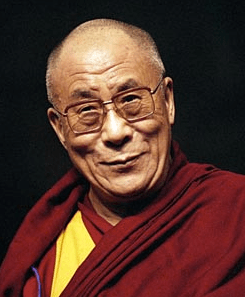
I bring this up as last week the Dalai Lama released a statement on the website of the Tibetan Government in Exile entitled the “Statement of His Holiness the Fourteenth Dalai Lama, Tenzin Gyatso, on the Issue of His Reincarnation.” In it he presents and analyses the history, politics, theory, and practice of reincarnation, before going on to present his thoughts on what will happen once he passes on / leaves his current reincarnation. Its a long statement, and so I have linked it here as a downloadable PDF: Statement of His Holiness the Fourteenth Dalai Lama.

The final section is the most interesting to me. It is here for the first time that the Dalai Lama specifically sets out a defiant message to China, and the world, that there should be no political interference in this process, should it take place. After all it has not been beyond the Chinese Communist Party to issue directives and selections regarding reincarnation, and few should forget the plight of the current XIth Panchen Lama that the Dalai Lama recognised: Following the death of the Xth Panchen, the traditional search committee process involving monks in Tibet was disrupted when the Dalai Lama unilaterally announced his selection of Gedhun Choekyi Nyima. The leadership in China spirited Nyima away to prevent his being taken to India by the Dalai Lama’s supporters and reverted to the Qing Dynasty’s Golden Urn process to select Gyaincain Norbu, who currently fulfills the duties of the Panchen Lama in China. No one has seen Nyima since 1995, shortly after he recognised at only five years old, and the Chinese authorities hold him in an unknown location.
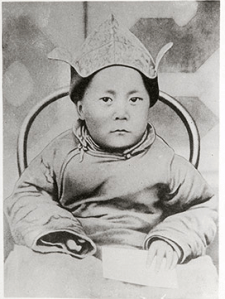
XIV Dalai Lama in 1939

The final section of the statement reads: “When I am about ninety I will consult the high Lamas of the Tibetan Buddhist traditions, the Tibetan public, and other concerned people who follow Tibetan Buddhism, and re-evaluate whether the institution of the Dalai Lama should continue or not. On that basis we will take a decision. If it is decided that the reincarnation of the Dalai Lama should continue and there is a need for the Fifteenth Dalai Lama to be recognized, responsibility for doing so will primarily rest on the concerned officers of the Dalai Lama’s Gaden Phodrang Trust. They should consult the various heads of the Tibetan Buddhist traditions and the reliable oath-bound Dharma Protectors who are linked inseparably to the lineage of the Dalai Lamas. They should seek advice and direction from these concerned beings and carry out the procedures of search and recognition in accordance with past tradition. I shall leave clear written instructions about this. Bear in mind that, apart from the reincarnation recognized through such legitimate methods, no recognition or acceptance should be given to a candidate chosen for political ends by anyone, including those in the People’s Republic of China.

1 Comment

Filed under Tibetology

Dot Com. Dot Done.

… so beware interword… I am now an official dot com interactive downloadable googleable cyber megahub of random information and fascinating nonsense. So watch out William Gates and Mark Suckerbug or whatever you are called. timmyatt.com is the new kid on the block. And this block ‘aint big enough for all of us. You have been warned… pack your cyber satchels and iApp off!

timmyatt


dot com

dot com

Leave a comment

Filed under Timology

Half Man, Half Marathon

My friend Cressida told me recently that this month was the 2500 year anniversary of the Battle of Marathon. And she should know; she is an outreach officer for Classics here in Oxford. It seemed ‘auspicious’ that this weekend I completed my first ever half marathon at Blenheim Palace to raise money for the British Heart Foundation.

There is much debate about the actual history of the marathon… ledged, or at least Herodotus (the ancient historian, not the toy horse) wrote the history of the Persian Wars in his Histories, composed about 440 BC, telling of an Athenian herald named Pheidippides who was sent to Sparta to request help when the Persians landed at Marathon. He ran 150 miles in two days, and then ran the 25 miles from the battlefield near Marathon to Athens to announce the Greek victory over Persia in the Battle of Marathon with the word “Νενικήκαμεν,” or “We have won” and collapsed and died from exhaustion. I think I know how he felt… Mine was obviously only a half marathon, but I was half dead by the end of it.

I really do appreciate all the support and sponsorship from so many people. Thank you all… you are really kind. I have succeeded in raising a little over £300 for the BHF thanks entirely to your generosity. I ran most of the course with my friend Paddy, and we both came in around the 2:08 mark… I was pleased with this, it being our first attempt! But Silk (of the Gardener’s Arms fame) managed it in just short of 1:30 … a truly Olympic performance. Over 3,000 runners took part in the day’s events up at Blenheim in 28-degree heat and together raised over £100,000! The Palace and its spectacular grounds were the perfect venue for the run, but to be honest I was not too interested in the spectacular course… just getting round. Now that I know that I can do it, I may do another one, but not till I can move my legs again!

You can get all the info you need about the British Heart Foundation and the good work they get up to here.

And if you somehow missed the opportunity to sponsor me (and you can for another three months!) please do get involved by following this link.

Heartfelt thanks for all your support!

Leave a comment

Filed under Timology