

Barmy for Bandstands
I know I am a bit geeky, but I love a good bandstand. Yep. Bandstands. (For once, not a typo!)
For me they epitomise those high minded Victorians who decided that it was in the public good to not only have an antidote to the dark satanic mills and grime of the suburban sprawl in the form of public parks and green spaces, but that they should obviously feature a heavily ornamented, cast iron focal point, under which the band should, quite literally, play on. Play on through the inevitable summer downpour, but also through the gradual decline of their own high mindedness and sense of place in the world. They are glorious features in and of themselves, but represent so much more. Tibetans had chortens; Victorians had bandstands.

The Birdcage, Brighton
The first bandstands were were built in the Royal Horticultural Society Gardens 1861. Like most things Victorian and elegant they therefore took their rise in South Kensington before eventually congregating on the South Coast. From their inception they quickly spread to almost every British town and city, and were popular places to meet and listen to music… a sort of semi official public performance space. The wars were not kind to them however, and while Britain listened to the wireless in the dugout rather than open spaces (for good reason), the iron railing and ornate castings were melted to make weapons and artillery.
Between 1979 and 2001, more than half of the 438 bandstands in historic parks across the country were demolished, vandalised, or in a chronic state of disuse. It is therefore not surprising that most people my age see them as faded, dated, folly. In the late 1990s the Heritage Lottery Fund invested a substantial sum in the restoration and rebuilding of bandstands across the country, and one such example graces the Brighton sea front (see above). Known as The Birdcage, I was lucky enough to poke about it last weekend, while my poor family looked on somewhat bemused.
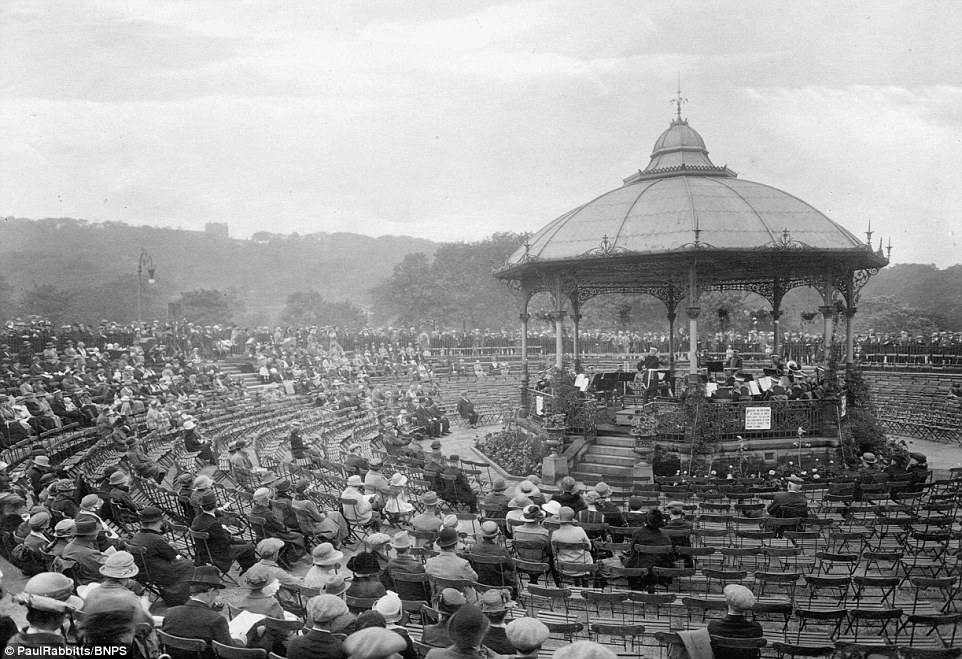
The bandstand in Corporation Park, Blackburn. Note ubiquitous overcoats and hats!
Eastbourne also boasts (quietly) of another example, and they even use it for gigs and concerts!

PS, and this one just in from my parents, in Hyde Park! (Feb 2017)

Filed under Timology

Guess Who Friday
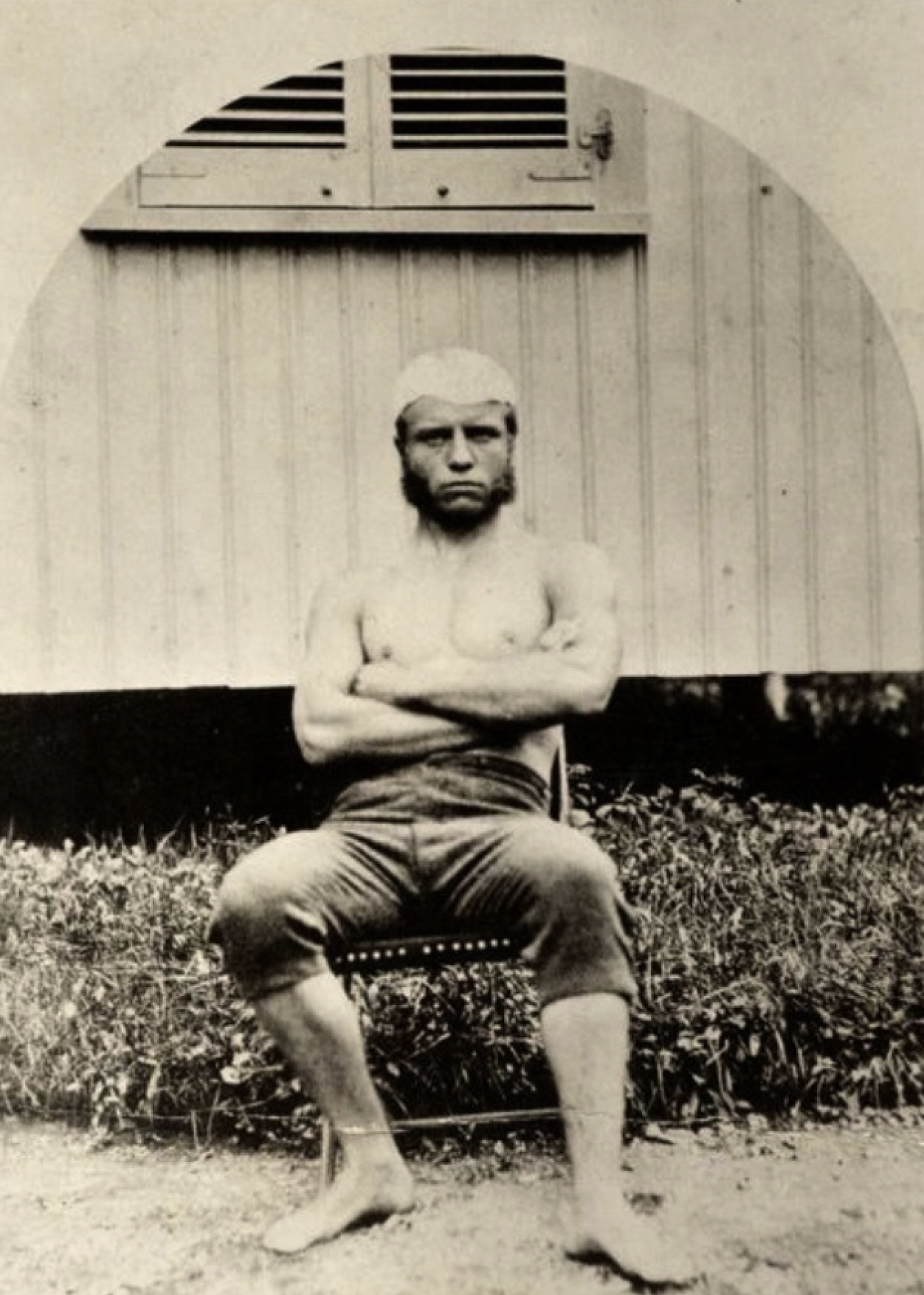
It’s been a while since our last round of the marginally popular ‘Guess Who Friday’… so, given our current visitors from across the pond, who is this?
Filed under Timology

Gladstone at the Union
“To call a man a characteristically Oxford man is, in my opinion, to give him the highest compliment that can be paid to any human being. I fear I do not and cannot accept such a compliment. But one part of it I will accept, and it is this, that, apart from every subject of controversy, there is not a man that has passed through this great and famous University that can say with more truth than I can say, ‘I love her from the bottom of my heart’.”
Mr Gladstone at the Union, February 1890.

Filed under Oxford: The Perspiring Dream
Who owns your street? Searchable map of properties owned by offshore companies
What with all the recent revelations to come out of the Panamanian Mossack Fonseca data leak, and the plight of the troubled British steel industry, there is currently a lot of attention being focused on exactly how much of GB PLC is owned and registered abroad.
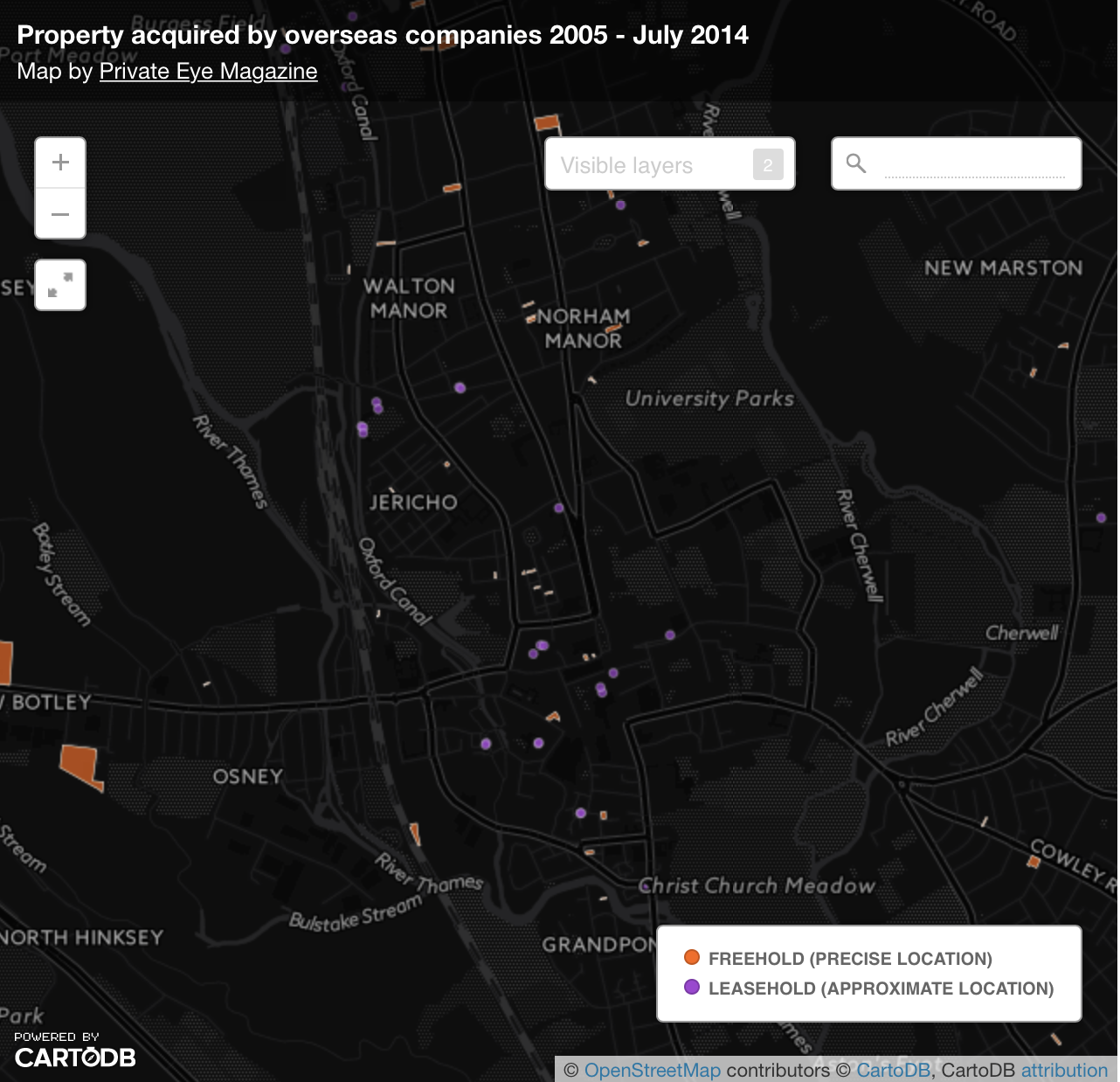
Those cunning and clever people at Private Eye (pick up a copy at all good newsagents) have created a searchable map of properties in England and Wales owned by offshore companies. Using Land Registry data released under Freedom of Information laws, and then linking around 100,000 land title register entries to specific addresses, the Eye has mapped all leasehold and freehold interests acquired by offshore companies between 1999 and 2014.
There is an 8MB database available, but the real joy comes from the searchable map… while London is awash with foreign registrations, Oxford escapes only lightly. I was interested to discover that of the seven flats in the converted pub I live in, two are owned by the Jersey based Eurocomm Holdings. They also seem to hold a number of other houses and flats in Oxford and beyond! Have a look a see who owns what near you using this link.
Filed under Oxford: The Perspiring Dream, Technology, Timology

What if an all-electric vehicle was bespoke, hand crafted, and exhilarating to drive?
Both of you that follow this blog will know that I am a fan of those ‘hand made little green racers from Malvern.’ I refer of course to the Morgan Car Company and the frankly dazzling machines they (very slowly and carefully) craft.
Last week the Morgan EV3 made its world debut at the 2016 Geneva Motor Show. Morgan have essentially asked “what if an all-electric vehicle was bespoke, hand crafted, and exhilarating to drive?” What if indeed!? I have had the pleasure of driving a couple of electric vehicles over the years. While the recent Tesla Model S was certainly luxurious and had incredible acceleration, it was a little like driving an electric canal barge round the back streets of Oxford. I enjoyed my migrations in the hybrid Prius, but could never have described them as ‘exhilarating.’
The EV3 is Morgan’s first electric vehicle, and production is due to start in Q4 of this year. Their website claims that pricing and performance figures will be comparable to their petrol 3 wheeler. (And what a glorious statement that is… I wonder who else currently manufactures a 3 wheeler.) It is hoped it will have an operational range of 150 miles, which is just enough to pop to London and back.
 This year also marks 80 years of the longest running production car in the world. Of course, it is also a Morgan, and to celebrate Morgan have announced a limited edition 80th anniversary 4/4. The Morgan 4/4 was first launched in 1936 at exhibitions in London and Paris, and if those clever chaps came up with this design 80 years ago, just imagine what they might conjure in 80 years hence.

Filed under Technology, Timology
Oxford Bags.
Thirty years ago no man was ever seen in the streets of Oxford after lunch without being dressed as he would have been in Pall Mall. Tail coats were sometimes worn in those days in the morning, and the fast men still wore cutaways. But the correct thing for the quite gentlemanly undergraduate was black frock-coat, and tall hat, with the neatest of gloves and boots, and in this costume he went out for his country walk, the admired of all beholders, as he passed through Hinksey or Headington. In the same dress he usually went into hall, and appeared at wine-parties. Now, I believe, shooting-jackets of all patterns…have taken the place of this decorous garb in which every one looked well.
T.E. Kebbel, the National Review of June 1887
Filed under Oxford: The Perspiring Dream, Timology
 Tim Myatt