Super Exhibition Saturday: Ice & Diamonds

All you London based culture vultures might want to check out two interesting exhibitions in our fair capital over the next month or so.

The first is called ‘Enduring Eye: The Antarctic Legacy of Sir Ernest Shackleton and Frank Hurley‘ at the Royal Geographic Society. The Enduring Eye exhibition will open to the public on Saturday 21 November, exactly 100 years to the day that the crushed Endurance sank beneath the sea ice of the Weddell Sea, and run until 28 February 2016.

The RGS website describes how, as one of the first truly modern documentary photographers and film-makers, Australian born Hurley hoped to have his images seen at as large scale size as possible. 100 years later, this intention will be honoured with giant dimension prints, some over 2 metres in width and height, at the heart of the exhibition, providing viewers with a sense of awe and wonder.

In addition to the newly digitised images, the exhibition will include a number of ‘precious survivors’ – personal artefacts that were carried through every stage of the successive journeys for survival from the Weddell Sea to Elephant Island and onto South Georgia.

The second collection of objects of wonder can be found in The Victoria and Albert Museum’s ‘Bejewelled Treasures‘ exhibition, which also opens to the public on Saturday.

More than 100 objects owned by Sheikh Hamad Bin Abdullah Al Thani, a member of the Qatari royal family, have been loaned to the V&A for the show, which explores 400 years of Indian jewellery. It is being exhibited as part of the museum’s India festival.

As well as the objects from the Al Thani collection, our Queen has lent three pieces from the crown jewels including the spectacular “Timur ruby”. This ‘ruby’ is a source of much intrigue since it was never actually owned by Timur and is not even a ruby. (It is in fact a very large, 352-carat spinel, a type of red stone found in Badakhshan.)  The spinel was owned by Jahangir in the 17th century, and in 1851 it was given to Queen Victoria after the British annexed the Punjab. It seems a trifle odd to me to have your country ‘annexed’ only to then send a whacking great jewel to your new Empress, but it’s a nice touch.

frank-hurley-antarctica-carved-cave-sea

Screen Shot 2015-11-19 at 17.36.10

Leave a comment

Filed under Oxford: The Perspiring Dream, Photography, Timology

Maison de la Photographie in Marrakech

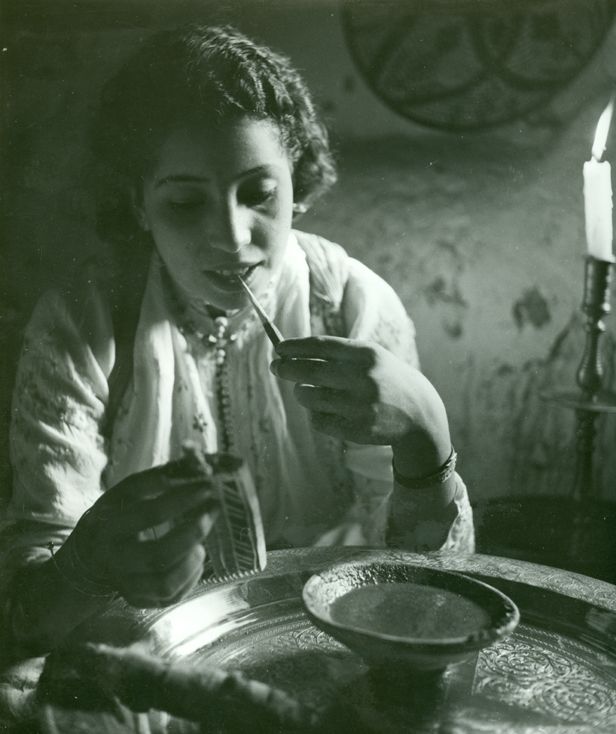
The ever wonderful Maison de la Photographie in Marrakech sends out a monthly photo if you sign up to receive emails their collection. I hope they will not mind me sharing this month’s image with you all, as I think it’s exceptionally beautiful.

The Maison de la Photographie is a wonderful quiet venue to admire their impressive collection of photographs of the 20s-60’s. Enlarged images bring the history to life, and many of the scenes depicted can be found in ‘real life’ just outside the walls.

If you are keen, you can find out more here, and also sign up for next month’s image:

Pierre Boucher, Femme se maquillant, Tirage aux sels d'argent, 1936 (Woman and her make-up, Silver print, 1936)

Pierre Boucher, (Woman and her make-up, Silver print, 1936.)

Leave a comment

Filed under Photography, Timology

Because it’s there…

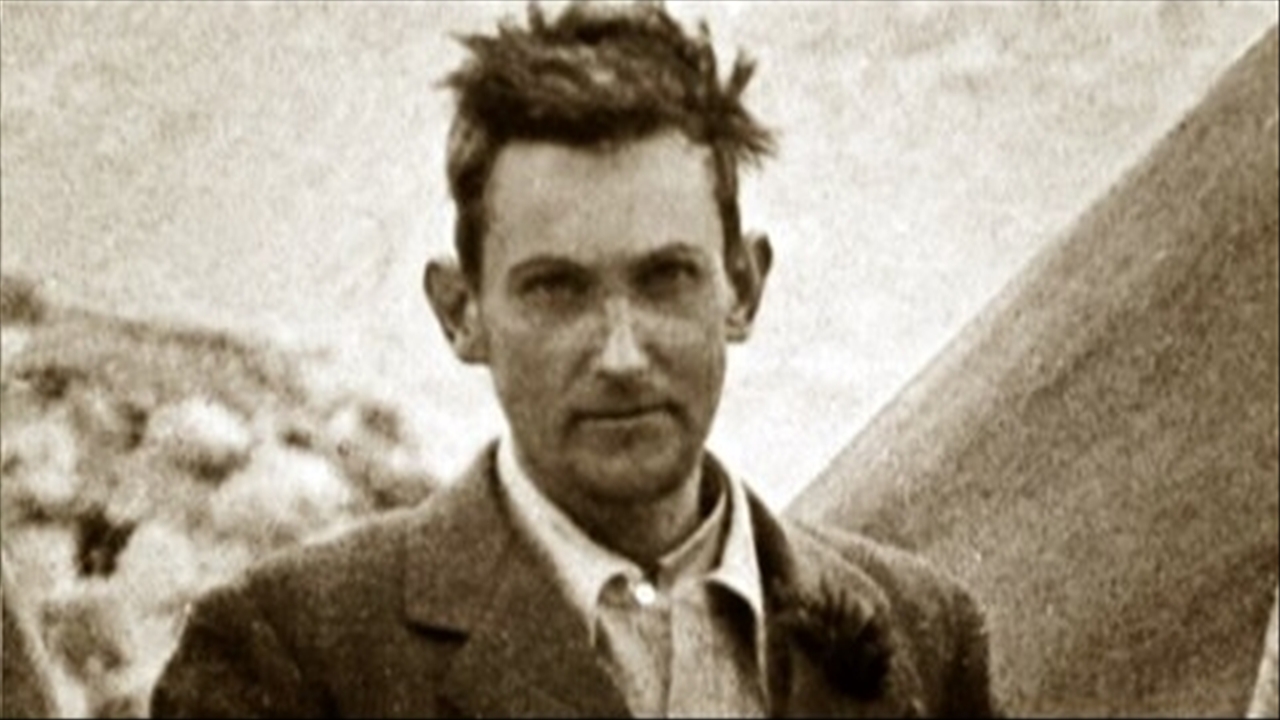
“The first question which you will ask and which I must try to answer is this, ‘What is the use of climbing Mount Everest?’ and my answer must at once be, ‘It is no use.’ There is not the slightest prospect of any gain whatsoever. Oh, we may learn a little about the behaviour of the human body at high altitudes, and possibly medical men may turn our observation to some account for the purposes of aviation. But otherwise nothing will come of it. We shall not bring back a single bit of gold or silver, not a gem, nor any coal or iron. We shall not find a single foot of earth that can be planted with crops to raise food. It’s no use. So, if you cannot understand that there is something in man which responds to the challenge of this mountain and goes out to meet it, that the struggle is the struggle of life itself upward and forever upward, then you won’t see why we go. What we get from this adventure is just sheer joy. And joy is, after all, the end of life. We do not live to eat and make money. We eat and make money to be able to enjoy life. That is what life means and what life is for.”

Mallory

Leave a comment

Filed under Tibetology, Timology

Meet Murgatroyd

I don’t think you have all met Murgatroyd before? She has been with Becky and I for a couple of years now, and we love her very much. Please don’t ask me “Why Murgatroyd?”; it’s just her name, and she likes it.

She is a late 1998 midnight blue Mazda MX5, Mk II.

IMG_5924

When my old car decided to ‘retire’ and enjoy life as a sea container in the South China Seas, I knew I had an opportunity to buy a sports car, and that opportunity would only potentially come round twice in my lifetime, inshallah, and not again ’till the kids have let uni, and I have more grey hairs and bigger paunch. However I don’t exactly have a ‘sports car compatible wallet’… it’s not that it does not fit in the glove box, but that they tend to be quite expensive. Becky was initially skeptical of a car you have to lie on the floor to drive, does not have enough space for her Imelda Marcos memorial shoe collection, and in the wet corners like a giraffe on ice-skates, however I persuaded her to have a test drive. We both instantly fell in love with her, and have enormously enjoyed racing round Britain and beyond with the wind in our hair, and one eye on the rainclouds. While she has a hard top that lives in the garage, that’s not the point, and Murgatroyd gets grumpy every winter when she has to put it on.

For those of you who snigger and say things like “no hairdressing products are kept in this car overnight” you don’t know what you are missing! When new she did 0-60mph in 7.7 seconds, topped out at 127 mph, and packed 140 bhp, and has not lost much of her sprightliness thanks to decent care of her original 1.8 litre beating heart. She was made for Cotswold lanes, Indian summer evenings, and zooming about The Shire, but not for the weekly shop, IKEA flatpack, nor motorways in the rain. Which is fine by me.

But she now has a bigger sister on the market. Mazda have released the all new MX5 Mk4, and what a beast it is. A new one might set you back £18k, but it does 47 mpg, rather than the merger 33 I can (just) get out of Murgatoryd. It is marginally slower, doing 0-62 in 8.3 seconds, but only slightly heavier, and comes spec’ed up to the nines with all sorts of electronic jiggery pokery. I think it’s a shame to lose the distinctive long nose, but love the slightly angry looking front, however, I don’t think I will trade our Murgatroyd just yet.

mazda MK5 Mk 4MX5

Leave a comment

Filed under Technology, Timology

Periodic Table of Gin

Those wonderful people at the London Gin Club have have created the world’s first Periodic table of Gin.

You may recall my adventures with the Periodic table, with both my former supervisor’s reworking of the table, and also an interesting link to St Giles’ Church and the University Museum of the History of Science by way of the life of Henry Moseley. However this is something quite different; detailing over 100 gins, their style, ABV and botanicals.

Gin Periodic Table

You can find out more about the London Gin Club here, and you can buy one of their tables here.

Leave a comment

Filed under Timology

The Perspiring Dream…

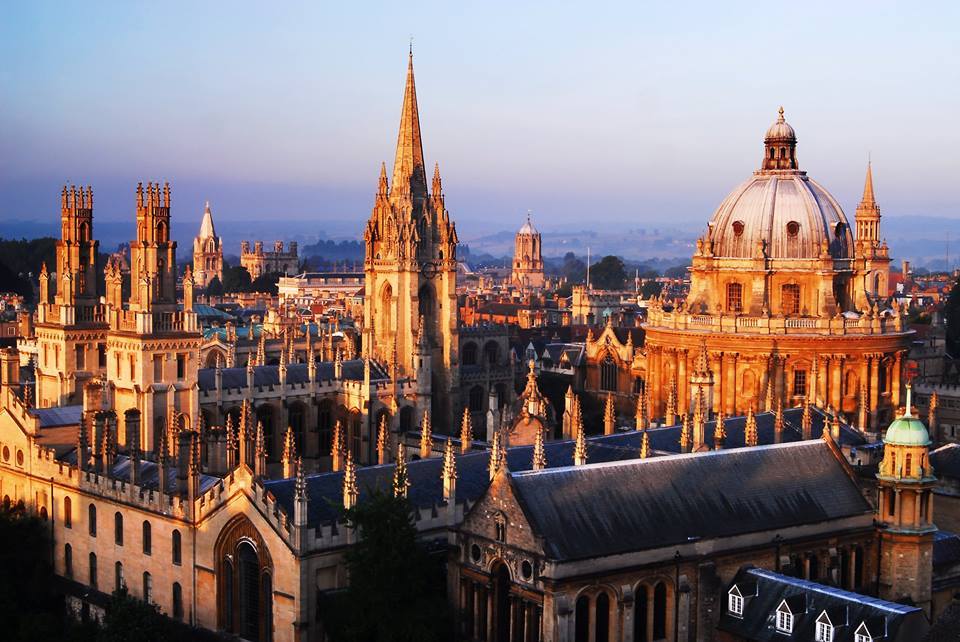
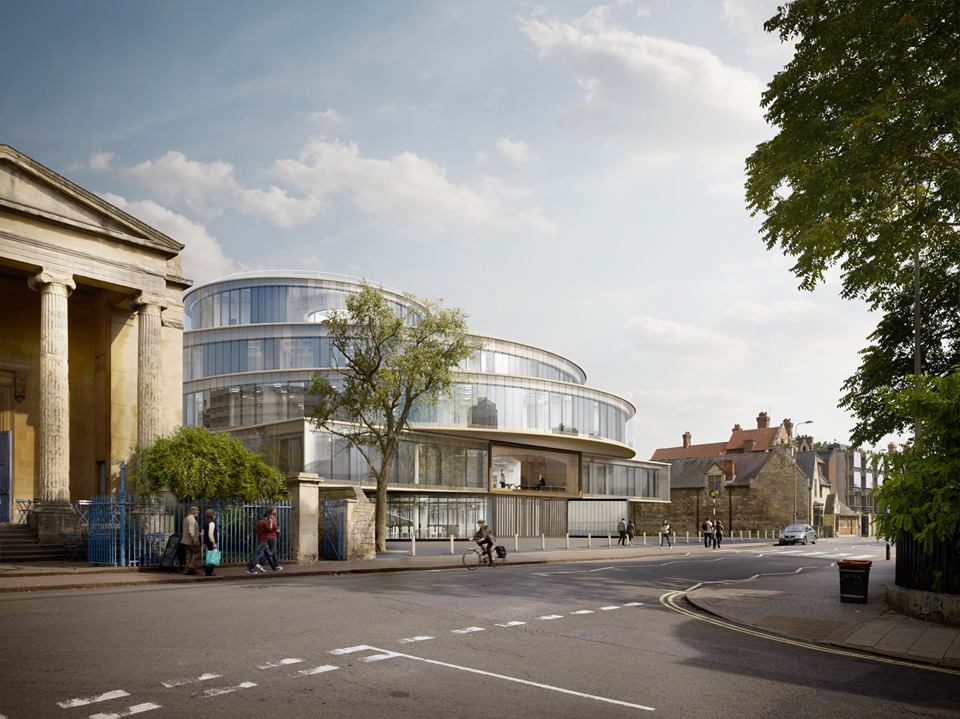
Sometimes I would love to know what goes through the minds of Oxford University’s administrators… and indeed the City Planning Department. I imagine it’s something like this: “I know, we have been building staggeringly beautiful buildings for nigh on a thousand years; let’s have a spate of really ugly ones, just for a change? After all the 1960’s produced some beauties didn’t they?Old Oxford New Oxford

1 Comment

Filed under Oxford: The Perspiring Dream, Timology

A Right Royal Mess: The Greek Debt Crisis

Greek Debt

Leave a comment

July 10, 2015 · 11:38 am

The Sound of the Charge of the Light Brigade

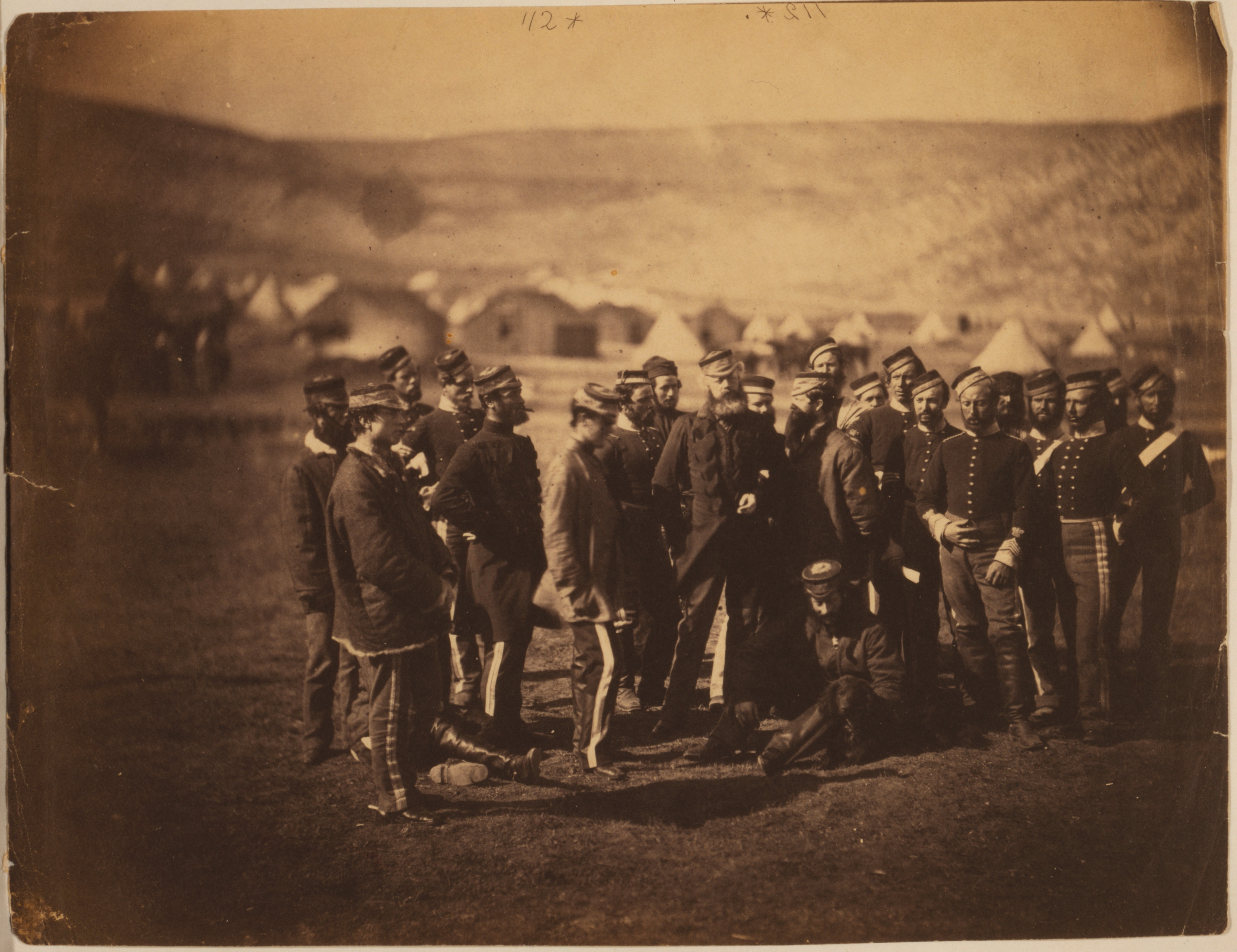
Ever wondered what the bugle call would have sounded like during a cavalry charge? (It turns out, this is the place to find out!)

Extraordinarily one of the survivors of the Charge of the Light Brigade, Trumpeter Landfrey, from the 17th Lancers, later made a recording on an Edison cylinder. And its a very special recording; Trumpeter Landfrey sounded the bugle charge at Balaclava in 1854, but the recording (made in August 1890) was made with a bugle which had been used at Waterloo in 1815. You can listen to him, and the recording below. I think it would make a great ringtone or alarm clock!

Fenton13ltdragoons

The photograph shows the Officers and men of the 13th Light Dragoons, survivors of the charge, photographed by Roger Fenton shortly after the battle.

2 Comments

Filed under Timology

The Petrie Museum’s mummy portraits

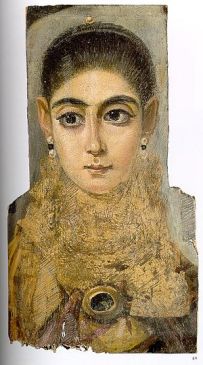
I have only just trembled up on the fabulous Petrie Museum. Like the Pitt Rivers in Oxford, the Petrie Museum is a university museum, and was set up as a teaching resource for the Department of Egyptian Archaeology and Philology at University College London. I am yet to visit but it is rammed full of interesting artefacts from Egypt and Sudan, over 80,000 objects in total! Amelia Edwards donated her collection of several hundred Egyptian antiquities, many of historical importance. However, the collection grew to international stature in scope and scale thanks mainly to the extraordinary excavating career of the first Edwards Professor, William Flinders Petrie (1853-1942) Petrie excavated literally dozens of major sites in the course of his career, including the Roman Period cemeteries at Hawara, famous for the beautiful mummy portraits in classical Roman style; Amarna, the city of king Akhenaten, sometimes called the first king to believe in one God; and the first true pyramid, at Meydum, where he uncovered some of the earliest evidence for mummification. The collection contains outstanding works of art from Akhenaten’s city at Amarna: colourful tiles, carvings and frescoes, and from many other important Egyptian and Nubian settlements and burial sites. The museum houses the world’s largest collection of Roman period mummy portraits (first to second centuries AD). These painted panels illustrate the application of Greco-Roman art to Egyptian burial customs at the beginning of the first millennium. They appear to be naturalistic in style and be a portrait of an individual, while acting as part of the funerary equipment needed for  entry into the afterlife. The panels would have covered the face of a mummy but most have been cut out of their wrappings and are displayed separately from the physical context in which they were found. When Petrie first exhibited these panels in London in 1889, he framed many like a European art work. I remember seeing something similar recently in India at the Albert Hall Museum in Jaipur, and they are magnificent reminders and depictions of real people… capturing them before mummification preserved them.

Not all panels were removed from their wrappings or mummies. The British Museum and Manchester Museum, for example, display mummies which still have these panels over their face. I am off to have a routle about in the museum as soon as I can get to London! You can come too, and find out more here. I will pop some photos of their collection up once I have been, but here is the sort of thing I hope to find!

Left, Fayum mummy portrait from the late 1st century CE. Walters Art Museum, Baltimore. Right, Mummy portrait of a young woman, 3rd century, The Louvre, Paris.

300px-Fayum-34

220px-Egyptian_-_Mummy_Portrait_of_a_Man_-_Walters_323

1 Comment

Filed under Timology

Bee Happy

HoneyBee

Leave a comment

June 17, 2015 · 11:35 am