Category Archives: Timology

The Ball of the Century

QEII So while the Royalists amongst you will be celebrating the 60th anniversary of the glorious coronation of Queen Elisabeth II, and the limitless opportunities for commemorative pottery that seem to accompany such milestones, few of you will have noticed the anniversary of a much more seismic event from the high octane world of leg spin bowling; yes, today is the 20th anniversary of “The Ball of the Century.”

For those of you who don’t know what I am talking about (but have persevered read this far, having realised that this is a post about cricket) it was the first ball delivered by Australia’s Shane Warne in his first Ashes Test in England. England had won the toss and put the tourists into bat… they amassed a modest 289, before it was our turn to have a waft of the willow. Atherton scored 71 before falling to Merv Hughes’s moustache, heralding the arrival of Mike Gatting to the crease. Gatting was never a ‘lightweight player,’ and was regarded as one of the finest players of spin in the world. He probably still is for that matter… but the delivery he received first ball was quite simply the best ball ever bowled in Test Match cricket. You can see it here.

The inexperienced Warne lolloped in (he was also ‘built for comfort, rather than speed’) and rolled a leg break delivery to the right hander… it seemed strait enough at first and the batsman prepares his stroke, the ball then drifted towards Gatting’s leg stump, pitching several inches outside the line… Gatting deploys the time honoured ‘Bat and Pad’ defence, but the ball rips out of the hallowed turf of Old Trafford and clears the outside edge of Gats’s bat by a country mile clipping off his off stump

bail. It’s hard to describe to a non-cricketer (and especially as a bad cricketer) but it was the turn achieved by Warne that befuddled commentators, Gatting, and frankly, English batting sides to come for almost a generation. The look on Gatting’s face is priceless (as is the Queen’s for that matter):

Ball of the century.

The ball became a source of myth, and also prompted some of the best loved cricketing commentary.

The much missed Brian (thanks NM!) Johnson (whom the eagle eyes of you might have spotted in a recent ‘Guess Who Friday’) said “how anyone can spin a ball the width of Gatting boggles the mind.

The England captain at the time Graham Gooch added, “If it had been a cheese roll, it would never have got past him.” Harsh, but fair.

1 Comment

Filed under Timology

Guess Who Friday

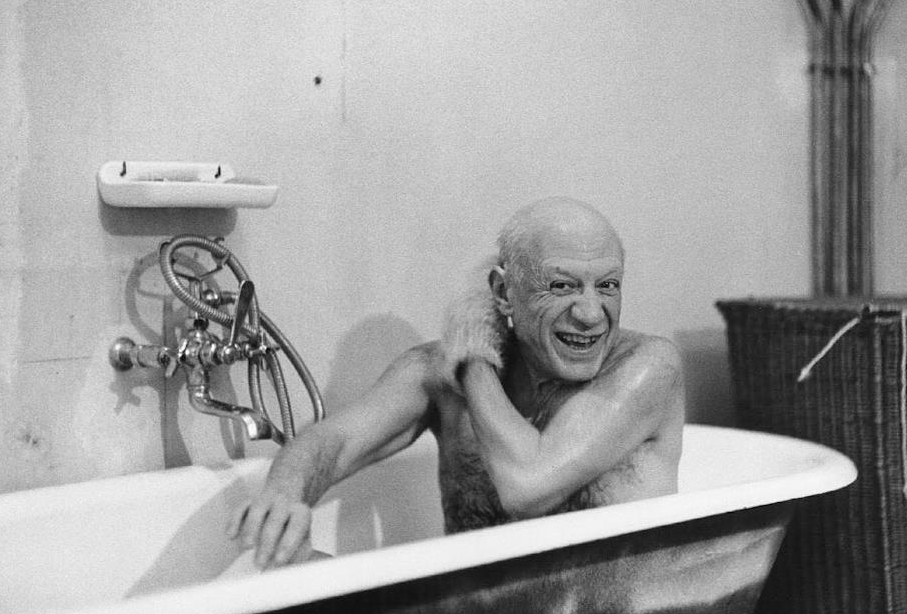
A classic here for you… answers on a postcard (or email me) with your guesses as to who is enjoying their bath time!

bath

Leave a comment

Filed under Timology

Massive Bores

Not exactly major news, but interesting (ish…) none the less… Crossrail has completed a milestone in the construction of one of the world’s largest man-made caverns at Stepney Green. Workers are today marking four years since the start of construction, and hopefully, trains will run through the cavern between central and east London from 2018.

cross rail

Incidentally, Crossrail is inviting suggestions of ‘modern day heroes’ as part of our competition to name the final two tunnelling machines that will be used to build the new rail tunnels beneath London. A total of eight Tunnel Boring Machines (TBMs) will be used to build 26 miles (42km) of tunnels beneath London to form the central section of the Crossrail route. So do contact them here if you know any massive bores…

Leave a comment

Filed under Timology

Space Oddity and Space Odyssey

Having been following Chris Hadfield tweets and posts from the International Space Station for some time I can confirm that he is a complete legend. His Q&A sessions about life in space are fantastic, and have been widely distributed, and he has a regular spot on Canadian radio. This latest offering has just sent him even higher (if that is possible) in my estimation.

Commander Hadfield recorded David Bowie’s Space Oddity (with some minor tweaks) inside the ISS … the footage is amazing.

(Prediction alert:) This is going to be huge.

Leave a comment

Filed under Technology, Timology

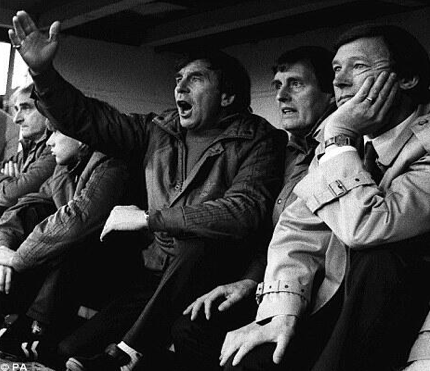
Sir Alex Ferguson’s Manchester United lose to Oxford United

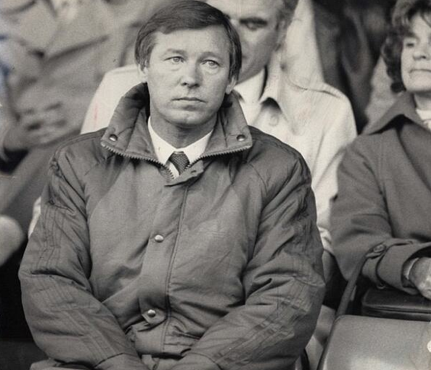
On the day Sir Alex Ferguson finally announces his retirement (after collecting a modest 38 trophies during his reign at Old Trafford) I thought I would share this little gem with you.

Sir Alex Ferguson

This is Alex Ferguson in his first away game as manager at Manchester United.

What you might not guess was that Manchester United lost 2-0 to the might of Oxford United at the old Manor Ground! How things have changed!

Alex Ferguson Oxford United

Leave a comment

Filed under Oxford: The Perspiring Dream, Timology

The Road to Oxiana and Sheikh Lotfollah Mosque

I just love this photograph of the dome of the Sheikh Lotfollah Mosque in Isfahan, Iran. It was taken by Hamzeh Karbasi, and the chap standing on the edge gives a perfect scale to the majestic dome. I have been wanting to travel to Iran for years, having been smitten by Robert Byron’s Road to Oxiana. If you have not read this book, go now to the nearest bookshop and buy a copy. Take my car. Do it Now. (Or if you must then click here to find it online.) I guarantee you will not be disappointed; OK it’s not exactly Fifty Shades, being a travel account of Persia, Mesopotamia, and Afghanistan in the 1930’s, but it is widely recognised as the greatest of all pre-war travel books. As Paul Fussell neatly put it in Abroad, “What Ulysses is to the novel between the wars, and what The Waste Land is to poetry, The Road to Oxiana is to the travel book.”

Dome of Sheikh Lotfollah Mosque

Sheikh Lutfollah Mosque (مسجد شیخ لطف الله) is one of the architectural masterpieces of Safavid Iranian architecture, standing on the eastern side of Naghsh-i Jahan Square, Isfahan. Construction of the mosque started in 1603 and was finished in 1618. It was built by the chief architect Shaykh Bahai, during the reign of Shah Abbas I of the Safavid dynasty.

Shah Abbas dedicated the mosque to his father-in-law, Sheikh Lotfollah, a prominent religious scholar and teacher who came to Isfahan at the orders of Shah ‘Abbas, and resided on the site. This beautifully proportioned and decorated mosque, with arguably (I am told… I am no expert!) the best mosaics from that era, took nearly 20 years to complete. The pale tiles of the dome change colour, from cream through to pink, depending on the light conditions. The mosque is unusual because it has no minaret or courtyard as it was intended as a private mosque of the royal court, and therefore needed no call to prayer.

The interior of the dome is simply stunning. One of the unique characteristics of the mosque is the peacock at the center of its dome. It is said that if you stand at the entrance gate of the inner hall and look at the center of the dome, a peacock’s tail is formed by the sunrays coming in from the hole in the ceiling.

Byron has been described as a writer of breathtaking prose – “prose whose sensuous, chiselled beauty has cast its spell on English travel writing ever since.” At his best Byron had a remarkable ability to evoke place, to bring to life a whole world in a single unexpected image, to pull a perfect sentence out of the air with the ease of a child netting a butterfly. The perfection and visual precision of the writing in Oxiana, combined with its wit, its farcical playlets, its intriguing scholarly essays and its fierce passion for its subject – a search for the Central Asian roots of Islamic architecture – make the book a timeless classic. I can’t recommend it enough.

Of the interior if the dome Byron wrote “I know of no finer example of the Persian Islamic genius than the interior of the dome: The dome is inset with a network of lemon-shaped compartments, which decrease in size as they ascend towards the formalised peacock at the apex… The mihrāb in the west wall is enamelled with tiny flowers on a deep blue meadow. Each part of the design, each plane, each repetition, each separate branch or blossom has its own sombre beauty. But the beauty of the whole comes as you move. Again, the highlights are broken by the play of glazed and unglazed surfaces; so that with every step they rearrange themselves in countless shining patterns… I have never encountered splendour of this kind before.”

Sheikh Lotfallah Mosque

2 Comments

Filed under Photography, Timology

Photographing the Raj

Such is the hegemony of the BBC that this week it has unwittingly taken down the website of a fascinating collection of photographs of the British Raj. Not the most important news story in a week that has seen breaking global news, but Auntie takes pride in adding ‘magazine’ pieces to their homepage: One of the best regular features is that ‘In Pictures’ section that tells the days news using images from across the globe.

This week it featured some awesome photographs from Lala Deen Dayal also known as Raja Dayal, who in 1894 became the official court photographer to the 6th Nizam of Hyderabad, Mahbub Ali Khan, Asif Jah VI. So many avid BBC readers clicked through to the website that hosts his original images that it has been down ever since the piece was published.

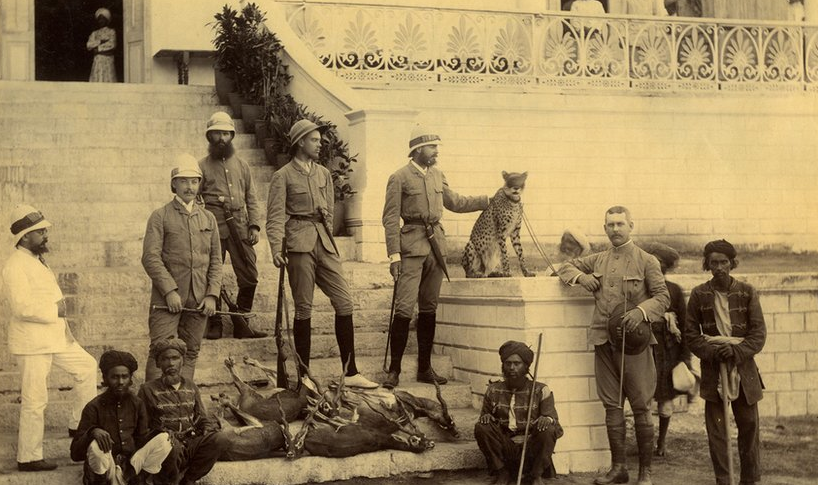
His photographs are unique and stunning. They often showcase important architectural and artistic triumphs and capture the scene so elegantly. However it is the photographs of the people that are most fascinating. For example, in this picture the Grand Duke Alexander of Russia and companions after a cheetah hunt in March 1891.

Grand Duke Alexander of Russia and companions after a cheetah hunt in March 1891

Dayal began his career in the mid-1870s as a commissioned photographer; eventually he set up studios in Indore, Mumbai, and Hyderabad, and employed over 50 photographers. In addition to his Royal appointments he was given commissions by many sections of the Raj, and was appointed photographer to the Viceroy in 1885. It was at this time that Dayal created the firm Raja Deen Dayal & Sons in Hyderabad.

Dayal was given the great honour of being appointed photographer to Queen Victoria in 1887, and in 1905-1906 accompanied the Royal Tour of the Prince and Princess of Wales.

He died in Bombay in 1905. After his death his family continued the studios with the seventh Nizam in Hyderabad, where his fourth generation descendants run the studio.

When the hype has died down you can visit the website here, but in the meantime, the BBC story is here.

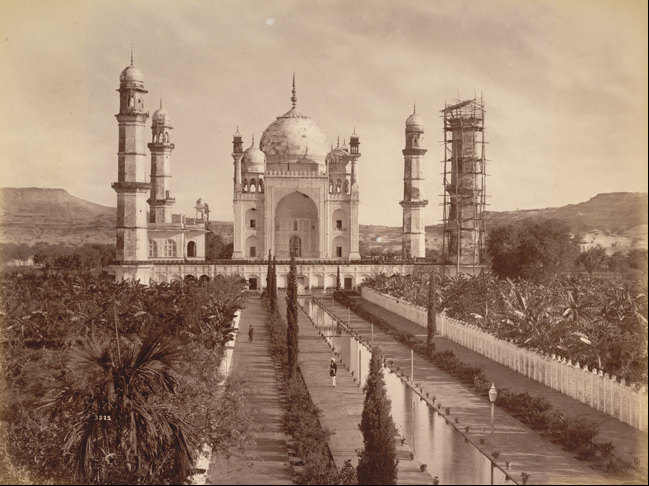
Bibi ka Makbara, which bears a striking similarity to the Taj Mahal is a alrge maqbara located in Maharastra. It was commissioned by the Mughal Emperor Aurangzeb in the late 17th century in the memory of his first wife, Dilras Banu Begum

Bibi ka Makbara, which bears a striking similarity to the Taj Mahal is a alrge maqbara located in Maharastra. It was commissioned by the Mughal Emperor Aurangzeb in the late 17th century in the memory of his first wife, Dilras Banu Begum

Leave a comment

Filed under Photography, Timology

What if the stars came out only once every 1000 years?

“Ralph Waldo Emerson once asked what we would do if the stars only came out once every thousand years…

No one would sleep that night, of course.

The world would create new religions overnight.

We would be ecstatic, delirious, made rapturous by the glory of God.

Instead, the stars come out every night and we watch television.”

~ Paul Hawken, environmentalist and journalistDeep space

Leave a comment

Filed under Photography, Timology

Ornamentalism: Full Metal Jackets

This photo of North Korea’s top brass has been doing the rounds this week.North Korea Medals on Generals

One thing is for sure, the Generals certainly have a lot of brass… (and tin, and enamel!) It made we wonder where on earth they got their medals from? Given that North Korea has really only fought one war in the last 50 years, and that did not exactly end well for them, then where do all the medals come from… well… North Korea is not alone in dishing out military bling. General Patraeus

This stock photo of the US General Patraeus also gets a mention at the International Tat Awards (I am in no way suggesting that medals and honours awarded for bravery, long-service, valour, gallantry, etc should in any way be ridiculed nor diminished… that’s not my point!)

But there is a nation even better at issuing military bling… one almost overpowered by Shiny Syndrome…one who took the handing out of gongs, ribbons, medals, badges, epaulettes, colarettes, aiguillettes, stars, and baubles… The British of course. This photo of our present Lord High Admiral proves the point:

Philip. Lord High Admiral

As part of a process know as Ornamentalism the British showered the leading lights of their Empire with more and more of this paraphernalia… often to absurdium.

I can thoroughly recommend a book, Ornamentalism: How the British Saw Their Empire, by David Cannadine about the topic. Somewhat controversially, Cannadine argues that class, rank, and status were more important to the British Empire than race. The title of the work Ornamentalism is a direct reference to Edward Said’s book Orientalism, which argues the existence of prejudiced outsider interpretations of the East, shaped by the attitudes of European imperialism in the 18th and 19th centuries. I personally think his central tenet is probably optimistic (and that the Empire remained essentially racist till then end), but the explanation of the way Ornamentalism developed is sound. His comparison between the Coronation of George VI, Curzon’s impossibly grand the Delhi Durbar, and the Nazi rallies at Nuremberg are fascinating.

But I wanted to save this personal favourite till last. Madho Rao Scindia (1876 – 1925), was the 5th Maharaja of Gwalior and part of the Scindian dynasty of the Marathas. He acceded to the throne of his Princely State of Gwalior in 1886 and ruled to his death in 1925. He was noted by the British Government as a progressive ruler and received a number of honours and decorations from the British Raj and other Indian States. He was even appointed Honorary Aide-de-camp to King Edward VII in 1901, in recognition of his support during the Boxer Rebellion in China. But it is his name and full titles that proves the point, and here it is, and here he is, in full glory!  gwalior-Madho

Lieutenant-General His Highness Ali Jah, Umdat ul-Umara, Hisam us-Sultanat, Mukhtar ul-Mulk, Azim ul-Iqtidar, Rafi-us-Shan, Wala Shikoh, Muhtasham-i-Dauran, Maharajadhiraj Maharaja Shrimant Sir Madho Rao Scindia Bahadur, Shrinath, Mansur-i-Zaman, Fidvi-i-Hazrat-i-Malika-i-Mua’zzama-i-Rafi-ud-Darja-i-Inglistan, Maharaja Scindia of Gwalior, GCSI, GCVO, GBE.

Leave a comment

Filed under Timology

The Taxing Issue of the Year…. the Tax Year!

So, a taxation tit-bit for you this grey morning… you may have been wondering why the UK Tax Year ends today… (admittedly, most of you will not have been wondering this, but you might be now…) April 5th as the start of the year neither follows the church calendar (on which a surprising number of annual events are based), or the school year, or even the financial year, let alone the year for Corporation Tax …

Some brief research as thrown up this brilliant answer from the Tax Advisory Partnership based in London. TAP describe themselves as “young and vibrant London-based organisation, which brings together a wealth of wide ranging experience and expertise in all areas of US and UK tax advice and compliance.” As I am quoting their answer word -for -word I dont mind including their website here, they also have a blog, which you can find here.

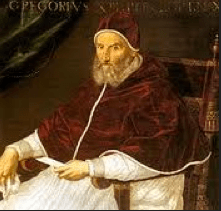
Pope Gregory XIII

Anyway, back to the important issues of the day; Firstly, we need to go back to 1582 when Pope Gregory XIII (yes, thats him over there…) ordered a change from the Julian Calendar (named after Julius Caesar) to the Gregorian Calendar (named after, well you can probably guess). The Julian Calendar had consisted of eleven months of 30 or 31 days with a 28 or 29 day February, and had worked pretty well for the previous 1600 years or so. However, it differed from the solar calendar (the actual time taken for the earth to travel around the sun) by approximately 11½ minutes per year and by the late 1500s this discrepancy had put the Julian calendar behind the Solar calendar by 10 days.

And so in 1582 Europe changed to a new system which drops a leap year every Century (unless that century is divisible by four, unless that century is divisible by four-hundred) and the problem was solved. Except that the UK, who had previously had their own “disagreements” with the head of the Catholic church on matters such as divorce, ignored the Pope’s decree and carried on with the Julian Calendar (as did Russia incidentally and for much longer than the UK). Thus for the next 170 years there existed a difference of at least 10 days between the calendar in Britain and that used in the rest of Europe. Using the new rules, 1600 added another day’s difference, whereas 1700 did not, and by 1752 Britain was therefore 11 days out.

Meanwhile, in England and Ireland the four main Christian religious holidays (including Christmas Day) had been used as the “quarter days” on which debts and accounts had to be settled and rents for land and property had to be paid. The first of these quarter days fell on “Lady Day” (the date of the announcement by the archangel Gabriel to the Virgin Mary that she would become the mother of Jesus Christ), being 25 March and that was also New Year’s Day and the first day of the British tax year.

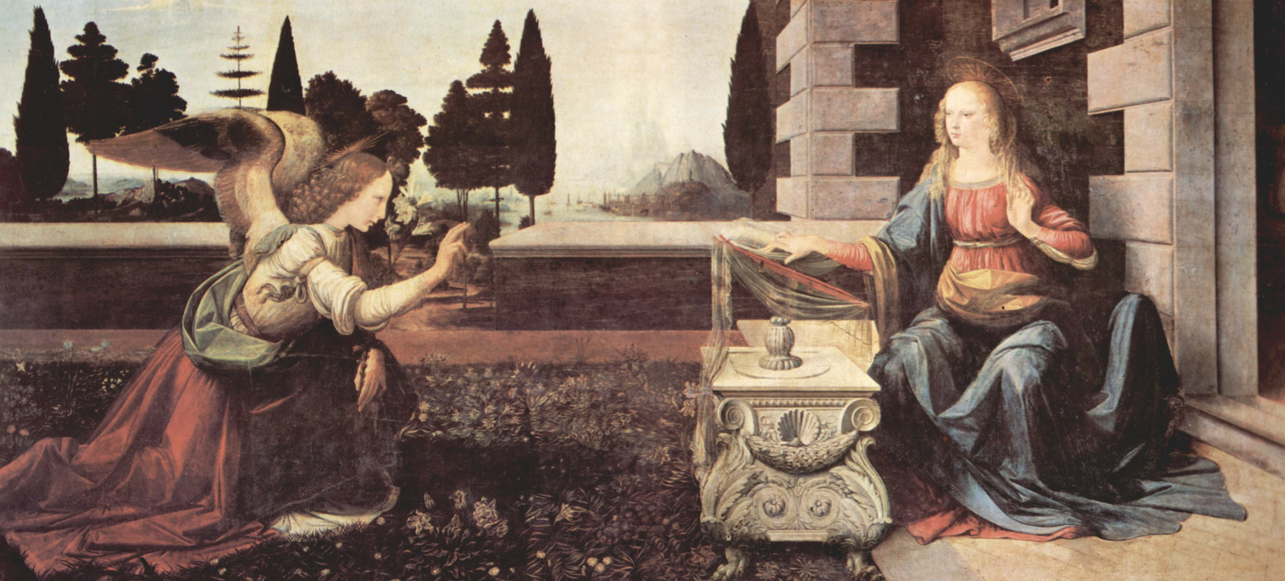
As a small aside, if you ever get to go to the Uffizi in Florence make sure you find the da Vinci “The Annunciation”… its magical… and as if my magic just here:

The Annunciation

Anyway, on with the tax story, it was not until 1752 that the British finally realised that they would have to align their calendar with the rest of Europe and move New Year’s Day to 1 January and drop 11 days from the calendar in order to catch-up. Therefore, 1752 would be an unusual year and in fact it was September 1752 that was the unusual month, with 2 September being immediately followed by 14 September. Perhaps understandably, the British people were unhappy with being robbed of 11 days of their lives and took to the streets to protest. The main focus of their fury was that their taxes were not also being similarly adjusted and so they were expected to pay a full year’s tax, despite the fact that the year had only 354 days.

In typical style, the Treasury was concerned to ensure there would be no loss of tax revenue and no concession to the populous and so it decided that the tax year should remain as 365 days. And so the beginning of the following tax year was moved from 25 March to 5 April and everyone was happy, kind of. Having done it once, the Treasury then decreed in 1800 that there would be another lost day of revenue, given that the century end would have been a leap year under the Julian calendar whereas it was not under the new Gregorian calendar. Thus 1800 was a leap year for tax purposes but not for the purpose of the calendar and so the tax year start was moved on again by a single day to 6 April. Taxes

This practice was dropped in 1900 and it seems that we are stuck with a 6 April start date for our UK tax year. If only the Treasury had continued adding a Julian leap year for tax purposes, where there was not a Gregorian leap year; we would have caught up with the rest of the world on 1 January 37901!?

Click here to read more about UK Tax Compliance…. go on… you know you want to.

1 Comment

Filed under Timology