Category Archives: Timology

Tibet, Assam, Textiles, and the British Museum

Ian writes a very fine blog. He mainly writes about events and attractions in London; interlacing history, architecture, exhibitions, and snippets of trivia into the online equivalent of an emporium of wonders. You can read more of his work here.

One of this recent posts caught my eye… not only did it combine Indian textiles, but also the British Museum, but amazingly, the Younghusband Mission to Tibet of 1904.

(Both) avid readers of this blog will know that I am a big fan of all things Asiatic, and my doctoral thesis looked especially at the looting that occurred at the time of the Mission, and what has become of the items carried across the Himalaya, and thence to the ‘drawing-rooms of Empire.

Anyhow, Ian has noticed how a vast  Vrindavani Vastra (literally ‘the cloth of Vrindavan’) has gone on display in the British Museum, filling an entire wall of the gallery. This Vrindavani Vastra is 9-metre long and made of woven silk and figured with scenes from the life of the Hindu god Krishna during the time he lived in the forest of Vrindavan.The Krishna scenes on the textile are from the 10th-century text the Bhagavata Purana, and are elaborated in the dramas of Shankaradeva. A verse from one of these is also woven into the textile, using immensely sophisticated weaving technology, now extinct in India. It is the longest example of its type, and was woven in Assam between 1567 and 1569. Think tea. Ian explains how it was first taken to Bhutan and then later to Tibet.

It was ‘found’ in Gobshi, a small town on the route between Gyantse and the Karo La, by Perceval Landon. Landon, a friend of Rudyard Kipling, was the correspondent from The Times on the expedition. He gave the textile, along with a vast array of Tibetan items, to the British Museum in 1905. The thesis has all the details if you can get to the fifth chapter.
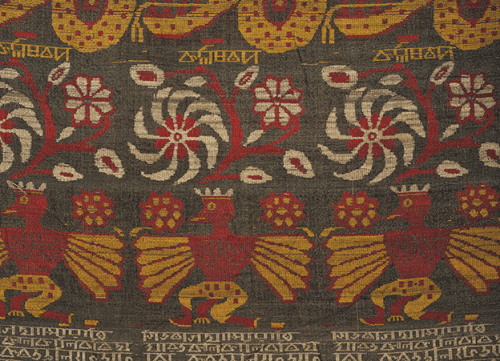
textile_624.png

Over the years there have been futile efforts by the Indian Government to bring back the silk drape back to India. In 2013 the Assam government requested the British Museum to exhibit the Vrindavani Vastra so that “art lovers, researchers, and local people with Assamese heritage could admire it”. Accordingly, it is now on display until August 2016 in the exhibition ‘Krishna in the garden of Assam: the cultural context of an Indian textile‘ in Room 91 of the British Museum. Entry is free.

PS, Landon’s account of the Mission is a great read: Lhasa: An Account of the Country and People of Central Tibet and of the Progress of the Mission sent there by the English Government in 1903–1904. Published 1905.

Leave a comment

Filed under Tibetology, Timology

How not to tune a piano.

Classic FM have recently email me (and no doubt thousands of other people) with a brilliant video shows Beethoven’s ‘Moonlight’ Sonata being performed on a piano on which all the keys have been tuned to middle C. Android created the video as part of an advertising campaign intended to highlight how we are all different, and to celebrate that individuality. Regardless of the intention or results of the advert, the sound produced by the piano is remarkable!

Leave a comment

Filed under Timology

Greasy Spoon in Pimlico

The Regency

I want to try this place… I know my wife has never read this blog, but it is conveniently just round the corner from her flat in London… so I am going to find an ‘excuse’ (mentioning a good local shoe shop normally does it…) to go here! Regency Café is a fabulous art deco ‘greasy spoon’ cafe in Regency Street, Pimlico. It opened in 1946, and seemingly little has changed… no snail ice-cream, no food served on roofing tiles, taster menus, and not a truffle in sight. It sounds perfect. In fact, the tea served here was described by in the Daily Telegraph, as “Proper builders’ tea, the stuff that once fuelled the docks, factories and steelworks of Britain; a mug of pure, liquid copper.”

Apparently it has been used in all sorts of films and TV shows, and some people complain that you have to wait to be served, but you will find me in the queue next time I am in London and in need a bacon sandwich.

1 Comment

Filed under Timology

A Knight’s Night Tale

It’s not often that I sleep next to man. It’s even rarer that he is taller than me. I have never before slept next to a 6’6″ man who has been dead for over 600 years. But then again last night was different… but I can explain…

I hate my birthdays, have lost count of them, and find that I get grumpy being the centre of attention. So this year I decided to do something different and spent the night in Christ Church Cathedral in Oxford. I find it sad that poverty still blights British society, and this Advent I have decided to try to help. Thousands of us, often very close to home, are struggling with debt, homelessness, isolation, depression, addiction, abuse, or violence. I have also been deeply impressed by the work of Church Urban Fund and wanted to support them by raising money as part of Christ Church’s Advent Sleepout Challenge. I was overwhelmed by the generosity of my friends and family when I asked them, rather than buy me a pint, to contribute to the CUF’s appeal. If you would like, you can still contribute here.

It was a really exciting experience, with a great group of friends. I found a spot on the floor next to a tall chap called John de Nowers. While I had opted for a red sleeping bag and hoodie, John had chosen a coat of chainmail, broadsword, tilting helmet, and had by his feet, his pet lion. But then again he died in 1386.

Nowers Monument

First Light over Oxford

First Light over Oxford

And here is the fantastic video that those nice people at the Church Urban Fund have made about all the fun we had!

1 Comment

Filed under Oxford: The Perspiring Dream, Timology

Hugh Leach

I was immeasurably saddened to learn recently of the death of Hugh Leach. I knew Hugh through the Royal Society for Asian Affairs, where he was the long standing and much admired historian, however over the years he kept cropping up at all sorts of events, and in the oddest places; Abingdon School reunions, charity dinners, the East India Club, and the like. He was essentially an Arabist, soldier, and diplomat, who endearingly listed his interests as ‘vintage cars, early Christianity, crystal sets, and circuses.’ As an example of the breadth of his scholarship, understanding and experience, in this History Today article Hugh draws on his experiences working with Arab tribes to examine T.E. Lawrence’s strategy in the Arab revolt. He was a warm, affable, intensely well informed, sprightly, mischievous sort of chap, with history in his fingertips and a twinkle in his eye. I liked him enormously, and he seemed genuinely fond of me and my interests in the field.

This is by no means intended as an obituary of Hugh, as I am sure these will follow in official publications and lectures (see here for the Telegraph’s), but the following article in the Peckham Perculier, gives an indication of the man. In the biog Hugh describes himself, his interests, and sadly even portends his own death. I will let him do the explaining:

I’ll be going to the grave in not very long, and I hope I never know the difference between a computer and a commuter, a blog and a frog, an iPod and a tripod, a Blackberry and a gooseberry, and a Kindle and a spindle. I was in the army for many years and spent a lot of my career in the Middle East. I was the first tank ashore at Port Said during the Suez Crisis in 1956, and I rather naughtily took some photographs as we landed. I’ve just presented a huge scrapbook of the pictures to the Tank Museum at Bovington.”

Hugh describes how he decided to stay on in the Middle east after his regiment was to return to Germany, and a fascinating anecdote about his selection to the Arabic school. After the army Hugh transferred to the Diplomatic Service, and in the middle of it all ran away and joined the circus. Obviously. He recalls his days in the circus, return to London to research Islam and the rise of fundamentalism, retirement in which he lead expeditions with Freya Stark and Wilfred Thesiger, and on one occasion put an advert in The Lady magazine that said, “Retired former army officer seeks temporary accommodation”. He got three replies, not offering a house, but asking for his hand in marriage.

You can read the full article here, and also find a link to Hugh’s history of the RSAA, Strolling about on the Roof of the World, here.

tumblr_inline_nxtpskSmCF1reu5wk_500

2 Comments

Filed under Timology

On Mallory’s Watch: Frozen in time

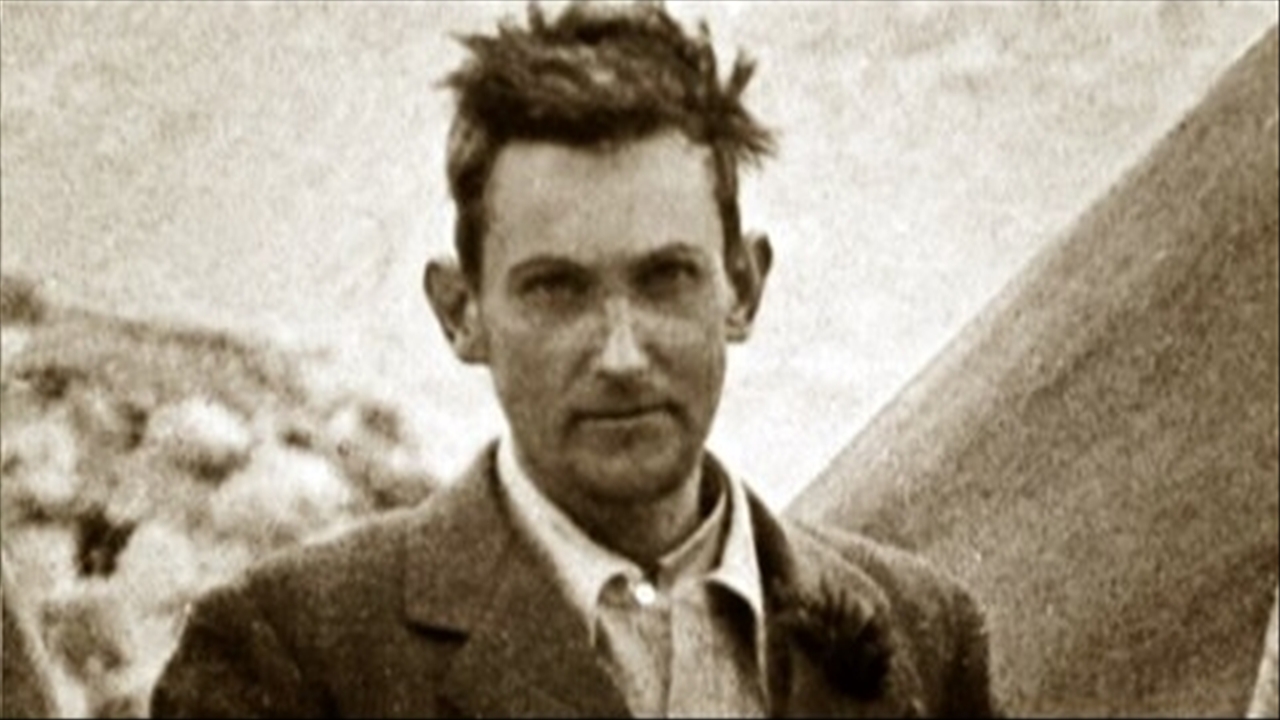
You have probably guessed by now that I am a bit of a Mallory nut.

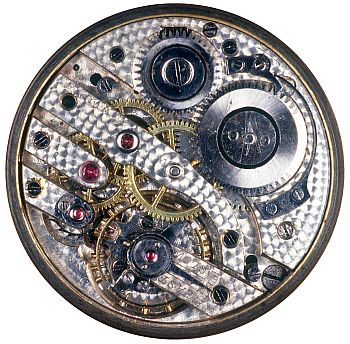
Mallory needs no introduction, but yesterday I found a spectacularly detailed article about his Borgel wristwatch… whatever makes you tick I guess.

The watch was found on Mallory’s body when it was discovered in 1999. It was missing its crystal and hands, and was found in a pocket of Mallory’s clothing. There has been speculation that the watch lost its crystal and stopped during a climbing manoeuvre, an arm jamb in a rock fissure while ascending the second step, and that the position of the hands could indicate the time at which the arm jamb took place. However the author of the article argues convincingly that there were “no signs that the watch has even been scratched lightly against a rock, let alone crushed against or between rocks during a hand jam. When the watch was examined it was found that the balance staff pivots are unbroken and the movement is in good working order. Watches of this age do not have shock protection for the balance staff pivots, which are very delicate and can be easily broken if the watch is knocked sharply against a hard object. The fact that the balance staff pivots are not broken shows that the watch did not sustain any such damage. It was reported that when the rusted stumps of the hands were removed the movement started ticking.” I love the idea that the time between Mallory and the modern age had literally been frozen! The watch is now in the keeping of the Royal Geographical Society in London. You can read much more about David’s thoughts and professional comments on the watch here, and also see his designs for vintage watch straps here.  (He also holds the copyright to the photo below).

Mallory movement sm

1 Comment

Filed under Tibetology, Timology

Shackleton’s Voice

So it was exactly a century ago today that Ernest Shackleton’s ship, Endurance, slipped beneath the icy Weddell Seas of Antarctica. The adventurers and epic bravery of his crew are well documented elsewhere, but what did their heroic leader actually sound like, and what did their expedition achieve?

Luckily the UCSB cylinder audio archive has the answer! Before MP3s, CDs, cassettes and vinyl records, people listened to … cylinders. First made of tinfoil, then wax and plastic, cylinder recordings, commonly the size and shape of a soda can, were the first commercially produced sound recordings in the decades around the turn of the 20th century.

The UCSB Library, with funding from the Institute of Museum and Library Services, the Grammy Foundation, and donors, has created a digital collection of more than 10,000 cylinder recordings held by the Department of Special Collections. To bring these recordings to a wider audience, the Library makes them available to download or stream online for free. You can find out more here, and listen to Shackleton here.

Earnest-Shackleton

Leave a comment

Filed under Timology

Super Exhibition Saturday: Ice & Diamonds

All you London based culture vultures might want to check out two interesting exhibitions in our fair capital over the next month or so.

The first is called ‘Enduring Eye: The Antarctic Legacy of Sir Ernest Shackleton and Frank Hurley‘ at the Royal Geographic Society. The Enduring Eye exhibition will open to the public on Saturday 21 November, exactly 100 years to the day that the crushed Endurance sank beneath the sea ice of the Weddell Sea, and run until 28 February 2016.

The RGS website describes how, as one of the first truly modern documentary photographers and film-makers, Australian born Hurley hoped to have his images seen at as large scale size as possible. 100 years later, this intention will be honoured with giant dimension prints, some over 2 metres in width and height, at the heart of the exhibition, providing viewers with a sense of awe and wonder.

In addition to the newly digitised images, the exhibition will include a number of ‘precious survivors’ – personal artefacts that were carried through every stage of the successive journeys for survival from the Weddell Sea to Elephant Island and onto South Georgia.

The second collection of objects of wonder can be found in The Victoria and Albert Museum’s ‘Bejewelled Treasures‘ exhibition, which also opens to the public on Saturday.

More than 100 objects owned by Sheikh Hamad Bin Abdullah Al Thani, a member of the Qatari royal family, have been loaned to the V&A for the show, which explores 400 years of Indian jewellery. It is being exhibited as part of the museum’s India festival.

As well as the objects from the Al Thani collection, our Queen has lent three pieces from the crown jewels including the spectacular “Timur ruby”. This ‘ruby’ is a source of much intrigue since it was never actually owned by Timur and is not even a ruby. (It is in fact a very large, 352-carat spinel, a type of red stone found in Badakhshan.)  The spinel was owned by Jahangir in the 17th century, and in 1851 it was given to Queen Victoria after the British annexed the Punjab. It seems a trifle odd to me to have your country ‘annexed’ only to then send a whacking great jewel to your new Empress, but it’s a nice touch.

frank-hurley-antarctica-carved-cave-sea

Screen Shot 2015-11-19 at 17.36.10

Leave a comment

Filed under Oxford: The Perspiring Dream, Photography, Timology

Maison de la Photographie in Marrakech

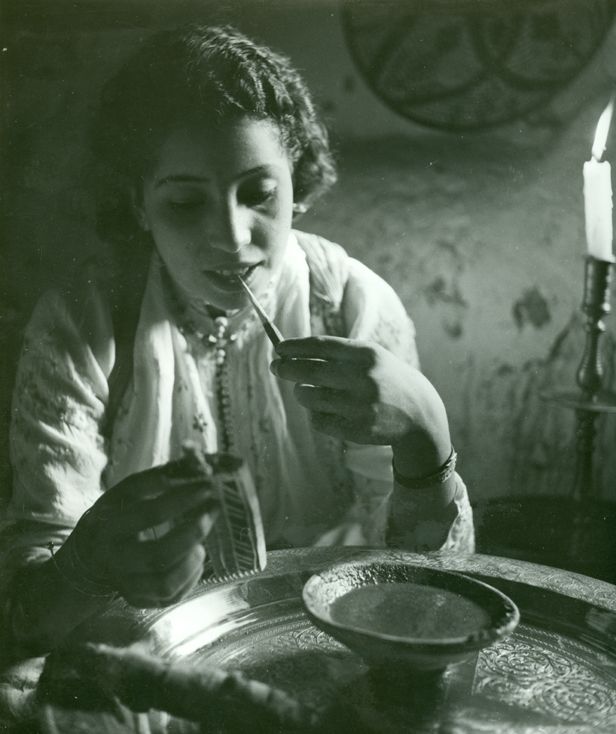
The ever wonderful Maison de la Photographie in Marrakech sends out a monthly photo if you sign up to receive emails their collection. I hope they will not mind me sharing this month’s image with you all, as I think it’s exceptionally beautiful.

The Maison de la Photographie is a wonderful quiet venue to admire their impressive collection of photographs of the 20s-60’s. Enlarged images bring the history to life, and many of the scenes depicted can be found in ‘real life’ just outside the walls.

If you are keen, you can find out more here, and also sign up for next month’s image:

Pierre Boucher, Femme se maquillant, Tirage aux sels d'argent, 1936 (Woman and her make-up, Silver print, 1936)

Pierre Boucher, (Woman and her make-up, Silver print, 1936.)

Leave a comment

Filed under Photography, Timology

Because it’s there…

“The first question which you will ask and which I must try to answer is this, ‘What is the use of climbing Mount Everest?’ and my answer must at once be, ‘It is no use.’ There is not the slightest prospect of any gain whatsoever. Oh, we may learn a little about the behaviour of the human body at high altitudes, and possibly medical men may turn our observation to some account for the purposes of aviation. But otherwise nothing will come of it. We shall not bring back a single bit of gold or silver, not a gem, nor any coal or iron. We shall not find a single foot of earth that can be planted with crops to raise food. It’s no use. So, if you cannot understand that there is something in man which responds to the challenge of this mountain and goes out to meet it, that the struggle is the struggle of life itself upward and forever upward, then you won’t see why we go. What we get from this adventure is just sheer joy. And joy is, after all, the end of life. We do not live to eat and make money. We eat and make money to be able to enjoy life. That is what life means and what life is for.”

Mallory

Leave a comment

Filed under Tibetology, Timology