Category Archives: Timology

Guess Who Friday

After an absence of a couple of months, it is my very great pleasure to offer you another exciting instalment of the marginally popular Friday quiz; “Guess Who Friday.”

Can you tell me who these dapper, albeit slightly grumpy, gents are?

Usual rules apply. Answers by email, or text message, but please don’t post on Facebook and ruin the fun for all. Happy Halloween!

Guess Who Friday 301014

Leave a comment

Filed under Timology

Surprised by Joy. C.S. Lewis.

Barfield believed that the imagination plays a very important part in how we know. He rejected the model that science is the only way to truth, to acquiring truth. He felt that the imagination was laid behind even the work of science. It gave meaning to propositions. And so he felt that Lewis was missing out in his whole approach to reality on what made knowledge possible.

I was suddenly compelled to read the Hippolytus of Euripides.

“Oh God, bring me to the sea’s end
To the Hesperides, sisters of evening,
Who sing alone in their islands
Where the golden apples grow,
And the Lord of Oceans guards the way
From all who would sail
Into their night-blue harbors —
Let me escape to the rim of the world
Where the tremendous firmament meets
The earth, and Atlas holds the universe
In his palms.
For there, in the palace of Zeus,
Wells of ambrosia pour through the chambers,
While the sacred earth lavishes life
And Time adds his years
Only to heaven’s happiness”

… I was off once more into the land of longing, my heart at once broken and exalted as it had never been since the old days. I was overwhelmed. I called it Joy.

Leave a comment

Filed under Oxford: The Perspiring Dream, Timology

… and dust his finger-tips in Yorkshire fog.

I have long been a fan of Robert Byron; art critic, historian, and travel writer best known for his The Road to Oxiana If you have not read it, I can only envy you opening it for the first time. But this week I four a ‘poem’ by him… it’s not in the same league as his travel writing, but it captures some of his charm, style, languid yet vast lexicon, and effortless ability to capture the moment and transplant it to the reader’s mind.

All These I Learnt  by Robert Byron 

If I have a son, he shall salute the lords and ladies who unfurl green hoods to the March rains, and shall know them afterwards by their scarlet fruit. He shall know the celandine, and the frigid, sightless flowers of the woods, spurge and spurge laurel, dogs’ mercury, wood-sorrel and queer four-leaved herb-paris fit to trim a bonnet with its purple dot. He shall see the marshes gold with flags and kingcups and find shepherd’s purse on a slag-heap. He shall know the tree-flowers, scented lime-tassels, blood-pink larch-tufts, white strands of the Spanish chestnut and tattered oak-plumes. He shall know orchids, mauve-winged bees and claret-coloured flies climbing up from mottled leaves. He shall see June red and white with ragged robin and cow parsley and the two campions. He shall tell a dandelion from sow thistle or goat’s beard. He shall know the field flowers, lady’s bedstraw and lady’s slipper, purple mallow, blue chicory and the cranesbills – dusky, bloody, and blue as heaven. In the cool summer wind he shall listen to the rattle of harebells against the whistle of a distant train, shall watch clover blush and scabious nod, pinch the ample veitches, and savour the virgin turf. He shall know grasses, timothy and wag-wanton, and dust his finger-tips in Yorkshire fog. By the river he shall know pink willow-herb and purple spikes of loosestrife, and the sweetshop smell of water-mint where the rat dives silently from its hole. He shall know the velvet leaves and yellow spike of the old dowager, mullein, recognise the whole company of thistles, and greet the relatives of the nettle, wound-wort and hore-hound, yellow rattle, betony, bugle and archangel. In autumn, he shall know the hedge lanterns, hips and haws and bryony. At Christmas he shall climb an old apple-tree for mistletoe, and know whom to kiss and how.

He shall know the butterflies that suck the brambles, common whites and marbled white, orange-tip, brimstone, and the carnivorous clouded yellows. He shall watch fritillaries, pearl-bordered and silver-washed, flit like fireballs across the sunlit rides. He shall see that family of capitalists, peacock, painted lady, red admiral and the tortoiseshells, uncurl their trunks to suck blood from bruised plums, while the purple emperor and white admiral glut themselves on the bowels of a rabbit. He shall know the jagged comma, printed with a white c, the manx-tailed iridescent hair-streaks, and the skippers demure as charwomen on Monday morning. He shall run to the glint of silver on a chalk-hill blue – glint of a breeze on water beneath an open sky – and shall follow the brown explorers, meadow brown, brown argus, speckled wood and ringlet. He shall see death and revolution in the burnet moth, black and red, crawling from a house of yellow talc tied half-way up a tall grass. He shall know more rational moths, who like the night, the gaudy tigers, cream-spot and scarlet, and the red and yellow underwings. He shall hear the humming-bird hawk moth arrive like an air-raid on the garden at dusk, and know the other hawks, pink sleek-bodied elephant, poplar, lime, and death’s head. He shall count the pinions of the plume moths, and find the large emerald waiting in the rain-dewed grass.

All these I learnt when I was a child and each recalls a place or occasion that might otherwise be lost. They were my own discoveries. They taught me to look at the world with my own eyes and with attention. They gave me a first content with the universe. Town-dwellers lack this intimate content, but my son shall have it!


And if you especially wanted to hear this being read by the heir to the throne, look no further than here.

1 Comment

Filed under Timology

A Critical Cultural Cluster

In all honesty, I hadn’t got The Spectator down in my mind as a credible source of book reviews, or even as a cultural criticism electronic hub. I admit that I was wrong. I had long thought that its strength (and thereby its weakness) lay in right wing, “Barcwellian“, longevity, and the fact that Boris was once editor. (On which, I recently found a letter from said editor informing me that he would “consider” one of my articles… I have no memory or record of the article!)

The “Culture House” section contains all sorts of gems clustered away under the diverse sub headings; Books Ends, Arts Features, Exhibitions, Music, Cinema, Opera, Dance, Theatre, Design, Television, Radio, Architecture, and Culture Notes. Yes, it is all a touch white, Anglo-Saxon, South East England, centric, but the quality of the writing is very good, and it is written from more diverse perspectives than I had assumed.

I was recently taken by two book reviews. The first was a commentary on the “sad but inevitable downfall of Kevin Pietersen” by Alex Massie. He not only reviews Kevin’s recent ‘auto’biography well, balancing the pathos and irony of the tale, but frames it in the context of the debacle in a fair manner, suggesting alternative courses of action the ECB perhaps should have considered. I am not convinced that the book is worth reading, but that is kind of the point of critical reviews… not to try to persuade you to read the book (that’s advertising), but to tell you what it’s about, why it’s important, and discuss it’s merits and shortcomings.

Kevin

The second was a review of the recent biography of Ernest Shackleton, who is something of a hero to me. If the reviewer captures the book well, then the biographer has captured his subject well indeed:

“Smith proposes to ‘untangle the myths from the reality’ of Shackleton’s life. He argues that there were two different Shackletons: ‘the charismatic, ambitious, buccaneering Edwardian explorer with a love for poetry, who touched greatness, combating unimaginable hardship and depths of adversity in the most unwelcoming region of the world.’ And there was also ‘the complex, flawed, restless, impatient and hopelessly unproductive character on dry land, who struggled to come to terms with the civilising forces of day-to-day routine and domestic responsibilities.’ ” You can read the full review here.

They are a combination of maverick, divisive, and tempestuous characters that are sure to be examined for years to come, and both deserve a read… or at least a read of the reviews.

Shackleton

Leave a comment

Filed under Timology

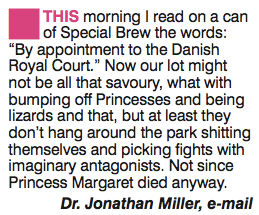
A special brew…

This from the Viz archive. Made me giggle.

Special brew

Leave a comment

Filed under Timology

Formula 1 and Tibetan Buddhism

While there has been a lot of chatter about Nico Rosberg edging Lewis Hamilton out of last weekend’s F1 Belgian Grand Prix, few eagle eyes will have noticed a small design on his race helmet. As the German driver clambered out of his car to face the podium, his team, and his critics, I noticed a small Tibetan Buddhist emblem on the front grille of his Mercedes-AMG Petronas helmet.

Nico Rosberg

Rosberg designed the helmet together with his girlfriend. He calls it his “Full Attack” design, and it is mainly comprised of black and turquoise, a colour strongly associated with Tibetan Buddhism. He describes the Tibetan motif as “something personal” but does not elaborate further. You can watch his full explanation here. It’s about as emotional as he gets!

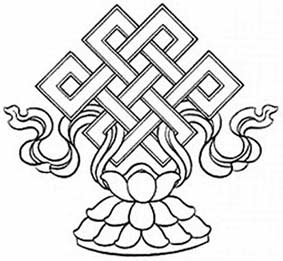
The design is an endless knot (dpal be’u for all you closet Tibetologists out there) which is a closed, graphic ornament composed of right-angled, intertwined lines. It overlaps without a beginning, or an end, symbolising the Buddha’s endless wisdom and compassion. It indicates continuity as the underlying reality of existence.

The intertwining of lines represents how all phenomena are conjoined and yoked together as a closed cycle of cause and effect. Thus the whole composition is a pattern that is closed on in itself with no gaps, leading to a representational form of great simplicity and fully balanced harmony. See here for a full explanation.

Tibetans and Buddhists often copy the design on a gift or greeting card as this is understood to establish an auspicious connection between the giver and the recipient. At the same time, the recipient is goaded to righteous karma, and reminded that future positive effects have their roots in the causes of the present. This interconnectivity, and the social dues that go with it, were first properly analysed and commented on by the French sociologist Marcel Mauss in his 1925 essay Essai sur le don. Forme et raison de l’échange dans les sociétés archaïques (An essay on the gift: the form and reason of exchange in archaic societies) and expanded upon in his seminal anthropological treatise ‘The Gift.’ It is a great, and short, introduction to the fascinating field of Anthropology.

One can only hope that Hamilton too has done his homework, and acknowledges that the knot represents a connection, a link between their fates and karmic destiny, but does not ‘connect’ with it further. I can assure him that the symbol will be the same when viewed in a rear view mirror.

endless knot

1 Comment

Filed under Tibetology, Timology

World War One. My Family’s History.

Today marks the centenary of Great Britain joining World War One. There have been salutes, flypasts, vigils, and tributes paid by all quarters, and much done to honour the dead. And quite rightly so; their sacrifices made possible our freedom, and we will all, ever, be thankful.

My own family were surprisingly lucky during the war. My mother’s side of the family were all in India for the duration, and only started to drift back to Blighty at Independence, while there are little or no records from my father’s side. My grandmother (on my father’s side) however used to tell me tales of her father, my great-grandfather, and his time in uniform.

When I was a child she would stroke my hair when she spoke to me of him, and tell me how much I reminded her of him… she described how his hair was exactly like mine… ginger and much like a wire brush. Apparently we have the same eyes, but I know mum’s side also lays claim to my (somewhat useless) ocular ancestry. Kelly was much luckier, and avoided the ginge altogether.

The only records we have of Frank Kittle (Nan called him “Pop”, but then our grandfather was also “Pops”, so maybe this is a generational thing?) are some photographs and stories.

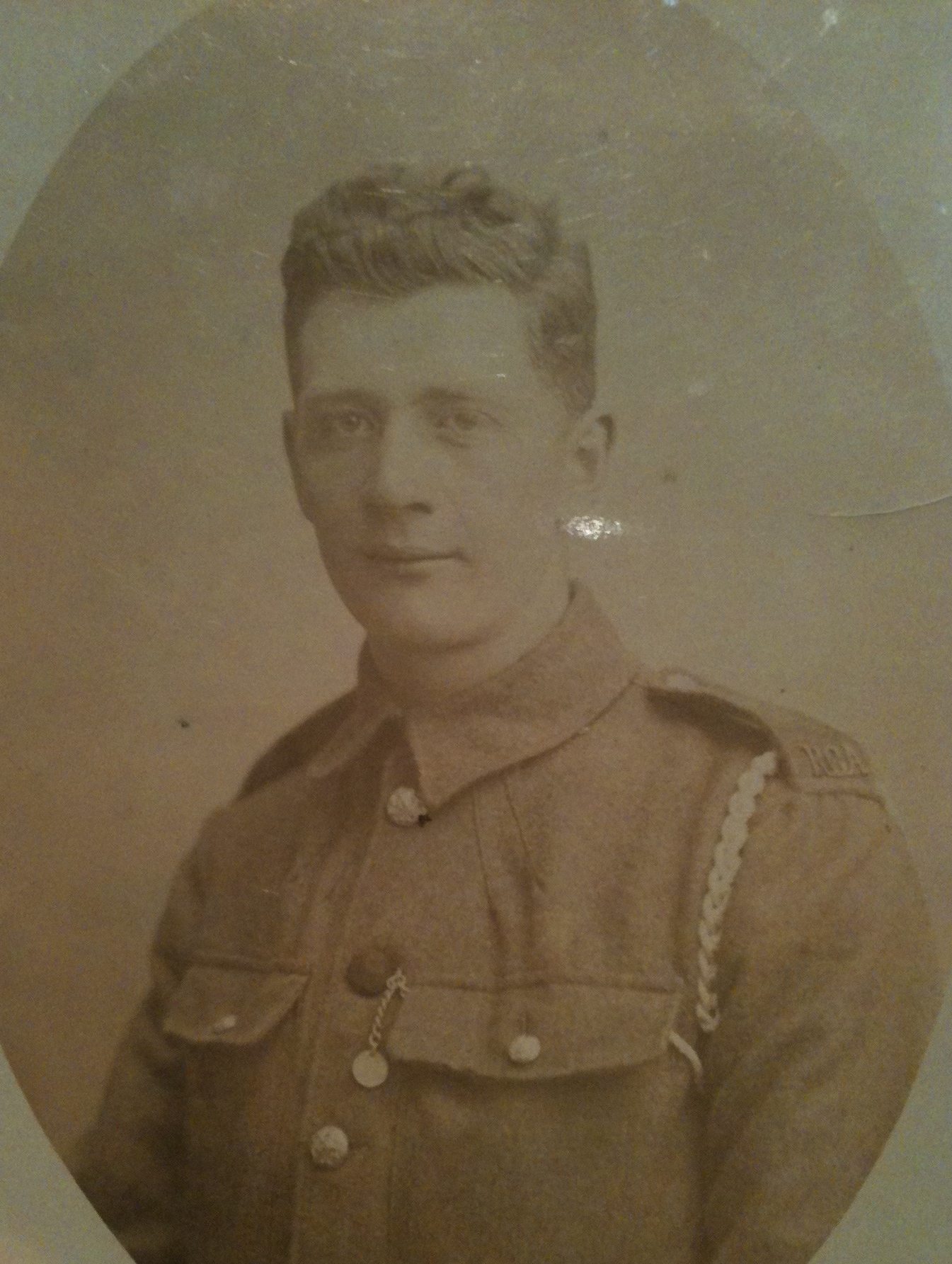
The photograph of him before he went to the trenches shows a thin, nervous, smile, and a rather optimistic attempt to Brylcream down the wire wool with a side parting. In the photo he must be in his mid 20’s, and has the badge of the Royal Garrison Artillery on his shoulder. Shortly after the photo was taken, he was sent to France, and was gassed at the Somme while serving with one of the Brigades of The Royal Field Artillery.

Pop Kittle Pre War

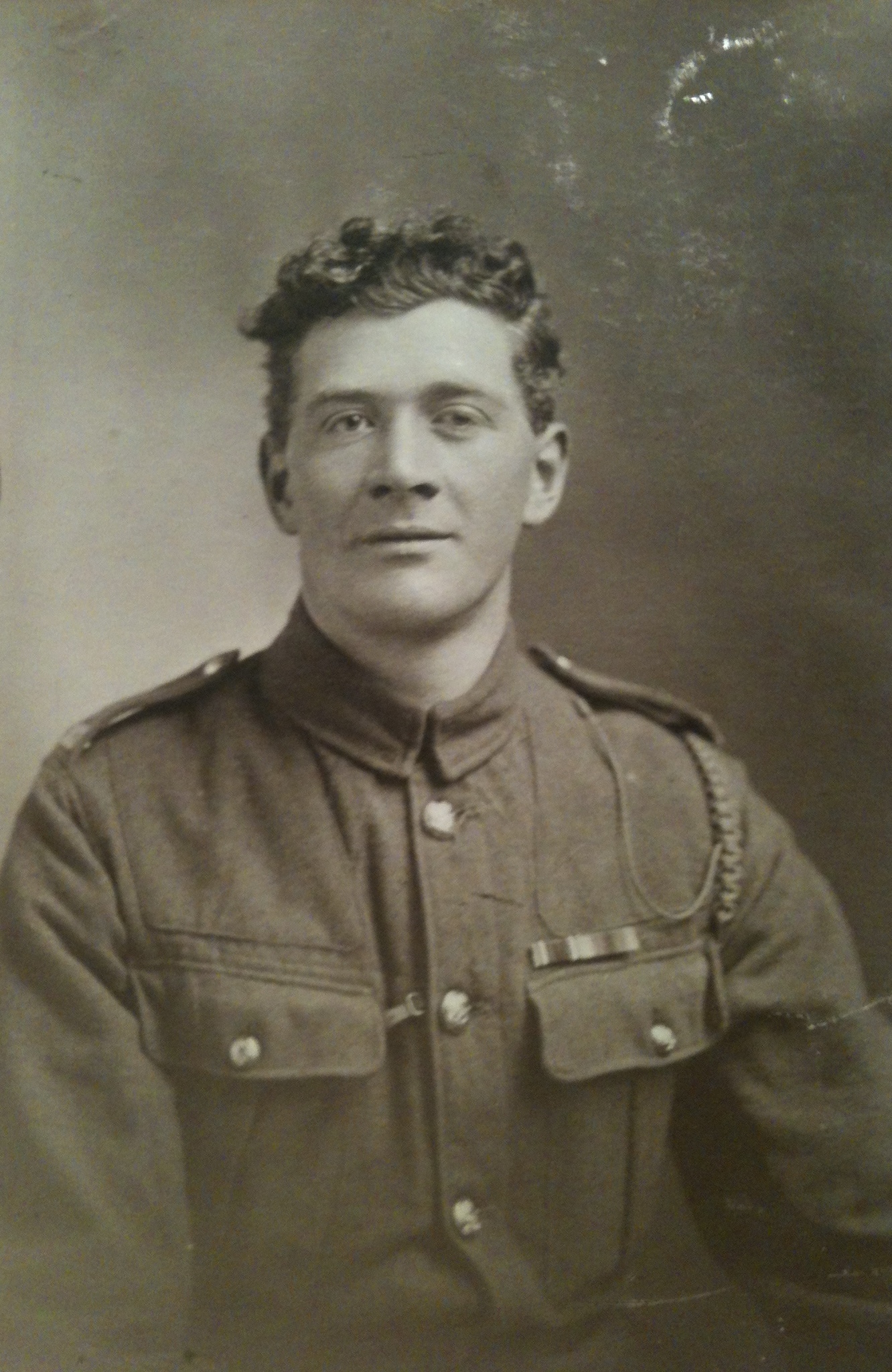
He was lucky to live, and was invalided back to his native Norfolk. He spent time recuperating from the effects of the mustard gas at hospitals in Bristol and Yarmouth, but had a hacking, rattling, cough ’till the day he died. A photo of him taken some years later, still in his uniform, shows a more confident face, and the slightest hint of a smile.

Frank Kittle

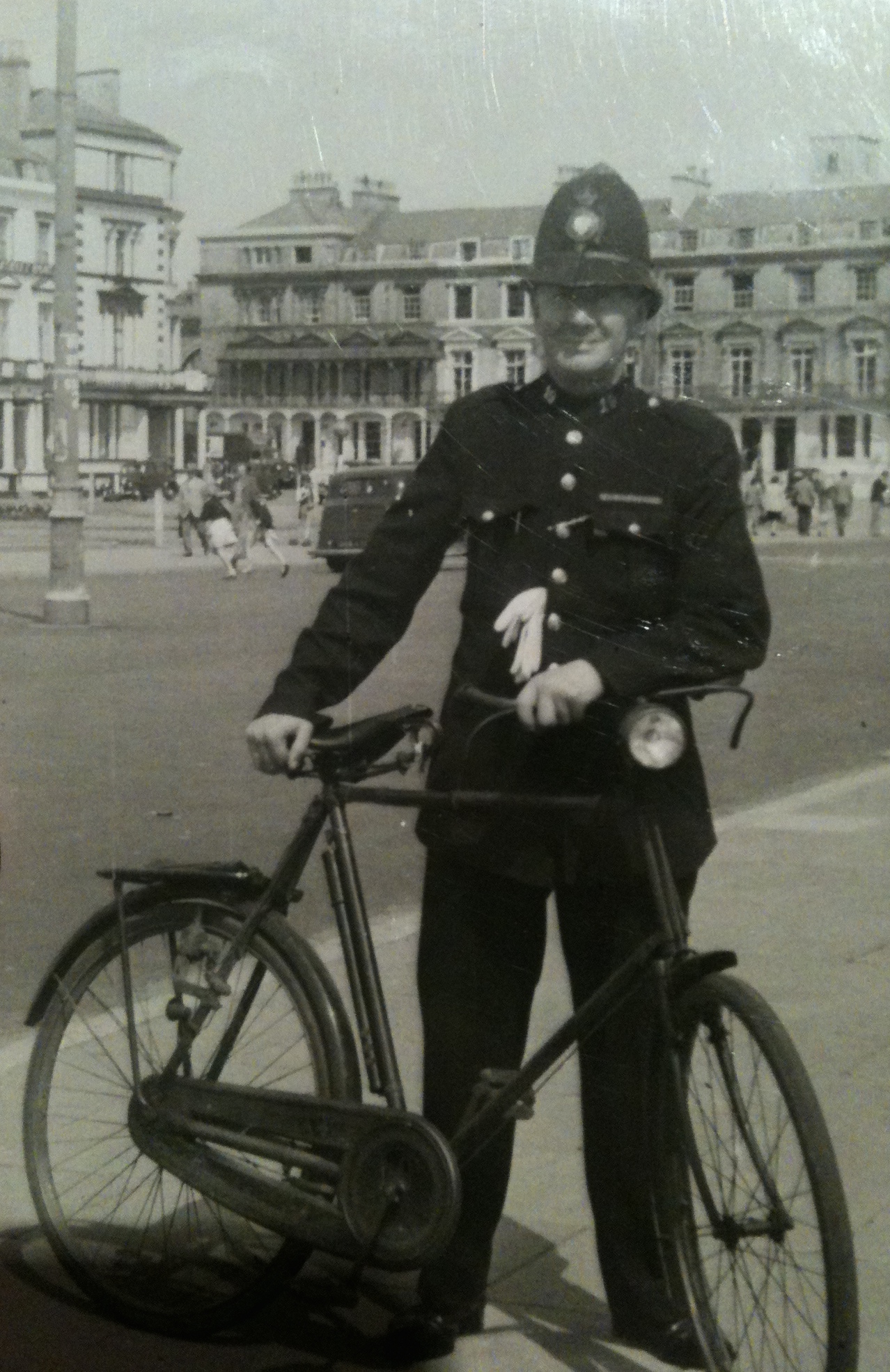
His cough stayed with him all his life, and Dad describes how he was always ill and bronchial. He served as both a Policeman, and Fireman in and around Yarmouth during both the interwar period, and during the Second World War. There is a family story that describes how he was the only policeman on duty when a local fisherman caught a German U-Boat in his nets, and towed it into Yarmouth harbour. Pop took the surrender of the U-Boat Captain, and his crew, and accepted a set of binoculars as a token of friendship. While this may or may not be true, it does help to explain the Nazi U-Boat binoculars that have been kicking about for years! This is him in his Police uniform, with his bicycle.

And a definite smile.

Policemand in Yarmouth

2 Comments

Filed under Photography, Timology

1066 and all that…

As we were all taught, Harold Godwinson, or King Harold II as he was known to his battle scarred subjects, was killed at the Battle of Hastings. There are differing accounts of this death, but the most widely accepted by historians is that of the eleventh-century churchman, Guy, Bishop of Amiens. His Carmen de Hastingae Proelio, or Song of the Battle of Hastings (which, let’s face it, was never going to be on Top of the Pops), was written shortly after the battle. In it,  Guy describes how the King was killed by four knights, probably including Duke William, and his body brutally dismembered.

The first mention of the famous arrow in the eye tale comes from an account written, nearly 30 years after the battle, by the fabulously named Amatus of Montecassino. Don’t go thinking that the Bayeux Tapestry contradicts all this… in the panel below the inscription “Harold Rex Interfectus Est” one poor chap is depicted gripping an arrow in his eye, but some historians have questioned whether this man is intended to be Harold, or if Harold is the next figure, lying to the right, and being mutilated beneath a horse’s hooves. My Latin is on the non existent end of the scale, but I think the translation should be more like ‘Harold the King is killed‘, rather than ‘King Harold gets one in the face.’

Anyway, after the battle the body of Harold was given to one William Malet, at least according to the contemporary chronicler William of Poitiers. (BTW when did we all stop being called ‘Someone of Somewhere’?  … I rather like it… perhaps we ought to reintroduce it?) Alternative theories suggest that the body was given to his widow, Edith, which seems much more likely to me. However there is much debate about the final resting place of the king.

The main contender is the small church at Bosham, where Harold was born, and where in 1954 and Anglo-Saxon coffin was inadvertently discovered by workmen. They found a stone sarcophagus and the remains of a man, estimated at up to 60 years of age, lacking a head, one leg and the lower part of his other leg; a description consistent with the fate of the King. Sadly in 1954, DNA profiling was not available, and carbon dating was still a nascent art. The coffin has not been reopened since.
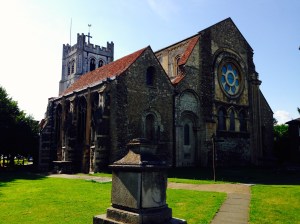
Church of The Holy Cross However legends persist that Harold’s body was laid to rest in Waltham, at the Church of The Holy Cross. That old gossip monger, William of Malmesbury, wrote in the Gesta regum Anglorum in 1125, that the refusal by Duke William to accept payment for the body meant that it was handed over without ransom, and taken from the battlefield to Waltham for burial. Harold had re-established the church in Waltham 1060, and by the late middle ages, it was one of the largest church buildings in England and a major site of pilgrimage. In 1540 it was the last religious community to be closed during the Dissolution of the Monasteries. Sadly however it was locked when I visited on Saturday, so you only get photos from the outside. As luck would have it, Harold is said to have been buried under the old High Alter, now in ruins, and which is now outside!
Harold II's resting place


Leave a comment

Filed under Timology

Not Really Guess Who Friday

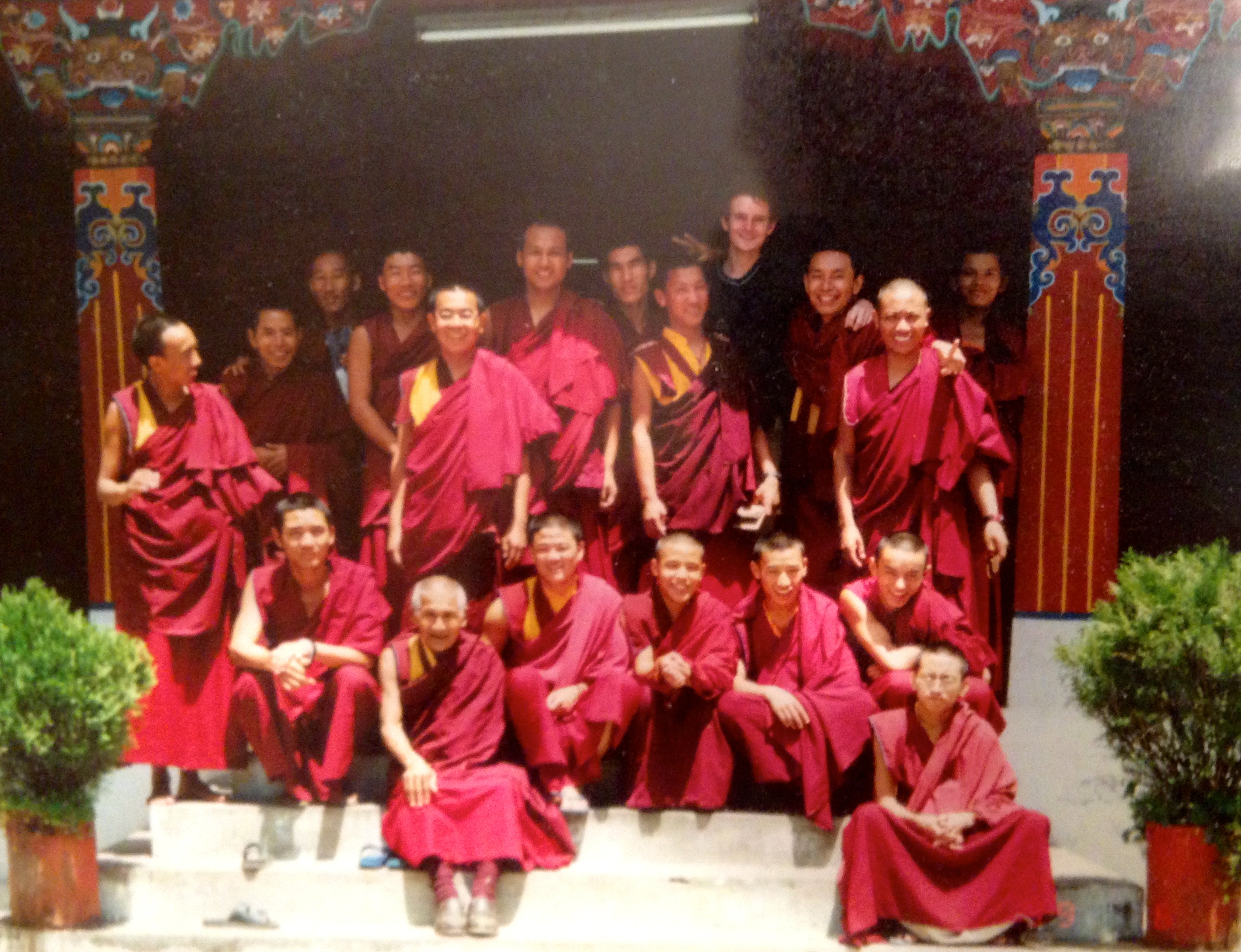
This week various things have been making me think about my times in India. As I am sure I have told you all, in about 1998 I taught English in a Tibetan monastery in McLeod Ganj in Himachal Padesh. The monastery is called Dip Tse Chock Ling, and I still have many wonderful friends and memories in the place… its what I think about when times are tough, or if I want clear thinking and exploring space. In short, it makes me happy; both as a space, idea, and record of all the good times I had there. So I thought I would share a couple of photos of my time there… I hope you like them!

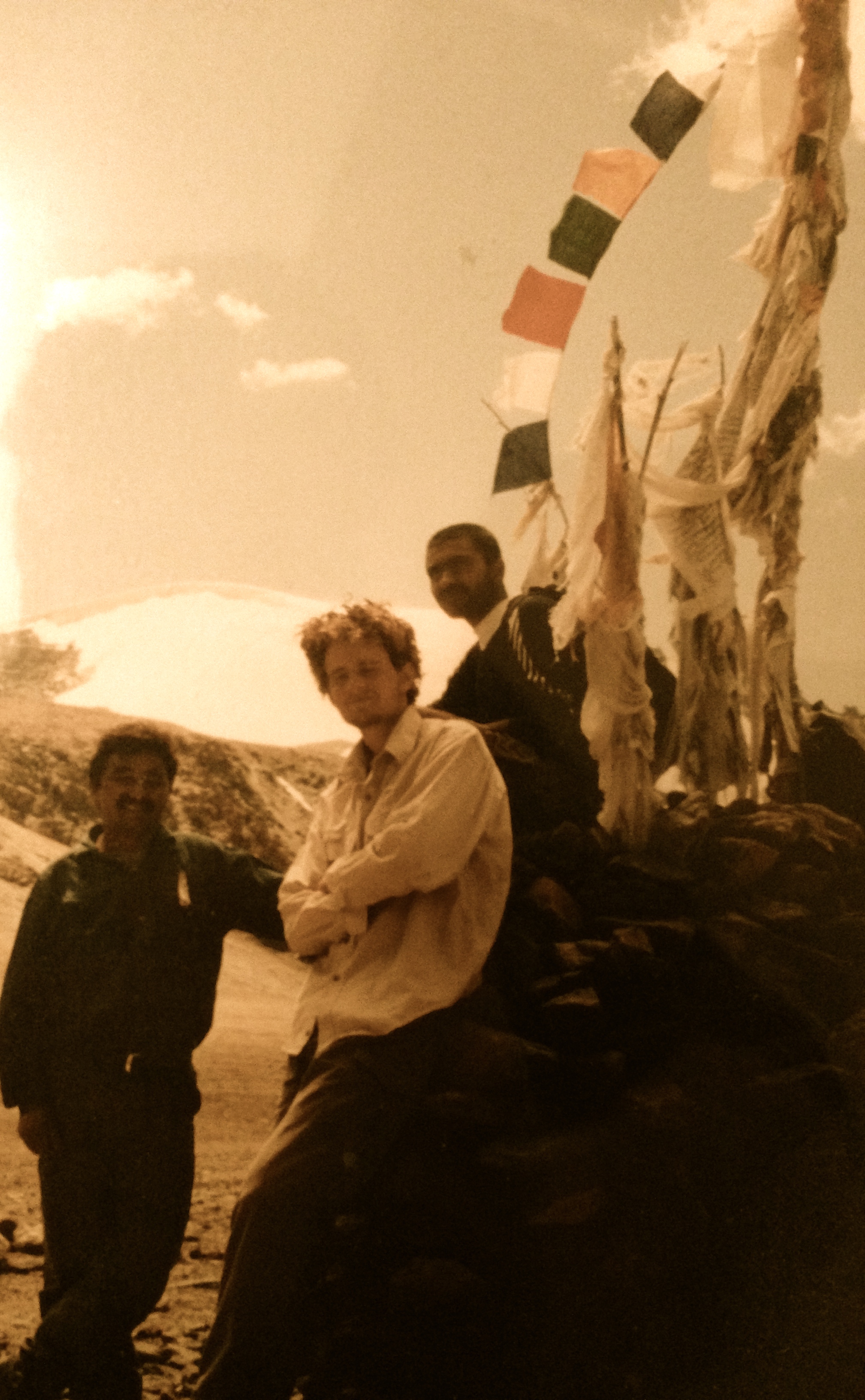
Tim and Translators

This one was taken in Ladakh in about 2000 when I was working on development issues in the Zangskar valley. The chap on the left is our translator, Dorje Gyalpo, and Ash Spearing sits behind me on the Chorten.

Tim and Drip Tse Chock Ling MonasteryThis was about 1998, with the monks of Dip Tse Chock Ling.


1 Comment

Filed under Timology

The New Lepage Glue Gun

“They began to invent humourless, glum jokes of their own and disastrous rumours about the destruction awaiting them at Bologna.
Yossarian sidled up drunkenly to Colonel Korn at the officers’ club one night to kid with him about the new Lepage gun that the Germans had moved in.
‘What Lepage gun?’ Colonle Korn inquired with curiousity.
‘The new three-hundred-and-forty-four-millimeter Lepage glue gun,’ Yossarian answered. ‘It glues a whole formation of planes together in mid-air.’

Colonel Korn jerked his elbow free from Yossarian’s clutching fingers in startled affront. ‘Let go of me, you idiot!’ he cried out furiously, glaring with vindictive approval as Nately leaped upon Yossarian’s back and pulled him away.
‘Who is that lunatic anyway?’
Colonel Cathcart chortled merrily. ‘That’s the man you made me give a medal to after Ferrara. You had me promote him to captain, too, remember? It serves you right.’
Nately was lighter than Yossarian and had great difficulty maneuvering Yossarian’s luching bulk across the room to an unoccupied table. ‘Are you crazy?’ Nately kept hissing with trepidation. ‘That was Colonel Korn. Are you crazy?’

Yossarian wanted another drink and promised to leave quietly if Nately bought him one. Then he made Nately bring him two more. When Nately finally coaxed him to the door, Captain Black came stomping in from outside, banging his sloshing shoes down hard on the wood floor and spilling water from his eaves like a high roof.

‘Boy, are you bastards in for it!’ he announced exuberantly, splashing away from the puddle forming at his feet. ‘I just got a call from Colonel Korn. Do you know what they’ve got waiting for you at Bologna? Ha! Ha! They’ve got the new Lepage glue gun. It glues a whole formation of planes together in mid-air.’

‘My God, it’s true!’ Yossarian shrieked, and collapsed against Nately in terror.”

tumblr_m4pjo62CdA1r0kjroo1_400

Leave a comment

Filed under Timology