I slowed to ninety.

The extravagance in which my surplus emotion expressed itself lay on the road. So long as roads were tarred blue and straight; not hedged; and empty and dry, so long I was rich.

Nightly I’d run up from the hangar, upon the last stroke of work, spurring my tired feet to be nimble. The very movement refreshed them, after the day-long restraint of service. In five minutes my bed would be down, ready for the night: in four more I was in breeches and puttees, pulling on my gauntlets as I walked over to my bike, which lived in a garage-hut, opposite. Its tyres never wanted air, its engine had a habit of starting at second kick: a good habit, for only by frantic plunges upon the starting pedal could my puny weight force the engine over the seven atmospheres of its compression.

Boanerges’ first glad roar at being alive again nightly jarred the huts of Cadet College into life. ‘There he goes, the noisy bugger,’ someone would say enviously in every flight. It is part of an airman’s profession to be knowing with engines: and a thoroughbred engine is our undying satisfaction. The camp wore the virtue of my Brough like a flower in its cap. Tonight Tug and Dusty came to the step of our hut to see me off. ‘Running down to Smoke, perhaps?’ jeered Dusty; hitting at my regular game of London and back for tea on fine Wednesday afternoons.

Boa is a top-gear machine, as sweet in that as most single-cylinders in middle. I chug lordlily past the guard-room and through the speed limit at no more than sixteen. Round the bend, past the farm, and the way straightens. Now for it. The engine’s final development is fifty-two horse-power. A miracle that all this docile strength waits behind one tiny lever for the pleasure of my hand.

Another bend: and I have the honour of one of England’ straightest and fastest roads. The burble of my exhaust unwound like a long cord behind me. Soon my speed snapped it, and I heard only the cry of the wind which my battering head split and fended aside. The cry rose with my speed to a shriek: while the air’s coldness streamed like two jets of iced water into my dissolving eyes. I screwed them to slits, and focused my sight two hundred yards ahead of me on the empty mosaic of the tar’s gravelled undulations.

Like arrows the tiny flies pricked my cheeks: and sometimes a heavier body, some house-fly or beetle, would crash into face or lips like a spent bullet. A glance at the speedometer: seventy-eight. Boanerges is warming up. I pull the throttle right open, on the top of the slope, and we swoop flying across the dip, and up-down up-down the switchback beyond: the weighty machine launching itself like a projectile with a whirr of wheels into the air at the take-off of each rise, to land lurchingly with such a snatch of the driving chain as jerks my spine like a rictus.

Once we so fled across the evening light, with the yellow sun on my left, when a huge shadow roared just overhead. A Bristol Fighter, from Whitewash Villas, our neighbour aerodrome, was banking sharply round. I checked speed an instant to wave: and the slip-stream of my impetus snapped my arm and elbow astern, like a raised flail. The pilot pointed down the road towards Lincoln. I sat hard in the saddle, folded back my ears and went away after him, like a dog after a hare. Quickly we drew abreast, as the impulse of his dive to my level exhausted itself.

The next mile of road was rough. I braced my feet into the rests, thrust with my arms, and clenched my knees on the tank till its rubber grips goggled under my thighs. Over the first pot-hole Boanerges screamed in surprise, its mud-guard bottoming with a yawp upon the tyre. Through the plunges of the next ten seconds I clung on, wedging my gloved hand in the throttle lever so that no bump should close it and spoil our speed. Then the bicycle wrenched sideways into three long ruts: it swayed dizzily, wagging its tail for thirty awful yards. Out came the clutch, the engine raced freely: Boa checked and straightened his head with a shake, as a Brough should.

The bad ground was passed and on the new road our flight became birdlike. My head was blown out with air so that my ears had failed and we seemed to whirl soundlessly between the sun-gilt stubble fields. I dared, on a rise, to slow imperceptibly and glance sideways into the sky. There the Bif was, two hundred yards and more back. Play with the fellow? Why not? I slowed to ninety: signalled with my hand for him to overtake. Slowed ten more: sat up. Over he rattled. His passenger, a helmeted and goggled grin, hung out of the cock-pit to pass me the ‘Up yer’ Raf randy greeting.

They were hoping I was a flash in the pan, giving them best. Open went my throttle again. Boa crept level, fifty feet below: held them: sailed ahead into the clean and lonely country. An approaching car pulled nearly into its ditch at the sight of our race. The Bif was zooming among the trees and telegraph poles, with my scurrying spot only eighty yards ahead. I gained though, gained steadily: was perhaps five miles an hour the faster. Down went my left hand to give the engine two extra dollops of oil, for fear that something was running hot: but an overhead Jap twin, super-tuned like this one, would carry on to the moon and back, unfaltering.

We drew near the settlement. A long mile before the first houses I closed down and coasted to the cross-roads by the hospital. Bif caught up, banked, climbed and turned for home, waving to me as long as he was in sight. Fourteen miles from camp, we are, here: and fifteen minutes since I left Tug and Dusty at the hut door.

I let in the clutch again, and eased Boanerges down the hill along the tram-lines through the dirty streets and up-hill to the aloof cathedral, where it stood in frigid perfection above the cowering close. No message of mercy in Lincoln. Our God is a jealous God: and man’s very best offering will fall disdainfully short of worthiness, in the sight of Saint Hugh and his angels.

Brough

The Road. In, The Mint. T E Lawrence, writing as T.E. Ross. Published posthumously in 1955.

Leave a comment

Filed under Timology

Iran’s ‘Colossal’ Ceilings

I have posted before about Robert Byron’s description of the Sheikh-Lotfollah’s mosque in Esfahan, Iran, in his Road to Oxiana.  I am yet to travel to Iran, but long to visit the country and explore its architectural splendours. For the time-being however I can read, use my imagination, and explore them through the internet.

One element of their design captures my imagination above all else… the intricately tiled iwans and ceilings, often featuring complex tessellations and honeycombs. Last night I came across a fabulous collection of photographs of them here on the ‘This is Colossal’ website. Well worth a look, but must be even better to see with one’s own eyes.

Sheikh-Lotfollah’s mosque in Esfahan

Of the interior if the dome Byron wrote “I know of no finer example of the Persian Islamic genius than the interior of the dome: The dome is inset with a network of lemon-shaped compartments, which decrease in size as they ascend towards the formalised peacock at the apex… The mihrāb in the west wall is enamelled with tiny flowers on a deep blue meadow. Each part of the design, each plane, each repetition, each separate branch or blossom has its own sombre beauty. But the beauty of the whole comes as you move. Again, the highlights are broken by the play of glazed and unglazed surfaces; so that with every step they rearrange themselves in countless shining patterns… I have never encountered splendour of this kind before.”

But as fans of this genre of architecture, can you tell me where the ceiling shown below can be found?Mystery roof

1 Comment

Filed under Photography, Timology

Shackleton’s bookshelf

Books on Shackleton’s bookshelf:

  • Encyclopedia Britannica
  • Seven short plays by Lady Gregory
  • Perch of the devil by Getrude Atherton
  • Pip by Ian Hey
  • Plays: pleasant and unpleasant, Vol 2 Pleasant by G B Shaw
  • Almayer’s folly by Joseph Conrad
  • Dr Brewer’s readers handbook
  • The Brassbounder by David Bone
  • The case of Miss Elliott by Emmuska Orczy
  • Raffles by EW Hornung
  • The Grand Babylon Hotel by Arnold Bennett
  • Pros and cons: a newspaper reader’s and debater’s guide to the leading controversies of the day by JB Askew
  • The Brothers Karamazov by Fyodor Dostoyevsky
  • The Woman’s view by Herbert Flowerdew
  • Thou Fool by JJ Bell
  • The Message of Fate by Louis Tracy
  • The Barrier by Rex Beach
  • Manual of English Grammar and Composition by Nesfield
  • A book of light verse
  • Oddsfish by Robert Hugh Benson
  • Poetical works of Shelley
  • Monsieur de Rochefort by H De Vere Stacpoole
  • Voyage of the Vega by Nordenskjold
  • The threshold of the unknown region by Clements Markham
  • Cassell’s book of quotations by W Gurney Benham
  • The concise Oxford dictionary
  • Chambers biographical dictionary
  • Cassell’s new German-English English-German dictionary
  • Chambers 20th Century dictionary
  • The northwest passage by Roald Amundsen
  • The voyage of the Fox in Arctic seas by McClintock
  • Whitaker’s almanac
  • World’s end by Amelie Rives
  • Potash and perlmutter by Montague Glass
  • Round the horn before the mast by A Basil Lubbock
  • The witness for the defence by AEW Mason
  • Five years of my life by Alfred Dreyfuss
  • The morals of Marcus Ordeyne by William J Locke
  • The rescue of Greely by Commander Winfield Scott Schley
  • United States Grinnell Expedition by Dr Kane
  • Three years of Arctic service by Greely
  • Voyage to the Polar Sea by Nares
  • Journal of HMS Enterprise by Collinson

_88387835_1920-shackleton-books-s0000

Leave a comment

Filed under Photography, Timology

Tibet, Assam, Textiles, and the British Museum

Ian writes a very fine blog. He mainly writes about events and attractions in London; interlacing history, architecture, exhibitions, and snippets of trivia into the online equivalent of an emporium of wonders. You can read more of his work here.

One of this recent posts caught my eye… not only did it combine Indian textiles, but also the British Museum, but amazingly, the Younghusband Mission to Tibet of 1904.

(Both) avid readers of this blog will know that I am a big fan of all things Asiatic, and my doctoral thesis looked especially at the looting that occurred at the time of the Mission, and what has become of the items carried across the Himalaya, and thence to the ‘drawing-rooms of Empire.

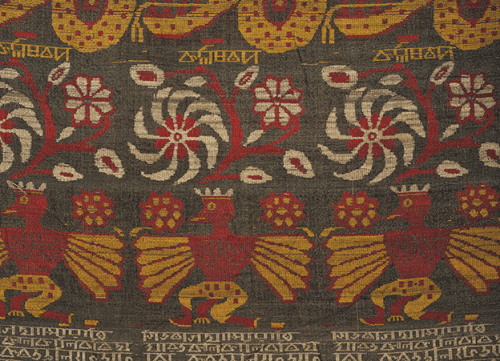
Anyhow, Ian has noticed how a vast  Vrindavani Vastra (literally ‘the cloth of Vrindavan’) has gone on display in the British Museum, filling an entire wall of the gallery. This Vrindavani Vastra is 9-metre long and made of woven silk and figured with scenes from the life of the Hindu god Krishna during the time he lived in the forest of Vrindavan.The Krishna scenes on the textile are from the 10th-century text the Bhagavata Purana, and are elaborated in the dramas of Shankaradeva. A verse from one of these is also woven into the textile, using immensely sophisticated weaving technology, now extinct in India. It is the longest example of its type, and was woven in Assam between 1567 and 1569. Think tea. Ian explains how it was first taken to Bhutan and then later to Tibet.

It was ‘found’ in Gobshi, a small town on the route between Gyantse and the Karo La, by Perceval Landon. Landon, a friend of Rudyard Kipling, was the correspondent from The Times on the expedition. He gave the textile, along with a vast array of Tibetan items, to the British Museum in 1905. The thesis has all the details if you can get to the fifth chapter.

textile_624.png

Over the years there have been futile efforts by the Indian Government to bring back the silk drape back to India. In 2013 the Assam government requested the British Museum to exhibit the Vrindavani Vastra so that “art lovers, researchers, and local people with Assamese heritage could admire it”. Accordingly, it is now on display until August 2016 in the exhibition ‘Krishna in the garden of Assam: the cultural context of an Indian textile‘ in Room 91 of the British Museum. Entry is free.

PS, Landon’s account of the Mission is a great read: Lhasa: An Account of the Country and People of Central Tibet and of the Progress of the Mission sent there by the English Government in 1903–1904. Published 1905.

Leave a comment

Filed under Tibetology, Timology

How not to tune a piano.

Classic FM have recently email me (and no doubt thousands of other people) with a brilliant video shows Beethoven’s ‘Moonlight’ Sonata being performed on a piano on which all the keys have been tuned to middle C. Android created the video as part of an advertising campaign intended to highlight how we are all different, and to celebrate that individuality. Regardless of the intention or results of the advert, the sound produced by the piano is remarkable!

Leave a comment

Filed under Timology

Greasy Spoon in Pimlico

The Regency

I want to try this place… I know my wife has never read this blog, but it is conveniently just round the corner from her flat in London… so I am going to find an ‘excuse’ (mentioning a good local shoe shop normally does it…) to go here! Regency Café is a fabulous art deco ‘greasy spoon’ cafe in Regency Street, Pimlico. It opened in 1946, and seemingly little has changed… no snail ice-cream, no food served on roofing tiles, taster menus, and not a truffle in sight. It sounds perfect. In fact, the tea served here was described by in the Daily Telegraph, as “Proper builders’ tea, the stuff that once fuelled the docks, factories and steelworks of Britain; a mug of pure, liquid copper.”

Apparently it has been used in all sorts of films and TV shows, and some people complain that you have to wait to be served, but you will find me in the queue next time I am in London and in need a bacon sandwich.

1 Comment

Filed under Timology

A Knight’s Night Tale

It’s not often that I sleep next to man. It’s even rarer that he is taller than me. I have never before slept next to a 6’6″ man who has been dead for over 600 years. But then again last night was different… but I can explain…

I hate my birthdays, have lost count of them, and find that I get grumpy being the centre of attention. So this year I decided to do something different and spent the night in Christ Church Cathedral in Oxford. I find it sad that poverty still blights British society, and this Advent I have decided to try to help. Thousands of us, often very close to home, are struggling with debt, homelessness, isolation, depression, addiction, abuse, or violence. I have also been deeply impressed by the work of Church Urban Fund and wanted to support them by raising money as part of Christ Church’s Advent Sleepout Challenge. I was overwhelmed by the generosity of my friends and family when I asked them, rather than buy me a pint, to contribute to the CUF’s appeal. If you would like, you can still contribute here.

It was a really exciting experience, with a great group of friends. I found a spot on the floor next to a tall chap called John de Nowers. While I had opted for a red sleeping bag and hoodie, John had chosen a coat of chainmail, broadsword, tilting helmet, and had by his feet, his pet lion. But then again he died in 1386.

Nowers Monument

First Light over Oxford

First Light over Oxford

And here is the fantastic video that those nice people at the Church Urban Fund have made about all the fun we had!

1 Comment

Filed under Oxford: The Perspiring Dream, Timology

Hugh Leach

I was immeasurably saddened to learn recently of the death of Hugh Leach. I knew Hugh through the Royal Society for Asian Affairs, where he was the long standing and much admired historian, however over the years he kept cropping up at all sorts of events, and in the oddest places; Abingdon School reunions, charity dinners, the East India Club, and the like. He was essentially an Arabist, soldier, and diplomat, who endearingly listed his interests as ‘vintage cars, early Christianity, crystal sets, and circuses.’ As an example of the breadth of his scholarship, understanding and experience, in this History Today article Hugh draws on his experiences working with Arab tribes to examine T.E. Lawrence’s strategy in the Arab revolt. He was a warm, affable, intensely well informed, sprightly, mischievous sort of chap, with history in his fingertips and a twinkle in his eye. I liked him enormously, and he seemed genuinely fond of me and my interests in the field.

This is by no means intended as an obituary of Hugh, as I am sure these will follow in official publications and lectures (see here for the Telegraph’s), but the following article in the Peckham Perculier, gives an indication of the man. In the biog Hugh describes himself, his interests, and sadly even portends his own death. I will let him do the explaining:

I’ll be going to the grave in not very long, and I hope I never know the difference between a computer and a commuter, a blog and a frog, an iPod and a tripod, a Blackberry and a gooseberry, and a Kindle and a spindle. I was in the army for many years and spent a lot of my career in the Middle East. I was the first tank ashore at Port Said during the Suez Crisis in 1956, and I rather naughtily took some photographs as we landed. I’ve just presented a huge scrapbook of the pictures to the Tank Museum at Bovington.”

Hugh describes how he decided to stay on in the Middle east after his regiment was to return to Germany, and a fascinating anecdote about his selection to the Arabic school. After the army Hugh transferred to the Diplomatic Service, and in the middle of it all ran away and joined the circus. Obviously. He recalls his days in the circus, return to London to research Islam and the rise of fundamentalism, retirement in which he lead expeditions with Freya Stark and Wilfred Thesiger, and on one occasion put an advert in The Lady magazine that said, “Retired former army officer seeks temporary accommodation”. He got three replies, not offering a house, but asking for his hand in marriage.

You can read the full article here, and also find a link to Hugh’s history of the RSAA, Strolling about on the Roof of the World, here.

tumblr_inline_nxtpskSmCF1reu5wk_500

2 Comments

Filed under Timology

On Mallory’s Watch: Frozen in time

You have probably guessed by now that I am a bit of a Mallory nut.

Mallory needs no introduction, but yesterday I found a spectacularly detailed article about his Borgel wristwatch… whatever makes you tick I guess.

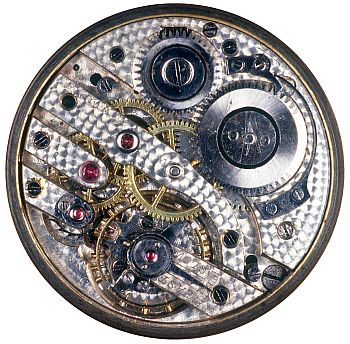
The watch was found on Mallory’s body when it was discovered in 1999. It was missing its crystal and hands, and was found in a pocket of Mallory’s clothing. There has been speculation that the watch lost its crystal and stopped during a climbing manoeuvre, an arm jamb in a rock fissure while ascending the second step, and that the position of the hands could indicate the time at which the arm jamb took place. However the author of the article argues convincingly that there were “no signs that the watch has even been scratched lightly against a rock, let alone crushed against or between rocks during a hand jam. When the watch was examined it was found that the balance staff pivots are unbroken and the movement is in good working order. Watches of this age do not have shock protection for the balance staff pivots, which are very delicate and can be easily broken if the watch is knocked sharply against a hard object. The fact that the balance staff pivots are not broken shows that the watch did not sustain any such damage. It was reported that when the rusted stumps of the hands were removed the movement started ticking.” I love the idea that the time between Mallory and the modern age had literally been frozen! The watch is now in the keeping of the Royal Geographical Society in London. You can read much more about David’s thoughts and professional comments on the watch here, and also see his designs for vintage watch straps here.  (He also holds the copyright to the photo below).

Mallory movement sm

1 Comment

Filed under Tibetology, Timology

Shackleton’s Voice

So it was exactly a century ago today that Ernest Shackleton’s ship, Endurance, slipped beneath the icy Weddell Seas of Antarctica. The adventurers and epic bravery of his crew are well documented elsewhere, but what did their heroic leader actually sound like, and what did their expedition achieve?

Luckily the UCSB cylinder audio archive has the answer! Before MP3s, CDs, cassettes and vinyl records, people listened to … cylinders. First made of tinfoil, then wax and plastic, cylinder recordings, commonly the size and shape of a soda can, were the first commercially produced sound recordings in the decades around the turn of the 20th century.

The UCSB Library, with funding from the Institute of Museum and Library Services, the Grammy Foundation, and donors, has created a digital collection of more than 10,000 cylinder recordings held by the Department of Special Collections. To bring these recordings to a wider audience, the Library makes them available to download or stream online for free. You can find out more here, and listen to Shackleton here.

Earnest-Shackleton

Leave a comment

Filed under Timology