Formula 1 and Tibetan Buddhism

While there has been a lot of chatter about Nico Rosberg edging Lewis Hamilton out of last weekend’s F1 Belgian Grand Prix, few eagle eyes will have noticed a small design on his race helmet. As the German driver clambered out of his car to face the podium, his team, and his critics, I noticed a small Tibetan Buddhist emblem on the front grille of his Mercedes-AMG Petronas helmet.

Nico Rosberg

Rosberg designed the helmet together with his girlfriend. He calls it his “Full Attack” design, and it is mainly comprised of black and turquoise, a colour strongly associated with Tibetan Buddhism. He describes the Tibetan motif as “something personal” but does not elaborate further. You can watch his full explanation here. It’s about as emotional as he gets!

The design is an endless knot (dpal be’u for all you closet Tibetologists out there) which is a closed, graphic ornament composed of right-angled, intertwined lines. It overlaps without a beginning, or an end, symbolising the Buddha’s endless wisdom and compassion. It indicates continuity as the underlying reality of existence.

The intertwining of lines represents how all phenomena are conjoined and yoked together as a closed cycle of cause and effect. Thus the whole composition is a pattern that is closed on in itself with no gaps, leading to a representational form of great simplicity and fully balanced harmony. See here for a full explanation.

Tibetans and Buddhists often copy the design on a gift or greeting card as this is understood to establish an auspicious connection between the giver and the recipient. At the same time, the recipient is goaded to righteous karma, and reminded that future positive effects have their roots in the causes of the present. This interconnectivity, and the social dues that go with it, were first properly analysed and commented on by the French sociologist Marcel Mauss in his 1925 essay Essai sur le don. Forme et raison de l’échange dans les sociétés archaïques (An essay on the gift: the form and reason of exchange in archaic societies) and expanded upon in his seminal anthropological treatise ‘The Gift.’ It is a great, and short, introduction to the fascinating field of Anthropology.

One can only hope that Hamilton too has done his homework, and acknowledges that the knot represents a connection, a link between their fates and karmic destiny, but does not ‘connect’ with it further. I can assure him that the symbol will be the same when viewed in a rear view mirror.

endless knot

1 Comment

Filed under Tibetology, Timology

World War One. My Family’s History.

Today marks the centenary of Great Britain joining World War One. There have been salutes, flypasts, vigils, and tributes paid by all quarters, and much done to honour the dead. And quite rightly so; their sacrifices made possible our freedom, and we will all, ever, be thankful.

My own family were surprisingly lucky during the war. My mother’s side of the family were all in India for the duration, and only started to drift back to Blighty at Independence, while there are little or no records from my father’s side. My grandmother (on my father’s side) however used to tell me tales of her father, my great-grandfather, and his time in uniform.

When I was a child she would stroke my hair when she spoke to me of him, and tell me how much I reminded her of him… she described how his hair was exactly like mine… ginger and much like a wire brush. Apparently we have the same eyes, but I know mum’s side also lays claim to my (somewhat useless) ocular ancestry. Kelly was much luckier, and avoided the ginge altogether.

The only records we have of Frank Kittle (Nan called him “Pop”, but then our grandfather was also “Pops”, so maybe this is a generational thing?) are some photographs and stories.

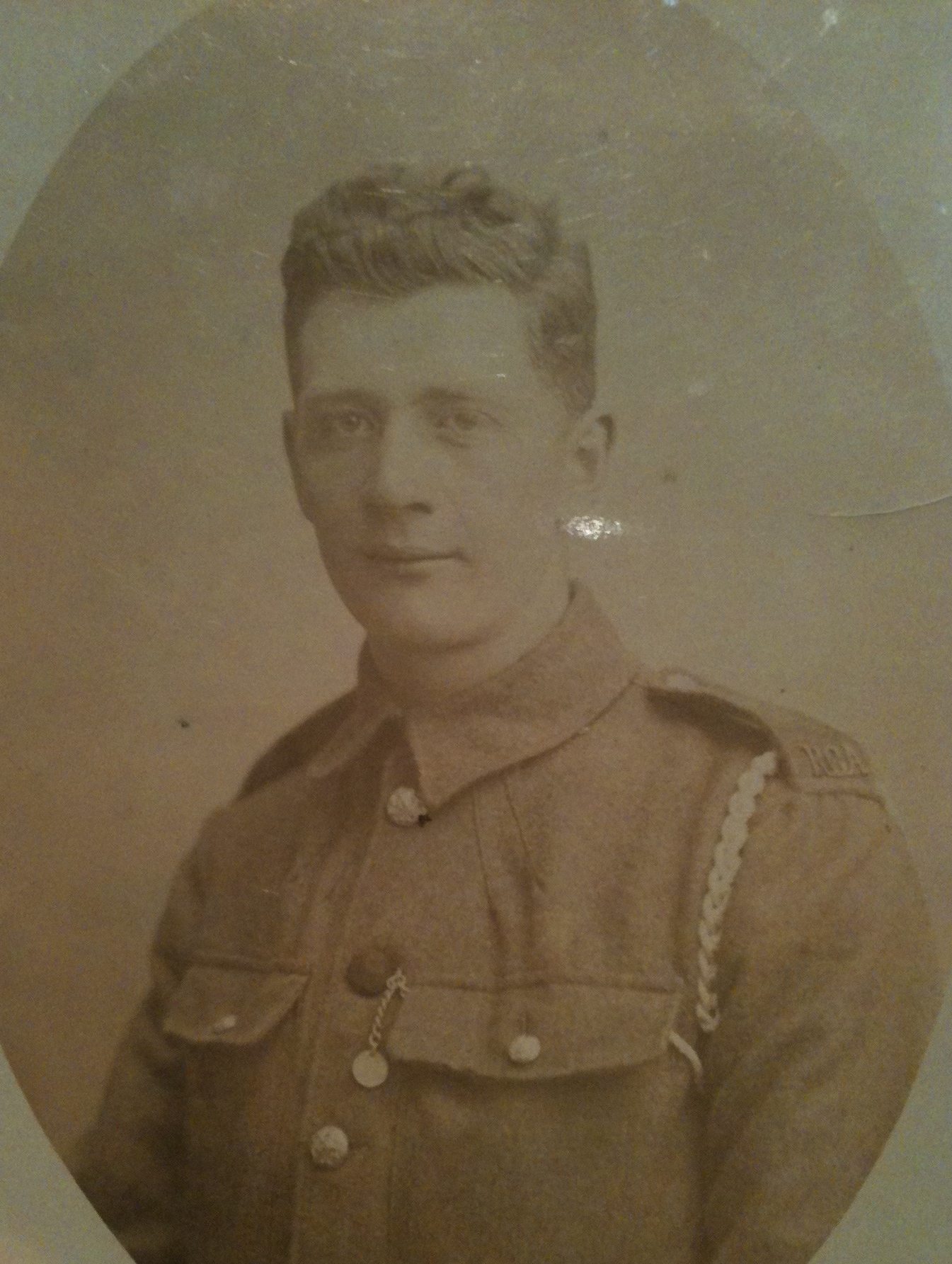
The photograph of him before he went to the trenches shows a thin, nervous, smile, and a rather optimistic attempt to Brylcream down the wire wool with a side parting. In the photo he must be in his mid 20’s, and has the badge of the Royal Garrison Artillery on his shoulder. Shortly after the photo was taken, he was sent to France, and was gassed at the Somme while serving with one of the Brigades of The Royal Field Artillery.

Pop Kittle Pre War

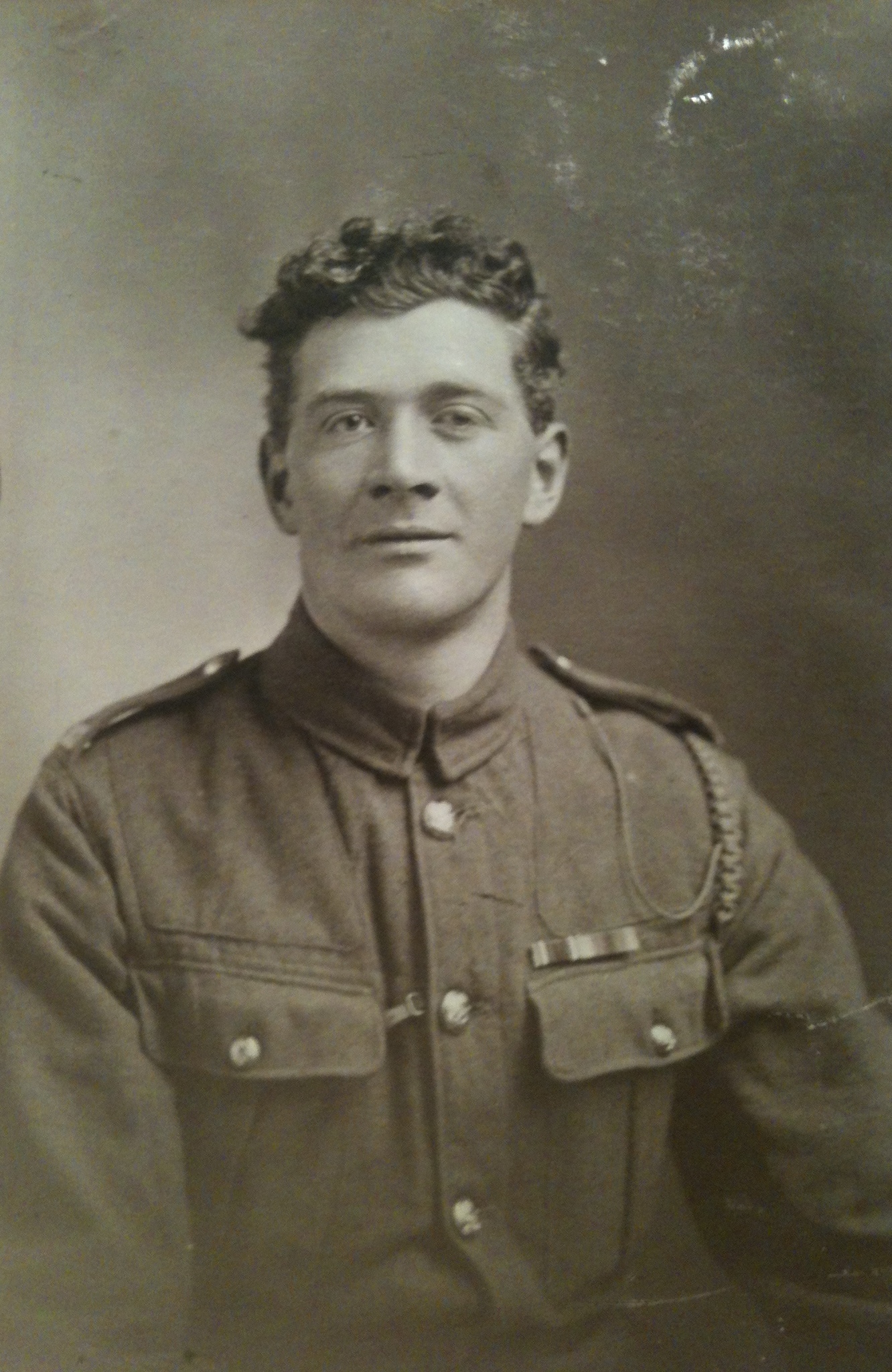
He was lucky to live, and was invalided back to his native Norfolk. He spent time recuperating from the effects of the mustard gas at hospitals in Bristol and Yarmouth, but had a hacking, rattling, cough ’till the day he died. A photo of him taken some years later, still in his uniform, shows a more confident face, and the slightest hint of a smile.

Frank Kittle

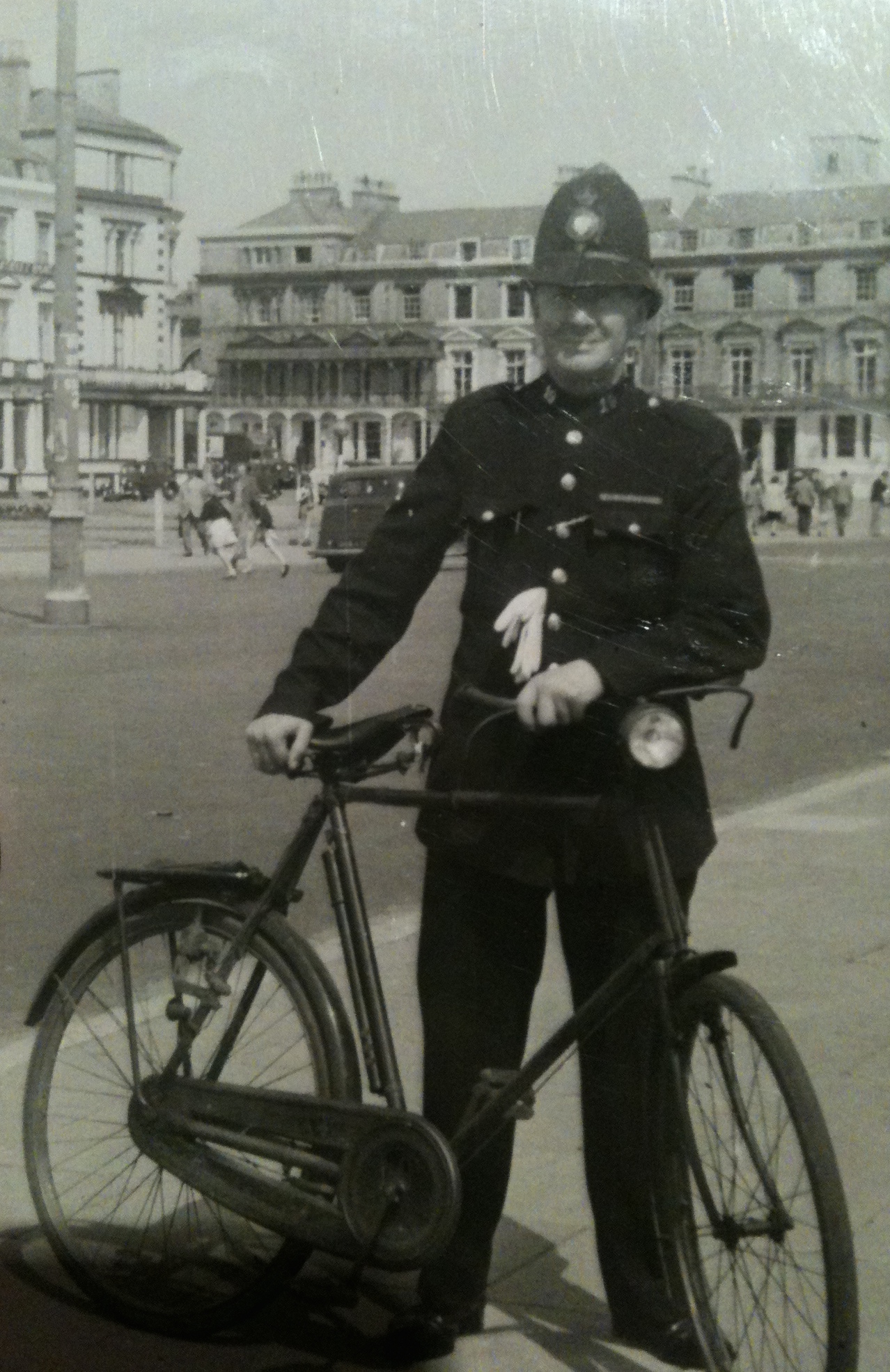
His cough stayed with him all his life, and Dad describes how he was always ill and bronchial. He served as both a Policeman, and Fireman in and around Yarmouth during both the interwar period, and during the Second World War. There is a family story that describes how he was the only policeman on duty when a local fisherman caught a German U-Boat in his nets, and towed it into Yarmouth harbour. Pop took the surrender of the U-Boat Captain, and his crew, and accepted a set of binoculars as a token of friendship. While this may or may not be true, it does help to explain the Nazi U-Boat binoculars that have been kicking about for years! This is him in his Police uniform, with his bicycle.

And a definite smile.

Policemand in Yarmouth

2 Comments

Filed under Photography, Timology

1066 and all that…

As we were all taught, Harold Godwinson, or King Harold II as he was known to his battle scarred subjects, was killed at the Battle of Hastings. There are differing accounts of this death, but the most widely accepted by historians is that of the eleventh-century churchman, Guy, Bishop of Amiens. His Carmen de Hastingae Proelio, or Song of the Battle of Hastings (which, let’s face it, was never going to be on Top of the Pops), was written shortly after the battle. In it,  Guy describes how the King was killed by four knights, probably including Duke William, and his body brutally dismembered.

The first mention of the famous arrow in the eye tale comes from an account written, nearly 30 years after the battle, by the fabulously named Amatus of Montecassino. Don’t go thinking that the Bayeux Tapestry contradicts all this… in the panel below the inscription “Harold Rex Interfectus Est” one poor chap is depicted gripping an arrow in his eye, but some historians have questioned whether this man is intended to be Harold, or if Harold is the next figure, lying to the right, and being mutilated beneath a horse’s hooves. My Latin is on the non existent end of the scale, but I think the translation should be more like ‘Harold the King is killed‘, rather than ‘King Harold gets one in the face.’

Anyway, after the battle the body of Harold was given to one William Malet, at least according to the contemporary chronicler William of Poitiers. (BTW when did we all stop being called ‘Someone of Somewhere’?  … I rather like it… perhaps we ought to reintroduce it?) Alternative theories suggest that the body was given to his widow, Edith, which seems much more likely to me. However there is much debate about the final resting place of the king.

The main contender is the small church at Bosham, where Harold was born, and where in 1954 and Anglo-Saxon coffin was inadvertently discovered by workmen. They found a stone sarcophagus and the remains of a man, estimated at up to 60 years of age, lacking a head, one leg and the lower part of his other leg; a description consistent with the fate of the King. Sadly in 1954, DNA profiling was not available, and carbon dating was still a nascent art. The coffin has not been reopened since.
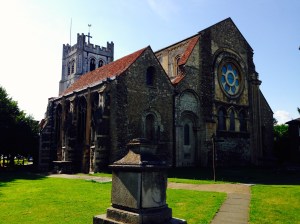
Church of The Holy Cross However legends persist that Harold’s body was laid to rest in Waltham, at the Church of The Holy Cross. That old gossip monger, William of Malmesbury, wrote in the Gesta regum Anglorum in 1125, that the refusal by Duke William to accept payment for the body meant that it was handed over without ransom, and taken from the battlefield to Waltham for burial. Harold had re-established the church in Waltham 1060, and by the late middle ages, it was one of the largest church buildings in England and a major site of pilgrimage. In 1540 it was the last religious community to be closed during the Dissolution of the Monasteries. Sadly however it was locked when I visited on Saturday, so you only get photos from the outside. As luck would have it, Harold is said to have been buried under the old High Alter, now in ruins, and which is now outside!

Harold II's resting place


Leave a comment

Filed under Timology

Not Really Guess Who Friday

This week various things have been making me think about my times in India. As I am sure I have told you all, in about 1998 I taught English in a Tibetan monastery in McLeod Ganj in Himachal Padesh. The monastery is called Dip Tse Chock Ling, and I still have many wonderful friends and memories in the place… its what I think about when times are tough, or if I want clear thinking and exploring space. In short, it makes me happy; both as a space, idea, and record of all the good times I had there. So I thought I would share a couple of photos of my time there… I hope you like them!

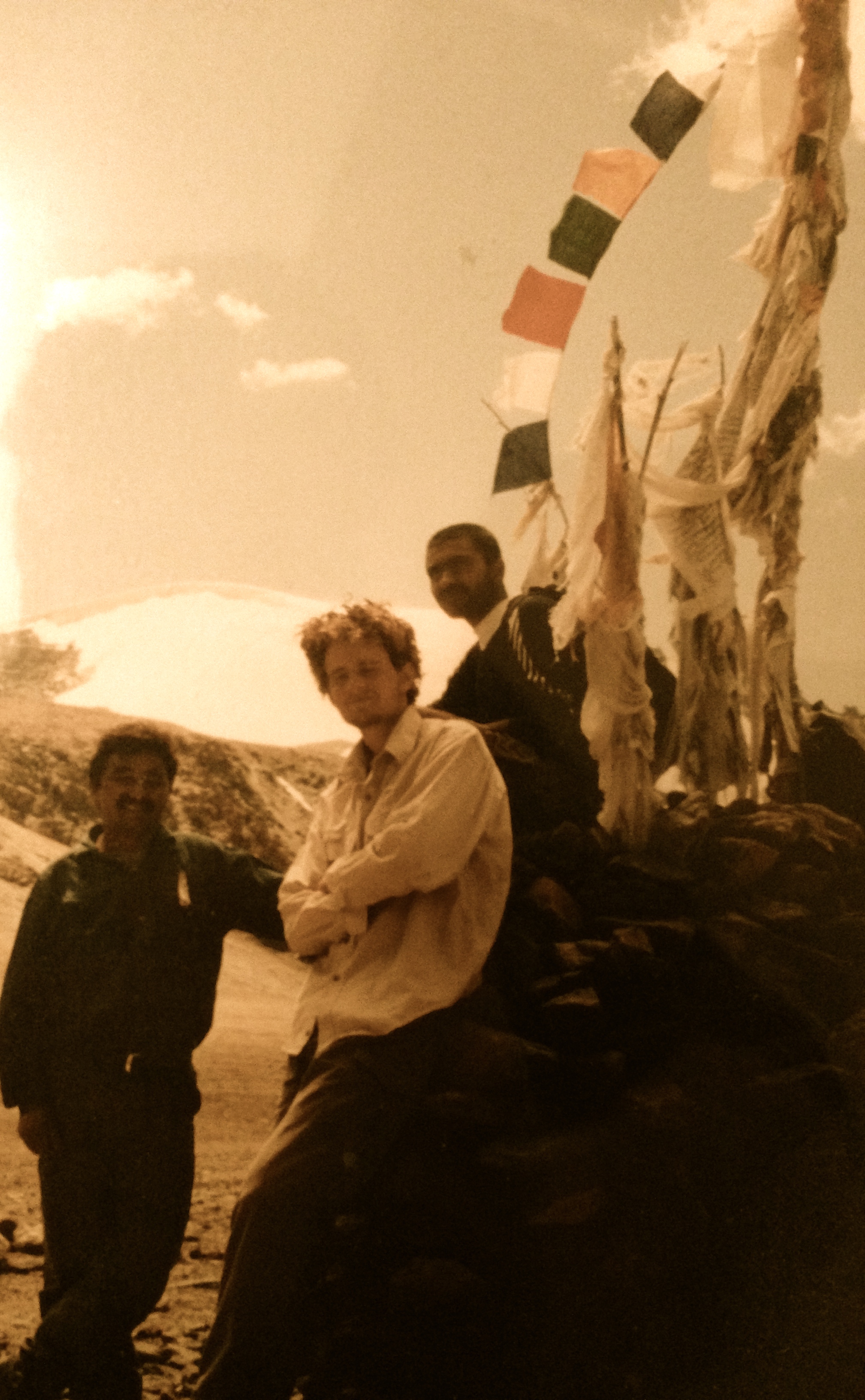
Tim and Translators

This one was taken in Ladakh in about 2000 when I was working on development issues in the Zangskar valley. The chap on the left is our translator, Dorje Gyalpo, and Ash Spearing sits behind me on the Chorten.

Tim and Drip Tse Chock Ling MonasteryThis was about 1998, with the monks of Dip Tse Chock Ling.


1 Comment

Filed under Timology

The New Lepage Glue Gun

“They began to invent humourless, glum jokes of their own and disastrous rumours about the destruction awaiting them at Bologna.
Yossarian sidled up drunkenly to Colonel Korn at the officers’ club one night to kid with him about the new Lepage gun that the Germans had moved in.
‘What Lepage gun?’ Colonle Korn inquired with curiousity.
‘The new three-hundred-and-forty-four-millimeter Lepage glue gun,’ Yossarian answered. ‘It glues a whole formation of planes together in mid-air.’

Colonel Korn jerked his elbow free from Yossarian’s clutching fingers in startled affront. ‘Let go of me, you idiot!’ he cried out furiously, glaring with vindictive approval as Nately leaped upon Yossarian’s back and pulled him away.
‘Who is that lunatic anyway?’
Colonel Cathcart chortled merrily. ‘That’s the man you made me give a medal to after Ferrara. You had me promote him to captain, too, remember? It serves you right.’
Nately was lighter than Yossarian and had great difficulty maneuvering Yossarian’s luching bulk across the room to an unoccupied table. ‘Are you crazy?’ Nately kept hissing with trepidation. ‘That was Colonel Korn. Are you crazy?’

Yossarian wanted another drink and promised to leave quietly if Nately bought him one. Then he made Nately bring him two more. When Nately finally coaxed him to the door, Captain Black came stomping in from outside, banging his sloshing shoes down hard on the wood floor and spilling water from his eaves like a high roof.

‘Boy, are you bastards in for it!’ he announced exuberantly, splashing away from the puddle forming at his feet. ‘I just got a call from Colonel Korn. Do you know what they’ve got waiting for you at Bologna? Ha! Ha! They’ve got the new Lepage glue gun. It glues a whole formation of planes together in mid-air.’

‘My God, it’s true!’ Yossarian shrieked, and collapsed against Nately in terror.”

tumblr_m4pjo62CdA1r0kjroo1_400

Leave a comment

Filed under Timology

Poe Boy

Poe

Leave a comment

June 5, 2014 · 1:05 pm

Runners and Writers

This week’s ramblings might seem at first disparate and irrelevant, but I assure you that this is only slightly the case… this blog, as you might have gathered, is often about links between things; not so much isolated interesting facts and snippets, but the tangleweb that connects them and us. If you wanted interesting facts, open an encyclopaedia, but it’s the connexions between things, the invisible covalent bonds of distraction that I find more stimulating.

This week I have been dipping into the BBC’s archive of Rev, a TV sitcom about a Church of England priest, played by Tom Hollander, and his inner city London church. The dialogue is excellent, and the characters feature an all too familiar line up of worthies, wastrels, and worshipers. The priest and his long suffering wife negotiate the machinations of the Archdeacon, mixed emotions of the lay reader, monetary meltdown of the parish, and even the manipulation of the local teacher’s breasts by the priest. There is even a cameo by Liam Neeson as God. It’s a gritty, humorous, and real portrayal of a “socially disunited” parish, and well worth a watch.

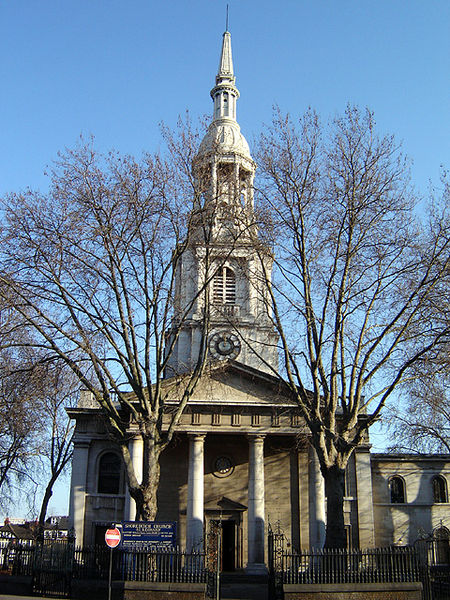
The church in question is know in the comedy as St Saviour in the Marshes, and is supposed to be in Hackney, East London. It is however actually filmed in St Leonard’s Parish Church in Shoreditch, located at the intersection of Shoreditch High Street and Hackney Road. The church was immortalised in the ancient nursery rhyme ‘Oranges and Lemons’ by the line, “When I grow rich, say the bells of Shoreditch“.

Most of the church dates from 1740, but the original sections could date from Saxon times. St Leonard’s has strong links with the theater, indeed it is the resting place for many a Tudor playwright and board creeper. Many believe Shakespeare may have worshipped there, and even that it might have inspired scenes in Romeo and Juliet. That is if you believe a word that The Gurinad tells you.

St leonards

Some have speculated that large portions of the medieval church demolished in the 1720’s would have been familiar to Shakespeare and many of his contemporaries. The chances are that the ruins survive intact beneath the present church and surrounding land. However, due to cost and the technical difficulties of investigating beneath and around a listed building used for worship, no work has been carried out. But recently Professor Maurizio Seracini has proposed using non-invasive techniques to investigate the church and the surrounding area.

I first came across Seracini when I was working for a philantropist some years ago, and Seracini was conducting 3D analysis research into the lost Leonardo da Vinci mural The Battle of Anghiari, at the Palazzo Vecchio in Florence. It is hoped that this tine he may unearth finds similar to those from a 2012 nearby dig that found remains of The Curtain Theater, where Romeo and Juliet and Henry V were first performed.

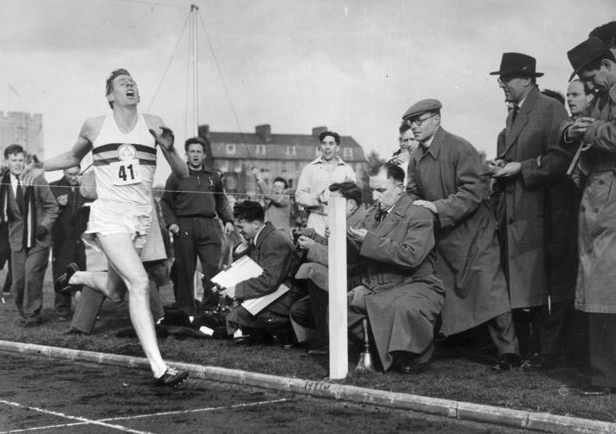
But there is a third connection here… This week also saw the 60th anniversary of Sir Roger Bannister’s four-minute mile. On Thursday 6th May 1954 the 25-year-old medical student became the first person to break through the four-minute barrier, a feat that has only been achieved by 1,337 people since… fewer than have climbed to the summit of Everest. Sir Roger, now 85 years of age and suffering Parkinson’s disease, is still a friendly face around Oxford, and is beloved by the University and City. The radio commentary for the day remains an evocative classic:

Result of event eight: one mile. First, RG Bannister of Exeter and Merton colleges, in a time which, subject to ratification, is a new track record, British record, European record, Commonwealth record and world record – Three minutes and …” the rest was drowned out by the cheering.

However the BBC has today been running a story claiming that Sir Roger might not have been the first man to run the mile in less than four minutes. Apparantly, as long ago as 1770 a certain James Parrott was wagered 15 Guineas that he could not run a mile in under four and a half minutes. The BBC paints wonderful picture of the race, describing how “with money on the line, it’s likely that umpires on both sides carefully checked the watches, locked them in a box to prevent tampering, and placed them in a horse-drawn carriage that would make sure they reached the finish line ahead of the runner.“ And that finishing line, was none other than the gates of St Leonard’s Parish Church in Shoreditch.

The result was reported in the Sporting Magazine of 1794: “1770 May 9th, James Parrott, a coster-monger, ran the length of Old St, viz. from the Charterhouse- wall in Goswell Street, to Shoreditch Church gates, (which is a measured mile) in four minutes.”

It’s the first known report of a four-minute mile. I wonder if he saw Liam Neeson on the way?

4 Minute mile

1 Comment

Filed under Oxford: The Perspiring Dream, Timology

Nostalgia, melancholy, and a pint in Rotherhithe: The Fighting Temeraire

‘The Fighting Temeraire’ is one of my favourite paintings… indeed in 2005 it was voted Britain’s favourite painting in a BBC poll. Not surprisingly, the vote coincided with the 200 year anniversary of the Battle of Trafalgar.

By 1839 Turner was well in his sixties when he painted the 98 gun ageing battleship being towed from Sheerness to Rotherhithe to be broken up. The painting is staggering for its beauty and elegance, and is deeply evocative of a sense of loss; the graceful old warship slipping silent through the waters behind the prosaic, belching, little steam-powered tug. The gloaming combines dramatically with the twilight of Nelson’s era of rigging and rum, heralding the decline of British sea power in the minds of many at the time.

Temeraire had served her country well. She was one of the key ships that took part in the Battle of Trafalgar in 1805, serving alongside HMS Victory, as Nelson ploughed straight through the French and Spanish lines. Following the battle the damage report showed that every sail and yard had been destroyed; only the lower masts were standing and they had been shot through in many places; the rudder had been shot off together with the starboard ‘cat-head’, from which the starboard anchor should have been suspended. Eight feet of her hull on the starboard side was stove in and the quarter galleries on both sides of the ship had been destroyed as she was crushed between the French ships.

But Turner did not want to show her scars, and was somewhat imaginative with the details of his masterpiece. As he watched, on the evening of the 6th of September 1838, the Temeraire was pulled up the Thames to Beatson’s ship-breaking yard. Despite the rain, he would have seen that she was in fact pulled by two tugs, not one, and that her masts, rigging, and most of her decks were missing. In the painting the ships are shown travelling east, away from the sunset, even though Rotherhithe is west of Sheerness, and besides there was little or no sunset that day according to other observers. Turner called the work his “darling”. But that’s not the point… details are rarely nostalgic, and should never be melancholy.

The Fighting Temeraire I am telling you all this because at the weekend I found the spot from which Turner watched her final journey. It’s just next to The Angel Pub in Rotherhithe, which if you happen to be passing, is well worth a stop for a pint! No comments about ‘battle scarred hulking old wrecks’ please…

Tim and Turner


2 Comments

Filed under Timology

My Amazing Find: The Ark of the Covenant

I have some serious and important news to share with you all:

I have found the final resting place of The Ark of the Covenant.

Ark For those of you who are not Biblical scholars, the Ark of the Covenant is the chest described in the Book of Exodus as containing the Tablets of Stone on which the Ten Commandments were inscribed. The Biblical account relates that about a year after the Israelites’ exodus from Egypt, the Ark was created according to the pattern given to Moses by God when Israel was encamped at the foot of Mount Sinai. The Israelite armies carried the Ark on their campaigns hidden under a large veil made of skins and blue cloth, always carefully concealed, even from the eyes of the priests and the Levites who carried it. It was captured for some time by the Philistines, before King David re-captured it, and it was placed in King Solomon’s Temple. In 597 BC, the Babylonians destroyed Jerusalem, and Solomon’s Temple, and the Ark has never been seen again.

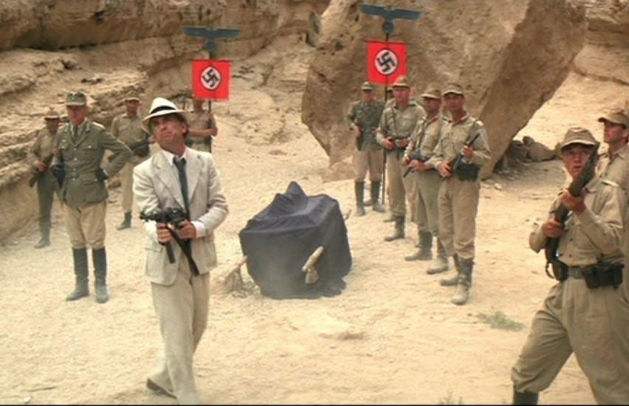
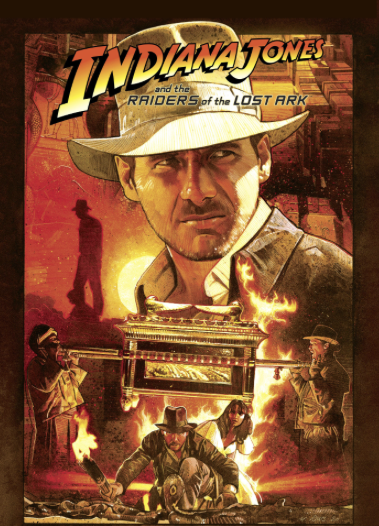
Of course that was until the Nazis found it, leading to the entirely factual account given in the documentary, Indiana Jones and the Raiders of the Lost Ark. You can see it clearly shown here and on the promotional poster for the documentary.nazis and the ark

At the end of the epic account the Ark is shown being wheeled carefully away for “study” by “experts” in a large warehouse in belonging to the US Government. But I have found it.

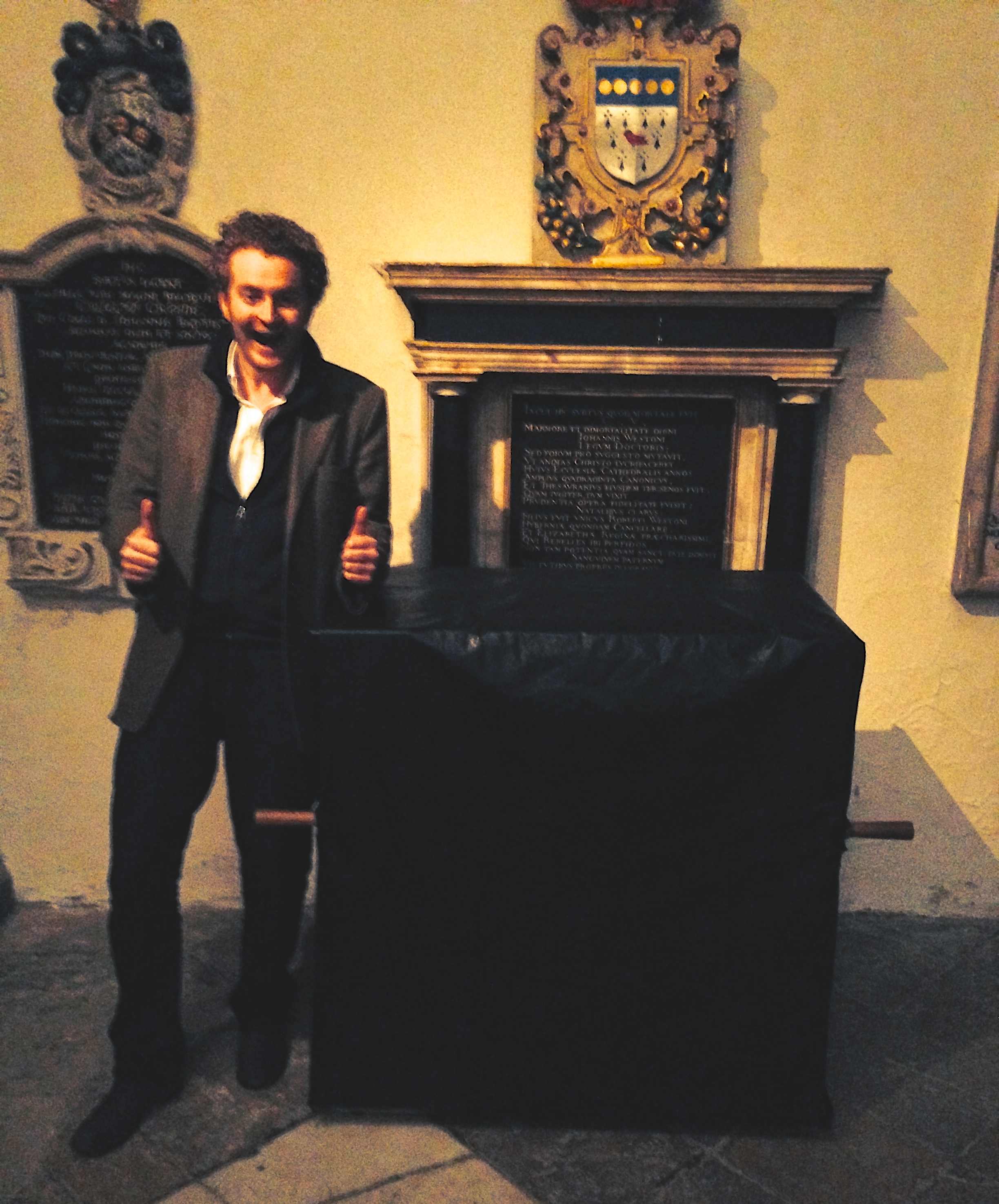
Indianna Jones The Americans obviously gave it to the University of Oxford for research, as it is now in Christ Church Cathedral, as my photo below clearly shows. Obviously I did not lift the sacred covering, in the knowledge and fear of the fate of Uzzah (see here if you know not of which I speak…) but I am sure it is the Ark. I wonder if the University know that they still have it?

Ark of the Covenant and Tim

Leave a comment

Filed under Oxford: The Perspiring Dream, Timology

Simla’s goat path to Empire

Many thanks to my friend, William Garrood, for this little gem of a quote from William Dalrymple’s latest offering, Return of a King:

The existence of Simla was itself a comment on the astonishing complacency of the British in India at this period: for seven months of the year, the Company ruled one-fifth of mankind from a Himalayan village overlooking the borders of Tibet and connected to the outside world by a road little better than a goat path.”

You can follow William’s excellent collection of digital snippets and comments here

Image


Leave a comment

Filed under Timology